How do you ski for the first time? Start on beginner terrain with a qualified instructor. Learn a balanced stance, move on flat snow, control speed with a wedge or snowplough, stop reliably, then add gentle turns. Do not rush into steeps, moguls, carving or terrain-park tricks before you can control speed and direction consistently.
This guide explains the beginner progression in the order it normally matters on snow. It is preparation for a lesson—not a replacement for in-person instruction.
[toc]
Before You Start Skiing
For a first-time skier, preparation matters more than advanced technique. A beginner lesson gives you suitable terrain, correctly fitted equipment and immediate feedback before bad habits become harder to correct.
- Take a beginner lesson. A qualified instructor can match the progression to your balance, confidence and snow conditions.
- Rent before buying. A rental shop can size boots and skis and set bindings for the skier rather than leaving a beginner to guess.
- Dress for cold and moisture. Use layers and waterproof outerwear. Our what to wear skiing guide covers clothing separately.
- Start on designated beginner terrain. Do not choose a run because friends say it is easy; trail ratings are relative to each ski area.
How to Ski for Beginners: The Basic Progression
1. Find a Balanced Ski Stance
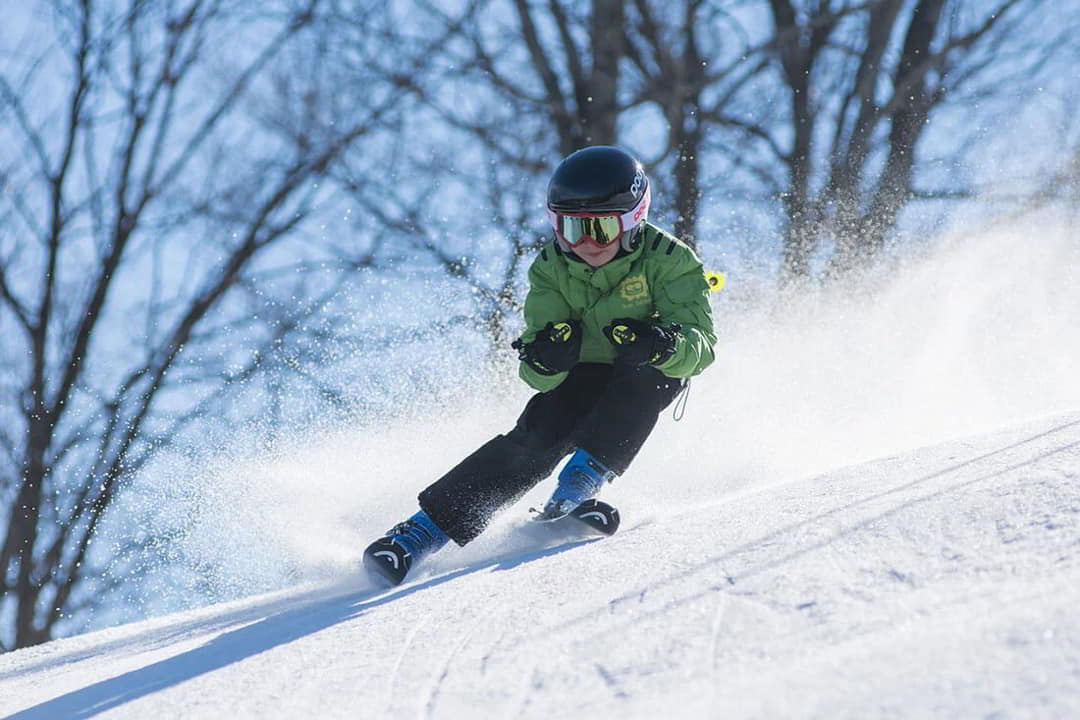
Stand comfortably over the middle of the skis with ankles and knees flexed, hands in front and your eyes looking where you want to go. Beginners often lean backward when they feel speed; that makes it harder to use the front of the skis effectively. Your instructor can correct stance before you start adding speed.
2. Learn to Move on Flat Snow
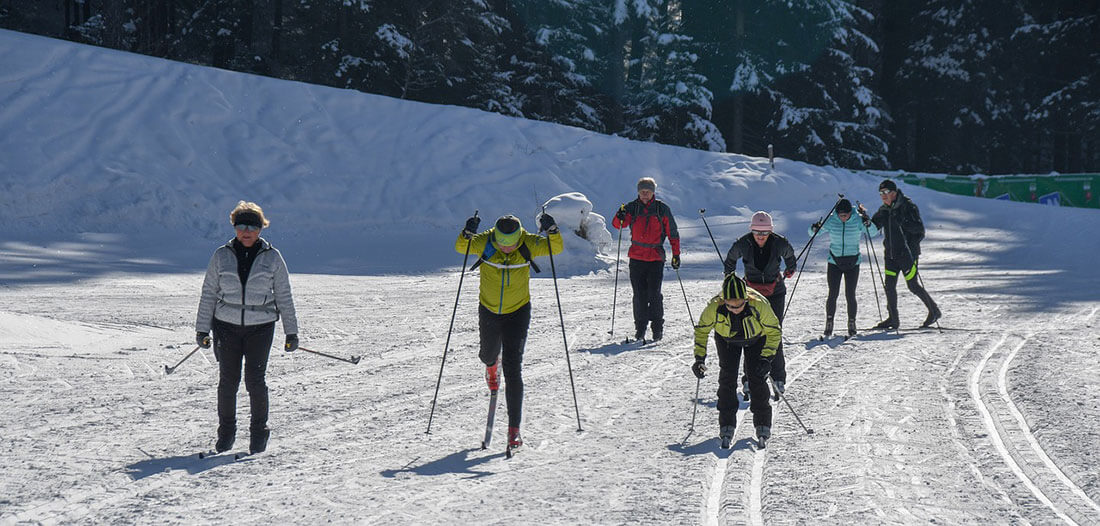
Before going downhill, practise clipping in and out of the bindings, shuffling or stepping on flat ground and turning the skis around in a controlled space. These small movements make lift queues and beginner areas much easier to manage.
3. Learn How to Stop
The first speed-control tool many beginners learn is the wedge, also called a snowplough or “pizza.” The ski tips move closer together while the tails move farther apart. On appropriate beginner terrain, an instructor teaches you how changing the wedge and edging affects speed until you can stop where you intend.
4. Add Gentle Turns
Once you can control speed and stop, the next job is changing direction. Early turns are about looking ahead, steering progressively and completing the turn rather than pointing straight downhill and trying to brake at the last moment. Linking controlled turns is a much more useful first-day goal than skiing fast.
5. Practise Falling and Getting Up Safely
Falls are part of learning. Use your lesson to learn how to recover without blocking the run, how to release or reposition equipment when necessary, and when to ask for help. Do not practise deliberate high-speed falls or try to copy advanced recovery techniques from videos.
6. Learn the Lift With an Instructor or Attendant
Beginner areas may use carpets, drag lifts or chairlifts. Lift procedures differ, so follow local instructions and ask the attendant for help if you are unsure. The National Ski Areas Association’s responsibility code specifically says skiers should know how to load, ride and unload lifts safely.
What Should You Learn on Your First Ski Day?
A realistic first-day target is simple: become comfortable with the equipment, stop on command, make controlled turns on gentle terrain and understand how to use the beginner lift. Parallel turns, carving, short-radius turns, moguls, steep terrain and freestyle features belong later in the progression.
- Put skis on and take them off without rushing.
- Move on flat snow.
- Maintain a balanced stance.
- Control speed with a beginner stopping method.
- Link gentle turns.
- Use the beginner lift and understand basic slope etiquette.
Beginner Ski Safety and Trail Signs
The most important rule is to stay in control. The National Ski Areas Association Responsibility Code also requires skiers and riders to avoid people downhill, obey signs and closures, look uphill before entering a trail and know how to use lifts safely.
Trail symbols and difficulty systems vary by country and resort. In North America, green circles commonly identify easier terrain, blue squares intermediate terrain and black diamonds advanced terrain, but the rating is relative to that ski area. Check the resort map and signage instead of assuming the same symbol means the same difficulty everywhere.
Weather, visibility, ice, fresh snow and crowding can change how a run feels. If conditions are beyond your ability, return to easier terrain or stop for the day. There is no universal rule that a beginner must wait a fixed number of days after a storm; follow ski-area closures, patrol advice and current conditions.
Common Beginner Skiing Mistakes
- Trying to go fast before learning to stop. Speed without control does not equal progress.
- Looking down at the ski tips. Keep your attention on the route and people ahead.
- Following experienced friends onto harder terrain. Choose runs for your own ability.
- Using poorly fitted borrowed equipment. Boots and bindings need to suit the skier.
- Teaching yourself advanced techniques too early. Steeps, jumps, rails, moguls and carving require progression and appropriate instruction.
What Comes After the Beginner Basics?
After you can stop, turn and ride lifts consistently on beginner terrain, lessons can progress toward more efficient turn shapes, parallel skiing, edge control and different snow conditions. Carving, bumps, steeps and terrain-park skiing should come after those foundations rather than being treated as first-day techniques.
If you are still deciding between one board and two, see Skiing vs Snowboarding for Beginners. For clothing, use What to Wear Skiing. Once you are ready to choose a destination, our ski-resort guides can help with location-specific planning.
Takeaway
For first-time skiing, success is not measured by speed or advanced terrain. Learn with suitable instruction, stay on terrain you can control, make stopping and turning reliable, and progress only when the previous step feels repeatable. That gives you a much stronger base for every skiing technique that follows.