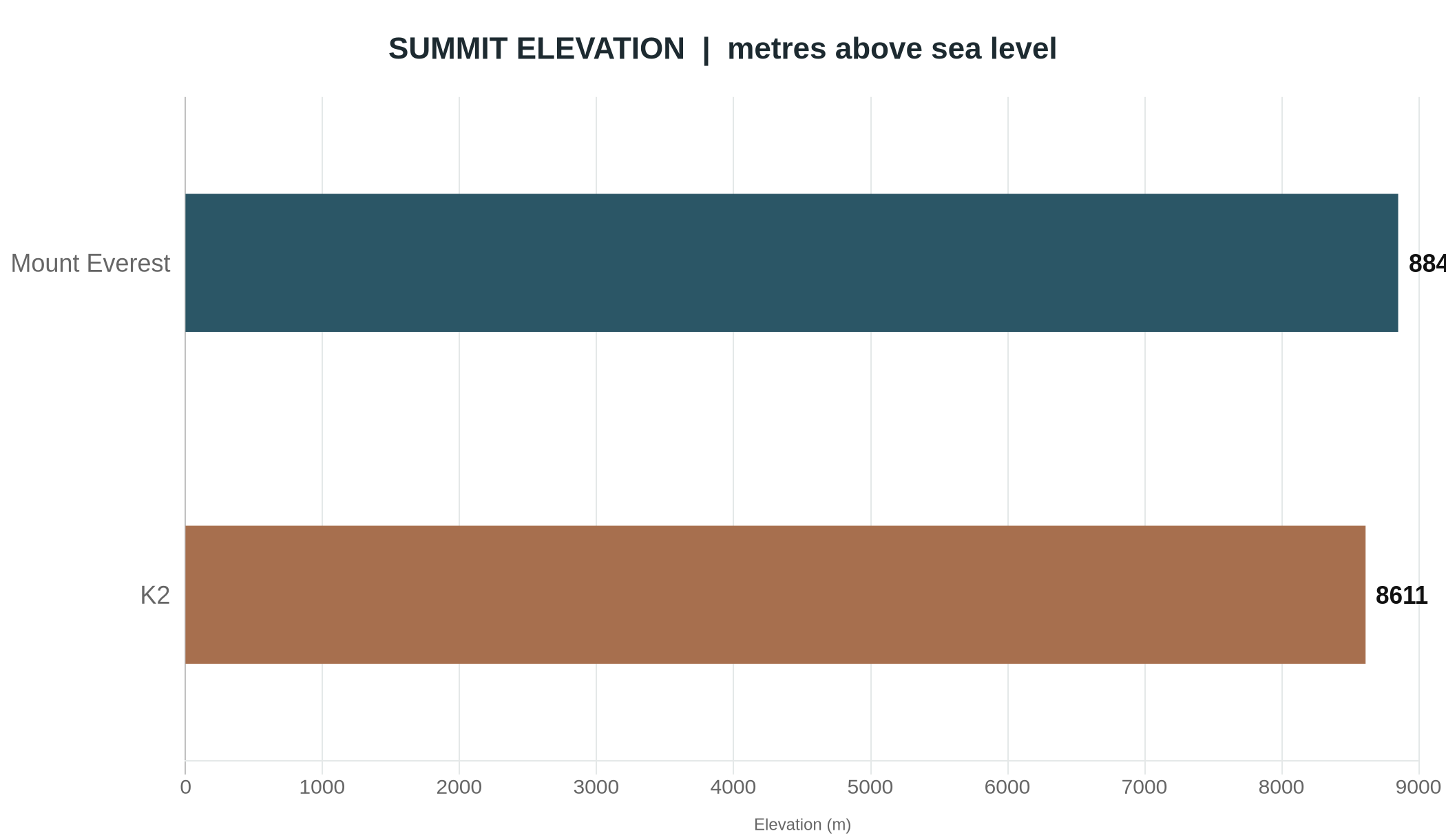
Which is harder to climb, K2 or Everest? On their normal routes, experienced mountaineers generally consider K2 the more technical climb, with steep rock and ice, the Black Pyramid and the exposed Bottleneck. Everest is higher by 237.86 m and has a harsher oxygen deficit at the summit. Both mountains have dangerous descents. A climber’s actual risk depends on the route, season, preparation, weather, bottled oxygen and expedition support—not simply a dramatic death-rate headline.
K2 vs Everest at a glance
| Question | K2 | Everest |
|---|---|---|
| Height | 8,611 m (28,251 ft) | 8,848.86 m (29,031.7 ft) |
| Geography | Karakoram, Pakistan–China border | Himalaya, Nepal–China border |
| First ascent | 31 July 1954, Lino Lacedelli and Achille Compagnoni | 29 May 1953, Edmund Hillary and Tenzing Norgay |
| First winter ascent | 16 January 2021, ten Nepalese climbers | 17 February 1980, Krzysztof Wielicki and Leszek Cichy |
| Standard south-side line | Abruzzi Spur (southeast ridge) | South Col / Southeast Ridge |
| Common climbing season | July / early August | May |
| Steep technical movement | More sustained on the standard route | Less sustained on the standard supported route |
| Typical major obstacle | Bottleneck and overhanging serac, near 8,200 m | Khumbu Icefall, Lhotse Face, upper summit ridge |
| Highest-altitude stress | Extreme | More severe at the summit |
| Established support | Increasing commercial ropes and oxygen, fewer teams | More extensive fixed-rope and high-altitude support system |

Neither row of this table measures personal risk by itself. For the mountains’ general history, see K2: The Savage Mountain and Mount Everest.
A quick way to read the comparison: Everest demands more from the body at summit height; K2 generally demands more technical climbing skill on its common route. When a graphic shows a death statistic, first ask whether it measures all attempts, only successful summiters, or deaths on descent. Those are different questions—and historical rates should not be represented as today’s individual odds.
Why experienced climbers call K2 the harder technical climb
Adrian Ballinger: technical difficulty is not the same as physiological difficulty
American mountain guide Adrian Ballinger, who has summited both mountains without supplemental oxygen, described K2 as the clear winner in technical difficulty. Crucially, he also explained that he personally felt very different above roughly 8,600 m: during his oxygen-free Everest summit he experienced pronounced impairment, whereas on K2 he remained aware of the climb and summit. His testimony is exceptionally useful because it undermines the lazy claim that the same mountain is hardest for every person in every respect. This is Ballinger’s experience, not a controlled physiological experiment.
Ed Viesturs: K2 becomes more demanding as altitude rises
In a NASA-published account of high-altitude mountaineering, Ed Viesturs—who climbed all fourteen eight-thousanders without bottled oxygen—characterised K2 as substantially more difficult to climb than Everest, drawing attention to sustained steepness, weather and the consequences of difficult movement close to the summit. His judgment carries unusual first-hand authority; the source reflects the era in which he spoke, and historical summit totals in the transcript are not current counts.
Gerlinde Kaltenbrunner: exposure and repeated attempts
Gerlinde Kaltenbrunner’s National Geographic interview describes why even the so-called easiest K2 route remains difficult. She highlighted Karakoram weather, snowfall, steep terrain and avalanche risk, and explained her choice to try the north side rather than again confront the Bottleneck. Her remarks are valuable for understanding route-choice decisions and the psychological consequences of repeated attempts, rather than ranking mountains with a single number.
Garrett Madison: what a commercial guide can—and cannot—reduce
K2 expedition leader Garrett Madison told National Geographic that K2’s standard climbing is steeper and more sustained than Everest’s South Col line. He also discussed fixed lines, rockfall, narrow camp sites, high-altitude support and the consequences of underprepared climbers. He identified a growing commercial support system on K2; portraying the mountain as having no fixed ropes, oxygen or guided expeditions would therefore be inaccurate. An organised expedition can manage some risks, but not remove objective exposure beneath a serac.
The routes compared, section by section
K2: Abruzzi Spur and the Bottleneck
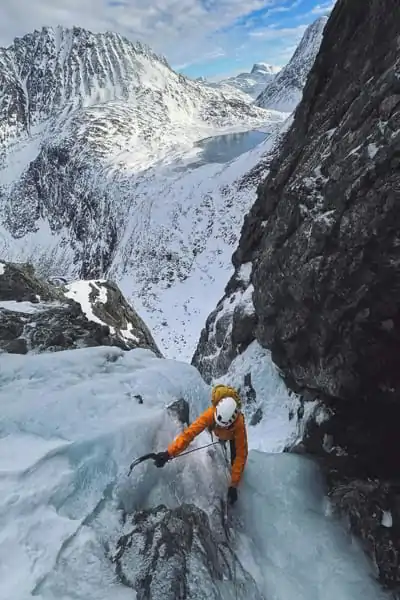
K2’s southeast ridge, known as the Abruzzi Spur, starts above the Godwin-Austen Glacier. Climbers move through steep rock and snow below Camp 2, negotiate House’s Chimney, ascend the technically mixed Black Pyramid, cross the Shoulder and reach the Bottleneck under overhanging ice. The final traverse and summit slopes are not simply a high-altitude hike; skills with crampons, ascenders, descenders, belays and movement on exposed terrain remain essential even when fixed ropes have been placed. Route positions and camp heights shift by season. Climbing magazine’s detailed route review distinguishes the Abruzzi from the Cešen (Basque) route, which joins the upper mountain but avoids some lower Abruzzi obstacles.
Everest: South Col, Khumbu Icefall and upper ridge
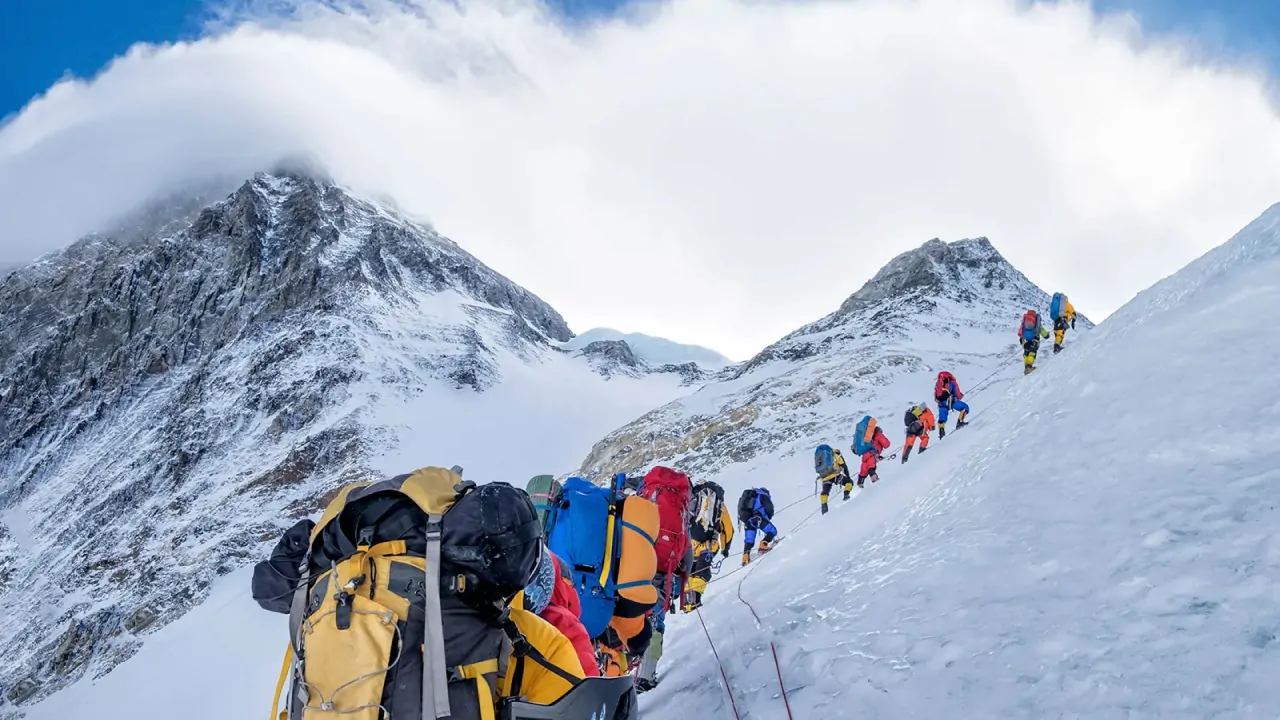
Everest’s standard Nepal-side route crosses the shifting Khumbu Icefall, enters the Western Cwm, ascends the Lhotse Face, traverses the Yellow Band and Geneva Spur to the South Col, then follows the Balcony, South Summit and upper southeast ridge. Fixed ropes, ladders over crevasses and extensive expedition support can make progress more systematic, but this does not turn the mountain into a walk: the icefall presents rapidly changing objective hazards, while oxygen supply, cold exposure and delays become critical high above 8,000 m. See the South Col route description for the sequence of obstacles.
Calling Everest technically easy is misleading. Its standard supported route is generally less continuously steep than K2’s Abruzzi Spur. Other Everest routes—including the West Ridge and technical faces—can be considerably more demanding. Comparing only the normal routes is necessary to make a defensible claim.
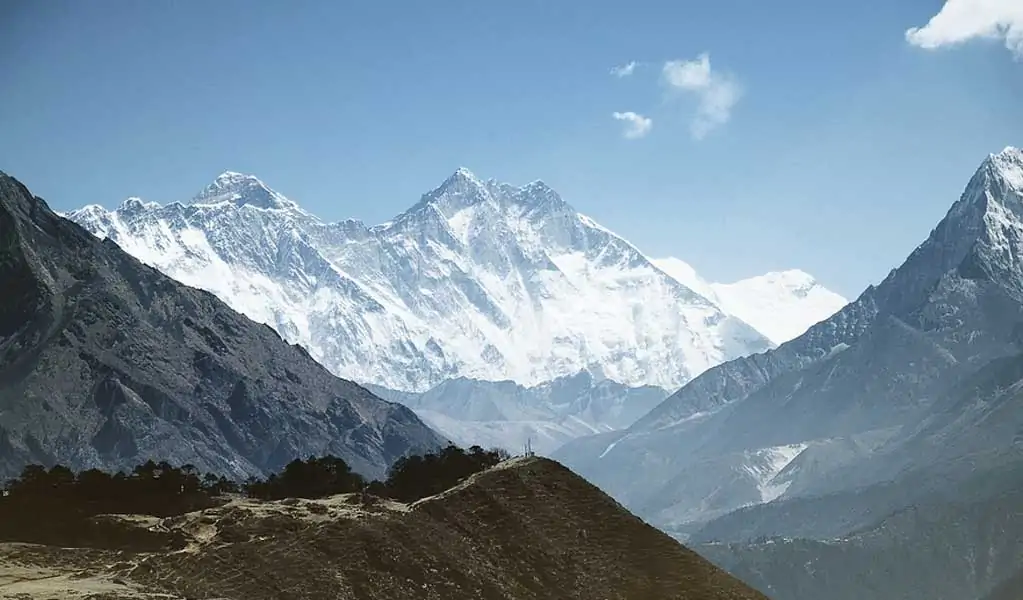
What a technical K2 climber notices: An expedition can place fixed ropes on steep rock or ice, but the climber still needs to maintain balance in crampons, clip into an appropriate system, manage transitions without becoming exposed, conserve energy and reverse those manoeuvres on descent. On the Abruzzi Spur these demands return across multiple camps, not only at one short obstacle. Rockfall and avalanche exposure may also change the practical choice of camp or route. Philippe Gatta’s first-hand K2 Abruzzi account describes the steep grades and variation in camp locations; its slope descriptions are route observations, not permanent angles for every season.
What a South Col climber notices: The movement system on an established Everest expedition can be more regular, but enormous hazards are still present. Icefall crossings demand prompt movement through changing towers and crevasses, while the high mountain demands rigorous oxygen checks, forecast interpretation and turnaround discipline. A guide may organise the route, yet cannot guarantee clear weather or prevent an icefall collapse. Robert Hall’s account of a 1992 K2 attempt in the American Alpine Journal describes retreat under unstable snow and the challenges of old rope and anchors—evidence of why real conditions matter more than a fixed itinerary.
Which route requires which skills?
- Both: high-altitude acclimatisation, crevasse awareness, crampons, fixed-rope transitions, emergency descent and sound decisions under fatigue.
- K2 Abruzzi: more repeated steep rock, ice and mixed terrain; confined camps; efficient ascending and descending with exposure.
- Everest South Col: intensive glaciated travel through the Icefall; oxygen and movement planning across a heavily trafficked high route; attention to time spent near 8,850 m.
- Neither: an appropriate first technical mountain or an expedition made safe merely by paying a guide.
What summit weather research actually shows
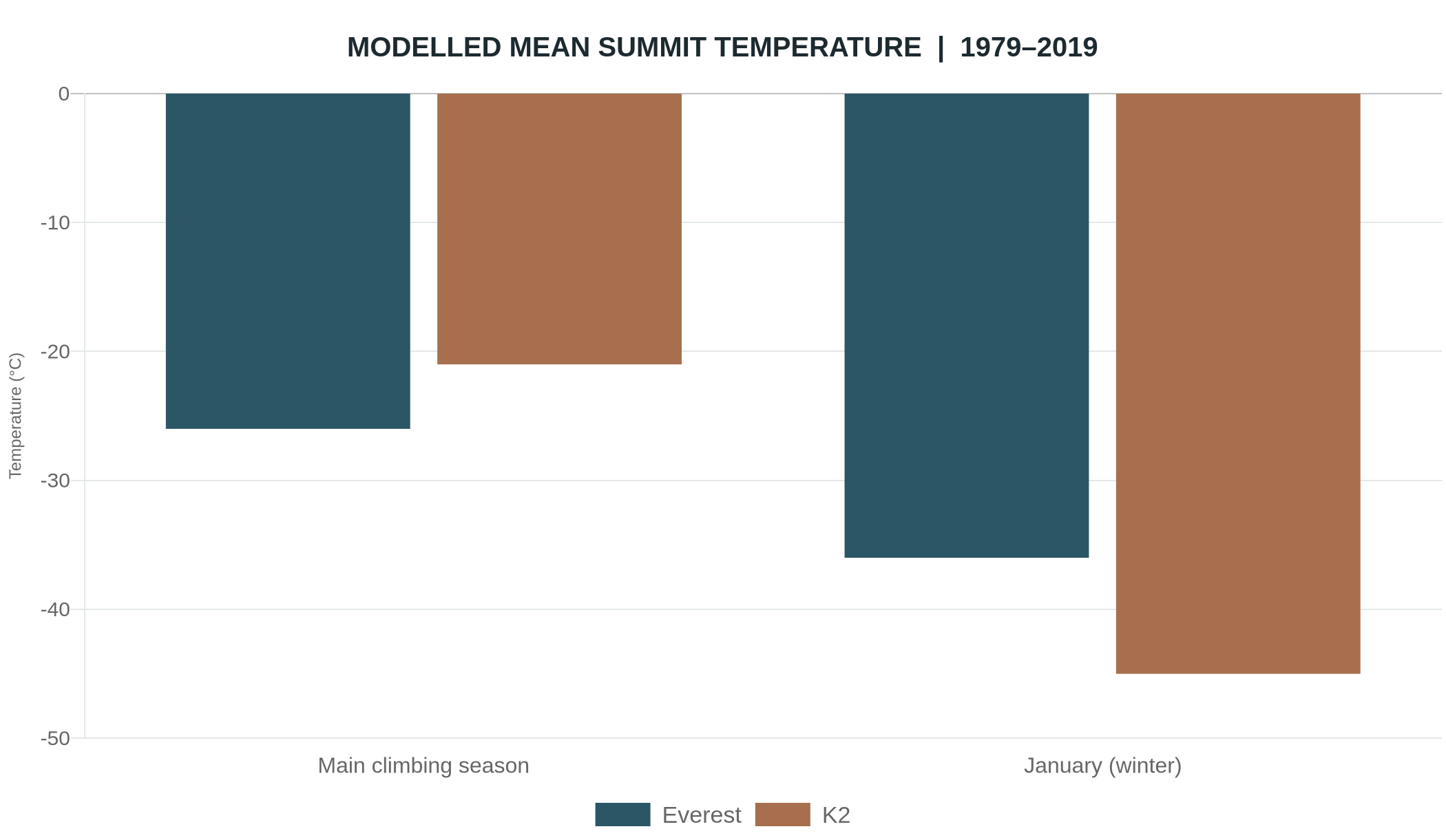
A peer-reviewed study using ERA5 reanalysis over 1979–2019 compared typical Everest climbing-season conditions in May with K2 in July. It estimated mean summit temperature at about −26°C on Everest versus −21°C on K2, and mean barometric pressure at 333 versus 347 hPa, respectively. The study’s modelling indicates that Everest’s greater height can create harsher summit oxygen and cold burdens in the principal climbing seasons, despite K2’s harder terrain.
Winter tells a different story. The same study estimated mean January temperatures at about −36°C on Everest and −45°C on K2; K2’s higher latitude contributes to exceptionally cold conditions. These are climatic averages, not conditions for a particular summit attempt. Wind, storm timing and multi-day weather windows are essential practical variables—and cannot be collapsed into “K2 always has worse weather”.
| Modelled summit climate | Everest | K2 |
|---|---|---|
| Principal climbing-season temperature | Approx. −26°C (May) | Approx. −21°C (July) |
| Principal season pressure | 333 hPa | 347 hPa |
| January temperature | Approx. −36°C | Approx. −45°C |
Source: Comparison of Environmental Conditions on Summits of Mount Everest and K2 in Climbing and Midwinter Seasons (2021). Values are modelled period means with uncertainty, not onsite readings at any particular climber’s summit.
Summits and deaths: the statistics you can—and cannot—compare
The strongest Everest historical records come from the Himalayan Database, which covers Nepal’s Himalayan expeditions and both sides of certain border peaks including Everest. It does not cover K2 in the same complete way; K2 lies in the Karakoram and requires independent Pakistan/China records, Alpine Club reports and climber verification. A neatly matched Everest–K2 chart assembled from different record keepers can look more precise than it is.
In Alan Arnette’s 2026 Everest statistical review, historical totals through December 2025 were 13,737 recorded summit ascents and 339 deaths. These are cumulative events, not numbers of unique climbers. For K2, Arnette’s 2025 season reporting documents 42 reported K2 summit ascents and two deaths during summer 2025. These annual K2 figures and Everest’s all-time figures must never be compared as if they share the same period or denominator.
- Summits: a recorded successful ascent, which may include repeat summiters and expedition support workers.
- Deaths: the count may include fatalities during approach, ascent, descent or other expedition work, depending on the source.
- Deaths ÷ successful summits: a historical ratio, not the probability that a person on an expedition will die.
- Deaths ÷ everyone climbing above base camp: an attempt/exposure-based rate, conceptually different from deaths per successful summit.
- Modern vs historic: equipment, oxygen usage, forecasting, route fixing, team size and climber selection have changed.
A 2026 peer-reviewed Everest mortality study covering climbers through 2024 reports that the overall death rate above base camp declined from 1.4% in 1921–2006 to 0.7% in 2007–2024, using its specified cohort and counting method. This Everest-specific result cannot be transferred to K2 or combined with another organisation’s deaths-per-summit ratio.
Why “one in four K2 climbers die” is not a defensible current risk statement
Older magazine articles and books often cite one fatality for roughly four K2 summits. Those statements reflected particular historical totals and typically divided deaths by successful summits, not deaths by all people who attempted the peak. More recent commercial ascents have greatly changed the cumulative denominator. We will not state this old ratio as an individual’s present-day odds. Historical figures can be discussed only with year, source and method attached; WU’s separate K2 Summit Expeditions investigation is the appropriate home for a continually updated statistical ledger.
A directly comparable historical safety study—within its own dated sample
An American Alpine Journal analysis of supplemental oxygen and descent mortality examined successful summiters from 1978–1999 on Everest and 1978–1997 on K2. In those specific historical samples, the proportion who died during descent after a confirmed summit was 3.4% on Everest and 13.4% on K2. These are post-summit descent rates among summiters, not all-expedition death probabilities or current rates. The analysis itself notes the statistical difficulties of correlated group accidents.
Why the descent matters as much as the summit
Climbers must reverse the route when tired, hypoxic and frequently short on daylight. K2’s high traverse and Bottleneck expose returning climbers to steep terrain beneath unstable ice. The American Alpine Club’s account of 2008 records 74 K2 attempts that season, 17 summit successes, and 11 climbers killed during or after the August 1 disaster around the Bottleneck. This is a historical case with specific circumstances, not a representative annual rate.
Everest’s descent is likewise unforgiving. The 2026 Everest mortality research found that most climber fatalities, as distinct from Sherpa support deaths, occurred on summit day in its recent analysis; exhaustion and impaired awareness remained prominent. A convincing comparison needs to follow the entire up-and-down journey rather than score only the summit approach.
Supplemental oxygen, support teams and ethics
More reliable oxygen systems, fixed ropes, professional weather forecasts and experienced support personnel can increase the chance of a successful ascent, but also change the character of the comparison. A no-oxygen alpine-style climb on either mountain is not equivalent to a guided ascent with oxygen and a high ratio of support staff. Statistics should separate those categories where records permit.
The guides, porters, high-altitude workers and rope-fixing teams who make a climb possible must be visible in this analysis. Sherpa workers and Pakistani high-altitude porters face their own exposures during route establishment and emergency response. The book Buried in the Sky investigates K2’s 2008 disaster through the experiences of two Sherpa climbers, providing necessary perspective beyond summit claims and foreign expedition leaders. WU’s Ali Sadpara profile offers more context on Pakistani climbing history.
What the books add beyond web comparisons
- K2: Life and Death on the World’s Most Dangerous Mountain — Ed Viesturs with David Roberts (2009). A climber’s retrospective on major K2 seasons; use for decision-making and history, not current mortality totals.
- No Shortcuts to the Top — Ed Viesturs with David Roberts. First-person comparative context for summiting eight-thousanders without oxygen.
- K2: The Savage Mountain — Charles Houston and Robert Bates (1954; later editions). First-hand 1953 expedition narrative on weather, retreat and team survival.
- K2: Triumph and Tragedy — Jim Curran (1987; later editions). An eyewitness-oriented history of the catastrophic 1986 season.
- Buried in the Sky — Amanda Padoan and Peter Zuckerman (2012). Reporting that centres high-altitude workers during K2’s 2008 disaster.
- Savage Summit — Jennifer Jordan (2005). Documented histories of pioneering women on K2.
- The Climb: Tragic Ambitions on Everest — Anatoli Boukreev and G. Weston DeWalt (1997). An eyewitness-influenced contrasting narrative of the 1996 Everest disaster.
- The Crystal Horizon — Reinhold Messner. Primary memoir context for no-oxygen and solo Everest climbing.
Books are recommended for source comparison, not claimed to have been read cover-to-cover in this research. Verify individual page references and quotations against copies before attributing detailed claims.
Expert conclusion: which mountain is the greater challenge?
Technical climbing on normal supported routes: K2. The climbing is more sustained and steep, with less forgiving passages on rock, ice and mixed terrain. Summit altitude: Everest. Its additional 237.86 metres matter physiologically and are reflected in climbing-season pressure and temperature research. Overall expedition danger: not reducible to one number. Route, date, support, oxygen, traffic, weather, worker exposure and the chosen denominator change the answer.
From a mountaineer’s perspective, a useful test is not “Which summit is prestigious?” but “Can I climb the technical terrain efficiently, turn back early, manage fixed lines safely and still descend when my body and team are depleted?” The lesson shared across expert accounts is that the summit is only half the commitment. This synthesis is WU’s interpretation of attributed expert material, not a claim of a new interview with those climbers.
Frequently asked questions
Is K2 taller than Everest?
No. Everest is 8,848.86 m and K2 is 8,611 m, a difference of 237.86 m.
Is K2 harder to climb than Everest?
Generally yes for their commonly used supported routes, because K2 has more sustained steep technical climbing. Everest can be more demanding in summit oxygen deprivation, and difficult Everest alternative routes must not be conflated with the South Col.
Is K2 more dangerous than Everest?
Historical death-to-summit ratios are higher for K2, but those ratios are not a modern per-attempt death probability. Different route choices, support, oxygen use and seasons can change the comparison.
Do climbers use fixed ropes on K2?
Yes. Modern K2 commercial expeditions frequently cooperate on fixed ropes, use high-altitude support, and may employ supplemental oxygen. That equipment does not eliminate steep terrain or serac exposure.
Which mountain is colder?
It depends on season. A 1979–2019 modelling study found lower average temperature at Everest’s summit during the principal May climbing period than at K2’s summit in July; in January, K2 was markedly colder in the study.
How this comparison was researched
WU used named first-hand climber interviews, the Himalayan Database for Everest, annual expedition reporting for K2, the American Alpine Club, and peer-reviewed environmental modelling. Numbers are attributed to the exact dates and denominators available. Expert opinions are paraphrased and explicitly attributed; no unrecorded new interview is implied. Routes and climbing conditions change annually. This article is educational and not a live safety forecast or operational climbing guide.
