YOU'RE READING · WU PRIORITY INVESTIGATION · LEGENDS / CRIME & CULTURE
Famous Thieves: What the Record Says Behind the LegendsNot every legend survives the evidence.
A source-led investigation into why certain thieves and criminal groups became famous, what the record actually establishes, and how media, memoir and popular culture changed the story—from Bonnie and Clyde and Willie Sutton to Doris Payne and the Pink Panthers.
LEGENDS · CRIME HISTORY · WU MEDIA RECORD
01 · INVESTIGATION BRIEF
How WU checked the record
WU checked official case records and court reporting first, then used contemporary journalism and later cultural material to explain how a criminal record became a public legend. The focus stays on people and groups; individual heists, art thefts and detailed biographies are covered separately so different kinds of evidence are not mixed together. Edwin H. Sutherland's classic study of the professional thief is useful here because it separates occupational criminal practice, learned methods and criminal social organisation from the much looser idea of public fame.
Why do somethieves become famous?
Fame does not reliably measure criminal skill. The people and groups remembered most often combine factors such as unusual methods, repeated offending, violence or large public impact, strong visual imagery, press coverage, mystery, personality, or a later film-and-book afterlife. Their cultural fame can outgrow the underlying record.
Which famous thieves havea well-documented record?
Bonnie and Clyde were violent fugitives whose later cultural image often softened the record of the Barrow gang. Willie Sutton became famous for robberies, disguises and repeated prison escapes. Doris Payne's record includes repeated jewel-theft convictions and guilty pleas reported in court coverage. The Pink Panthers are better understood as a transnational jewel-robbery network than a single cinematic-style gang. Art theft is a narrower neighbouring intent; detailed museum and fine-art cases belong to WU's dedicated Famous Art Thieves investigation.
What turns a criminal recordinto a legend?
Legal status, source quality, victim impact, press imagery, autobiography, film and later retelling all influence how a thief is remembered. Official records establish arrests, warrants, convictions and investigations; journalism can add chronology and context; a subject's own account may illuminate self-presentation but is not independent proof.
Case profiles, evidence synthesisand repeated mistakes
Four documented examples sit alongside the interpretive problems that recur across crime-history reporting. The aim is not to rank offenders, but to separate the surviving record from the legend built around it.
Documented offending comes before reputation
A famous name is not enough. The strongest profiles begin with dated arrests, convictions, official case records or well-sourced contemporary reporting before discussing the cultural story.
- Use legal status precisely: convicted, charged, suspected or wanted are not interchangeable.
- Keep the case date and source attached to major claims.
- Do not turn notoriety into a ranking of skill.
Fame is mistaken for criminal effectiveness
Some offenders are remembered because photographs, slogans, escapes, unusual targets or films made them memorable. That does not establish that they were the most successful, sophisticated or consequential thieves.
- Separate cultural fame from financial scale.
- Separate repeated offending from one spectacular case.
- Avoid labels such as 'greatest' unless the criterion is explicitly defined and supportable.
People, gangs and heists are flattened into one category
An individual offender, a changing criminal network and a single robbery event answer different questions. Mixing them produces false comparisons and intent overlap.
- Here, the focus is people and groups.
- Individual heist events are covered in World's Greatest Robberies.
- Museum and fine-art theft cases are covered in Famous Art Thieves.
Bonnie and Clyde: notoriety built on violence, imagery and later myth
FBI case history documents the Barrow gang as violent fugitives involved in robberies, killings and a multistate pursuit. Their enduring fame also reflects photographs, press coverage and later cultural retellings that often softened the underlying violence.
- Best-supported layer: FBI case history and contemporary law-enforcement record.
- Legend layer: the romantic outlaw image amplified by photographs, books and film.
- Evidence caution: cultural sympathy does not alter the documented violence or legal record.
Willie Sutton: disguises, escapes and a reputation larger than one robbery
FBI records describe Sutton's long robbery career, repeated prison escapes and use of disguises. His fame rests partly on those documented patterns and partly on the memorable public persona that developed around them.
- Best-supported layer: robbery history, escapes, arrest and Top Ten status in FBI records.
- Legend layer: the polished bank-robber persona and sayings later associated with him.
- Evidence caution: memorable quotations and anecdotes should not be treated as primary proof unless independently sourced.
Doris Payne: repeated jewel-theft cases with a long court record
Associated Press court reporting documents guilty pleas and later proceedings involving Doris Payne. Her public profile grew from the unusual longevity of the cases, repeated jewel-theft allegations and the way her story was retold in popular media.
- Best-supported layer: dated court outcomes and proceedings reported by established news organisations.
- Legend layer: stories about methods, personality and longevity that became part of her public image.
- Evidence caution: distinguish convictions and guilty pleas from accusations attached to other incidents.
Pink Panthers: a changing transnational network, not one fixed gang
INTERPOL has described the Pink Panthers as a transnational jewel-robbery network linked to investigations across countries. The name is useful for tracing a policing problem, but it can mislead when treated as a single stable group with fixed membership.
- Best-supported layer: international investigations, arrests and cross-border police cooperation.
- Legend layer: a cinematic image of one tightly organised master gang.
- Evidence caution: membership, scale and responsibility should be tied to specific cases and dated law-enforcement claims.
Older and transnational cases are unevenly documented
Historical records can be incomplete, later retellings may conflict, and criminal networks can change membership over time. Confidence should follow the surviving record, not the strength of the legend.
- Prefer primary or official records where available.
- Attribute disputed or retrospective claims.
- State when scale, membership, motive or proceeds remain uncertain.
Four Footprints: what survivesbeyond the crime
The Four Footprints are adapted here as an accountability check. Not every crime-history topic produces meaningful evidence in every footprint, and a missing footprint is stated rather than invented.
Identity, self-presentation and the making of a persona
- What did the subject say about themselves?
- Which parts are supported by independent records?
- Did memoir, interviews or later media reshape the persona?
A thief's public persona can become part of the legend, but self-description is evidence of presentation—not automatic proof of motive, skill or events.
Victims, violence and institutional harm stay visible
- Were people injured, threatened or killed?
- What financial or cultural loss was documented?
- What burden fell on victims, staff, police or institutions?
Crime-history storytelling can become glamorous when the human cost is omitted. The record should preserve harm alongside notoriety.
The afterlife of the story can become larger than the crime
- How did newspapers, photographs, books or films shape memory?
- Which claims appeared later rather than in contemporary records?
- Did a nickname or image become detached from the underlying case?
For famous thieves, historical memory is often one of the strongest footprints. It explains why some names remain culturally prominent long after the underlying case.
Environmental evidence is usually not material here
- Is there a documented environmental consequence tied to the case?
- Is any ecological claim directly sourced?
- Would mentioning nature add evidence or merely force the framework?
For this crime-history topic, a natural footprint is generally unsupported. WU does not invent an environmental angle simply to fill the framework.
What the record supports—and where it stops.
A concise conclusion, the evidence supporting it, and the uncertainty that remains.
The most famous thieves are not necessarily the most successful or sophisticated; notoriety is shaped by the person or group, the documented record and the story later built around it.
FBI case histories document Bonnie and Clyde's violent crime spree and Willie Sutton's robberies, disguises and escapes. INTERPOL records describe the Pink Panthers as a transnational jewel-robbery network. Contemporary Associated Press court reporting documents Doris Payne's guilty pleas and later legal proceedings. Together these sources support person- and group-specific comparison without treating fame as a measure of skill.
There is no global database ranking thieves by fame, skill or impact. Historical reporting is uneven, values and proceeds can be disputed, criminal groups change membership, and living or recently prosecuted people must be described according to verified convictions, charges or clearly attributed law-enforcement claims.
PLACE · DATE · SOURCEThe image can amplify the legend.
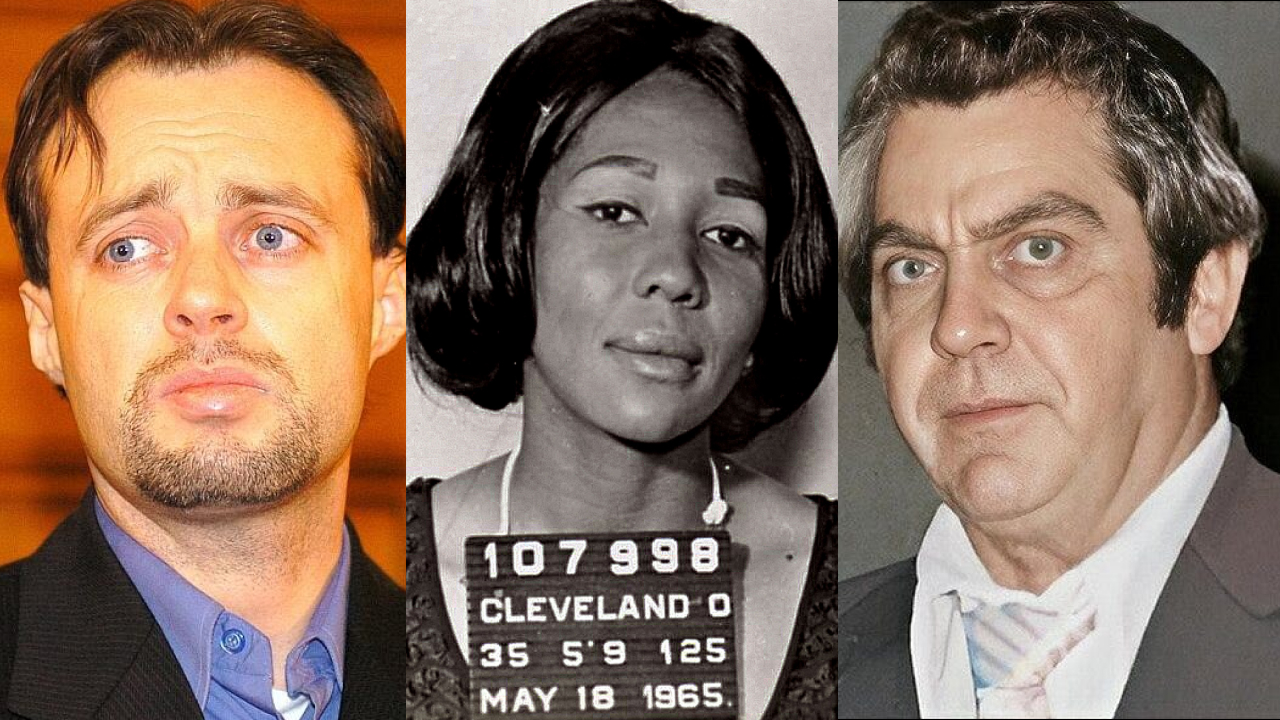
Posed photographs, wanted posters, surveillance stills and later film imagery influence how famous thieves are remembered. Visual familiarity helps explain notoriety; it does not prove unusual skill, motive or the accuracy of later mythology.
Images can help establish identity, setting and public memory. They do not by themselves prove motive, responsibility, scale or the accuracy of later retellings.

Doris Payne

Stéphane Breitwieser

Pink Panthers
EXPERT / EVIDENCE INTERPRETATION
What the record supports. And where it stops.
The conclusion here is deliberately narrower than an old-style 'greatest thieves' list: fame is a cultural and historical outcome, not a reliable measure of criminal ability. Bonnie and Clyde, Willie Sutton, Doris Payne and the Pink Panthers became famous through very different combinations of documented offending, imagery, repetition, violence, distinctive methods and later storytelling.
Author and Reader Experience Editor at WorldsUltimate. Zaib Un Nisa Khalid is a clinical psychology postgraduate, writer and editor. She reviews reader clarity, language, human context and the responsible treatment of personal experiences while contributing across travel, lifestyle and human-behaviour topics.
Specialist or editorial review is limited to what is actually checked and documented on the published article.
How the evidence should be read.
The source hierarchy matters. Official case records and court outcomes carry the most weight for legal status and chronology. Contemporary reporting is useful for proceedings and context. Memoirs, interviews, documentaries and films may explain how a legend formed, but they should not silently replace independent evidence.
Different kinds of crime history are kept separate. Here the focus stays on people and groups. Individual robbery events are covered in World's Greatest Robberies; museum and fine-art cases are covered in Famous Art Thieves and Heists; detailed biographies belong to the individual profile pages. That separation keeps different kinds of evidence from being mixed together.
Keep the investigationcorrectable.
FBI · Bonnie and Clyde ↗
Official case history documenting the Barrow gang's robberies, violence, federal pursuit and 1934 deaths.
FBI · Willie Sutton ↗
Official history of Sutton's robberies, disguises, escapes, Top Ten status and arrest.
INTERPOL · Pink Panthers ↗
Documents the Pink Panthers as a transnational jewel-robbery network and the cross-border police response.
Associated Press · Doris Payne guilty plea ↗
Associated Press court report on Payne's 2017 guilty plea to felony shoplifting and the sentence imposed.
Associated Press · Doris Payne later proceedings ↗
Associated Press reporting on later proceedings and the long-running public record surrounding Payne.
University of Chicago Press · The Professional Thief ↗
Edwin H. Sutherland's annotated sociological study distinguishes professional theft as learned, organised criminal practice with its own social structure, rather than simply a matter of notoriety.
READER SIGNAL
Did this investigation answer the question?
ADD YOUR EVIDENCE
Your record can add missing context.
Include the person, group or case, the relevant date or period, what the record shows, and a source editors can inspect. Submissions are moderated and do not automatically change the conclusion.
Audience submission · Add your evidence
Submit documented evidence
Your evidence enters a private moderation inbox. Automated spam and duplicate checks run first; a WU editor must then verify and approve it before it can appear publicly.