Arthur Barry was a prominent American jewel thief of the 1920s who became famous for burglaries targeting wealthy households in New York and the Northeast. Contemporary reporting described him as one of the era’s most notorious jewel thieves, but later retellings added a great deal of “gentleman thief” mythology. This profile separates the documented record from the legend.
Barry’s reputation rests on three well-established parts of his story: a series of high-value jewel burglaries during the Jazz Age, his 1929 escape from Auburn Prison during a violent prison uprising, and his recapture in 1932 after several years as a fugitive. Estimates of how much he stole vary sharply by source, so WU does not present one lifetime total as certain.
Who Was Arthur Barry?
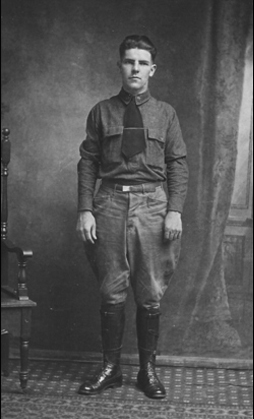
Arthur Barry operated during a period when wealthy families on Long Island, in Westchester County and in nearby Connecticut maintained large private homes and extensive jewellery collections. Contemporary newspapers linked him to burglaries at homes belonging to prominent society figures and financiers.
A 1932 Time report, published after his recapture, said authorities attributed about $2 million in jewels to his pre-1929 burglaries. A 1949 Associated Press report described police estimates ranging from $4 million to $10 million. The gap illustrates why later “total stolen” figures should be treated as estimates rather than audited fact.
Why Was Arthur Barry Called a “Gentleman Thief”?
Barry’s public image was shaped partly by reports that he was well dressed, socially comfortable around wealthy people and generally avoided violence during his burglaries. Stories circulated that he mingled at social events and later targeted homes whose layouts or valuables he had observed.
That image should not be confused with approval. “Gentleman thief” is a cultural label, not an objective criminal category. It helped turn Barry into a Jazz Age character whose manners and victims sometimes received more attention than the harm caused by burglary and theft.
The High-Society Jewel Burglaries
Historical reporting connects Barry with thefts from wealthy households including that of Wall Street speculator Jesse Livermore. Contemporary accounts also associated him with a broader wave of high-value jewel burglaries on Long Island and in wealthy New York-area communities during the 1920s.
One especially famous 1925 theft involved jewellery valued at $750,000 from the Plaza Hotel suite of Woolworth heiress Jessie Woolworth Donahue. Later writers attributed the case to Barry, although the crime was publicly described as unsolved at the time. That difference between contemporary case status and later attribution is exactly why WU treats individual “feats” cautiously.
For comparison with other people and groups whose records centre on jewellery theft, see Famous Jewel Thieves in History. For the broader historical list, see Famous Thieves in History.
Arrest, Auburn Prison and the 1929 Escape
Barry was captured in 1927 and later imprisoned at Auburn Prison in New York. On 28 July 1929, a prison uprising became the setting for a major escape. Historical accounts record that Barry was among the prisoners who got out during the violence.
The older WU article turned the escape into a step-by-step adventure story. That detail is unnecessary. What matters historically is that the escape made Barry a fugitive for roughly three years and substantially expanded his notoriety beyond jewel theft.
Recapture in 1932
Barry was recaptured in New Jersey in October 1932 while living under an assumed identity. Time reported that detectives identified him after surrounding a farmhouse near Newton, New Jersey. His capture ended the multi-year search that followed the Auburn escape.
Historical newspaper reports from the period continued to describe Barry as one of the best-known jewel thieves in the United States. That contemporary notoriety—not modern internet list-making—is the strongest reason he belongs in WU’s Famous Thieves cluster.
What Happened to Arthur Barry After Prison?
By 1949, Associated Press reporting described Barry emerging after 17 years in prison before being transferred to face additional legal proceedings. Later accounts say he eventually lived a quieter life after incarceration and did not return to the same high-profile jewel-burglary career.
The older version of this page made broad claims that Barry transformed law enforcement, became a local community leader because of his “honesty,” and personally caused changes in surveillance practice. WU has removed those statements because they were not supported by the sources reviewed.
Arthur Barry: Record vs Legend
| Claim | What the evidence supports |
|---|---|
| Barry was a major 1920s jewel thief | Strongly supported by contemporary press and later historical reporting. |
| He targeted wealthy households | Strongly supported. |
| He stole one exact lifetime total | Not secure; published estimates vary widely. |
| He was literally the “greatest” or “ultimate” thief | Subjective legend, not a factual ranking. |
| Every colourful society anecdote is proven | No. Some stories were repeated decades later and need case-specific sourcing. |
| He escaped Auburn Prison in 1929 and was recaptured in 1932 | Well documented. |
Sources and Evidence Limits
- Time · “Barry Trapped” (1932) — contemporary report on his recapture and then-current theft estimate.
- Associated Press report, 1949 — contemporary account of his post-prison transfer and differing police estimates of his lifetime haul.
- A Gentleman and a Thief library record — 2024 researched biography with bibliography and index.
Evidence limit: Barry became a heavily mythologised figure during and after his lifetime. Contemporary newspapers are useful for dates and public case history but can also repeat police estimates or colourful descriptions. Later biographies can add context, but individual anecdotes should not be treated as proven unless independently documented.

It’s posts like this that keep me coming back and checking this site regularly, thanks for the info!
well i wasnt intending comming here :o) was seeking something compleatly distinct but ended up here and glad i did 🙂 food for thought perhaps for a short article i was contemplating so will link back to here if thats ok ? and might i wish you a happy new year.
I just found a news clipping of a picture of him in a old book that my parents must have put in there and was curious of his story! Very interesting!
LOL…this is my great uncle – we called him Uncle Artie. He was a beloved character in our family. He regretted his criminal past (somewhat – because he also had an incredible life of adventure because of it…so it was bittersweet for him) and he encouraged young people to stay “clean” and not make the same mistakes he had. He spent a good deal of his life in prison and wasn’t terribly proud of that. But for all that, he was dear to his family and larger than life. He dedicated his life after prison to being a model citizen in his community in Worcester, and serving his veteran brothers in various fraternal organizations. We loved him. Thank you for a nice article.
Nell Hickey wrote a book, The Gentleman Was A Thief. I believe it was published in 1962 by Collier Books. My Mom was a young girl in the 1920’s, and she and her siblings grew up in Sussex County New Jersey; they all remembered him as a real nice man and spoke of him quite often. My efforts to obtain a copy of that book have been unsuccessful, and I’d appreciate any suggestions. Thank You.
My Mom and her siblings grew up in the 1920’s in Sussex County New Jersey. They knew Arthur Barry and often spoke of him with kindness. I’m trying to locate a book, “The Gentleman Was a Thief,” written by Nell Hickey, which details his adventures. I believe it was published in 1962 by Collier Books. If anyone can offer any suggestions, I’d be appreciative…even the ISBN.
My mother was Cousin Arthur’s first cousin. I met Cousin Arthur in 1954.
Is this true?
Yes, it’s true! Arthur Barry was a notorious jewel thief in the early 20th century, known for his daring heists. Over time, his criminal exploits became legendary, and he gained a certain “status” among both criminals and the public.