YOU'RE READING · WU PRIORITY INVESTIGATION · LEGENDS / ART CRIME
Famous Art Thieves and Heists: What Happened to the Stolen Works?The case record matters more than the criminal legend.
A case-led investigation of famous art thefts and museum heists, tracking what was stolen, who was identified, what was recovered and what remains unresolved—from the Mona Lisa and Gardner Museum to Stéphane Breitwieser and Vjeran Tomic.
ART CRIME · DOCUMENTED CASES · WU MEDIA RECORD
01 · INVESTIGATION BRIEF
Follow the stolen work, not the legend.
This investigation compares documented art-theft cases by the artwork or objects taken, the institution involved, whether an offender was identified, and what happened afterward. It does not rank thieves by supposed brilliance.
What actually happened in the most famousdocumented art thefts?
The cases differ sharply. Some stolen works were recovered, some remain missing, some offenders were convicted, and some major thefts are still unresolved. The useful comparison is the case record: what was taken, how access was gained, what investigators established, and what happened to the works afterward.
Which cases are securely documented—andwhat happened next?
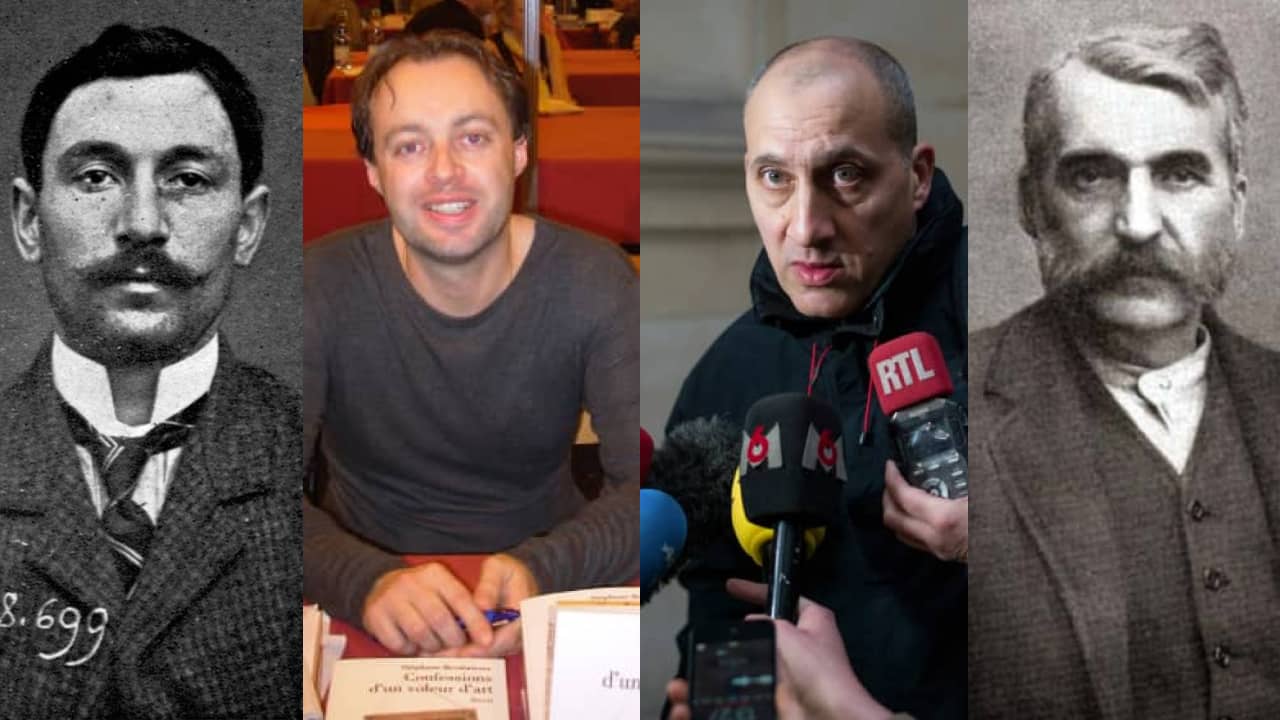
Vincenzo Peruggia stole the Mona Lisa from the Louvre in 1911; the painting was recovered after he tried to sell it in Italy more than two years later. In 1990, two men posing as police officers entered Boston's Isabella Stewart Gardner Museum and stole 13 works during an 81-minute theft that remains unsolved and the works remain missing. Stéphane Breitwieser admitted stealing hundreds of artworks and objects from European collections between the mid-1990s and 2001. Vjeran Tomic stole five major paintings from the Musée d'Art Moderne de Paris in 2010 and was convicted in 2017. In the nineteenth century, Adam Worth became associated with the 1876 theft of Gainsborough's portrait of Georgiana, Duchess of Devonshire—not The Blue Boy, as older retellings sometimes claim.
Why do recovery status andcase type matter?
A named thief, an unsolved museum burglary and a recovered painting are not the same kind of record. Separating offender identity, recovery status, institutional response and later mythology makes the cases easier to compare without turning notoriety into a score.
What the record supports—and where it stops.
A concise conclusion, the evidence supporting it, and the uncertainty that remains.
Famous art-theft cases are best understood through the status of the stolen works, the evidence identifying offenders, and the institutional record—not through rankings of criminal skill.
The Louvre, the Isabella Stewart Gardner Museum, FBI records and contemporary court reporting provide case-specific facts on dates, stolen works, known offenders, convictions, recovery and unresolved status.
This page does not attempt to value stolen art, identify unknown offenders or infer motives beyond documented statements and findings. Recovery status can change as investigations continue, and older crime reporting can contain inconsistencies.
PLACE · DATE · SOURCEThe artwork and the institution are part of the evidence.
Paintings, empty frames, surveillance records and museum documentation help establish what was taken and what remains unresolved. They should be read alongside dated case records rather than as proof of criminal sophistication.
Images can help establish identity, setting and public memory. They do not by themselves prove motive, responsibility, scale or the accuracy of later retellings.

Vincenzo Peruggia and the Mona Lisa

The Gardner Museum theft

Vjeran Tomic and five modern masterpieces
EXPERT / EVIDENCE INTERPRETATION
What the record supports. And where it stops.
These cases belong together because they are documented art-crime records, but they should not be flattened into a single ranking. Art-security literature also cautions against the polished 'master thief' stereotype: museum thefts can involve opportunism, ordinary criminal behaviour, weak institutional controls and difficult post-theft disposal as much as elaborate planning. Peruggia matters because the Mona Lisa was stolen and recovered. The Gardner Museum case matters because 13 works remain missing and the offenders have not been publicly identified. Breitwieser is notable for repeated theft across many collections, while Tomic's 2010 Paris burglary is a documented museum break-in followed by conviction. The useful question is what the record establishes about the works, the offenders and the outcome of each case.
Writer | Passionate Traveler | Chief editor of ‘Worlds Ultimate http://www.worldsultimate.net/ also CEO at www.futuristicartists.com by profession and lover of world cultures, languages, souls, food, oceans, wild spaces and urban places by nature. Share beautiful and practical stories from around the world. Visited luxurious hotels and destinations around the world including Marrakech, Mauritius, Singapore, Malaysia, USA, Greece, China and aims to inspire fellow Worlds Ultimate to pursue their dream career in travel.
Specialist or editorial review is limited to what is actually checked and documented on the published article.
Keep the investigationcorrectable.
Louvre · The theft of the Mona Lisa ↗
The Louvre records the 21 August 1911 theft, Peruggia's prior work at the museum and the painting's recovery after he tried to sell it in Italy.
Isabella Stewart Gardner Museum · The Theft ↗
Official museum account of the 1990 theft, the two men posing as police officers, the 13 stolen works and the ongoing investigation.
FBI · Isabella Stewart Gardner Museum Heist ↗
FBI case history confirming the 81-minute theft of 13 artworks and its unresolved status.
The Guardian · Stéphane Breitwieser mass art theft ↗
Contemporary report citing prosecutors after Breitwieser admitted stealing 239 art treasures from 172 museums and antique shops.
The New Yorker · Vjeran Tomic and the 2010 Paris theft ↗
Detailed account of Tomic's 2010 Musée d'Art Moderne de Paris theft and later conviction.
Smithsonian · Adam Worth and the Duchess of Devonshire ↗
Historical account linking Worth to the 1876 theft of Gainsborough's portrait of Georgiana, Duchess of Devonshire.
Anthony M. Amore & Tom Mashberg · Stealing Rembrandts ↗
Art-security and investigative reporting used here for context on museum-theft myths, offender variety, institutional vulnerabilities and the difficulty of turning famous stolen art into usable proceeds.
READER SIGNAL
Did this investigation answer the question?
ADD YOUR EVIDENCE
Your record can add missing context.
Include the person, group or case, the relevant date or period, what the record shows, and a source editors can inspect. Submissions are moderated and do not automatically change the conclusion.
Audience submission · Add your evidence
Submit documented evidence
Your evidence enters a private moderation inbox. Automated spam and duplicate checks run first; a WU editor must then verify and approve it before it can appear publicly.