The greatest robberies in history are useful to compare not because they prove criminal brilliance, but because each case exposes a different combination of planning, access, human vulnerability, institutional weakness, post-crime disposal and investigative recovery. This guide keeps the focus on documented robbery events; the people behind them are examined separately in WU’s Famous Thieves investigation.
[toc]
WU reads each case through the same sequence: what preparation is documented, how access was gained, what happened during the robbery, how offenders escaped or moved the assets, what evidence later identified them, and what changed afterward. That event-led structure keeps robbery history separate from offender biography and avoids turning notoriety into a ranking of skill.
How to Read the Greatest Robberies in History
For each case, the useful questions are consistent: Preparation — what planning is actually documented? Access — what human or institutional weakness was exploited? Event — what happened and what was taken? Escape and disposal — what became of the assets? Investigation — what evidence identified suspects or exposed the plan? Aftermath — did security, policing or public understanding change afterward? This is a reader-facing crime-script lens, not a practical guide to bypassing security.
Hatton Garden Safe Deposit Heist (2015)
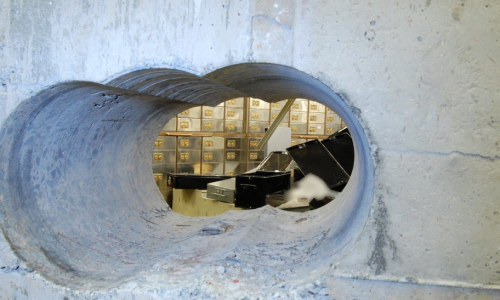
In 2015, a squad of older criminals, dubbed the “Bad Grandpas” by the press, carried out one of the most daring heists in British history. During the Easter weekend, they raided the Hatton Garden Safe Deposit Company in London, stealing up to £14 million in cash, jewelry, and gold.
Using industrial tools, they incapacitated the lift shaft, made their way down to the basement where the vault was located, and spent hours drilling through a concrete wall that was nearly two meters thick. The preparation of gang was so well, they even disable the internal alarms and took its time-over three days, to finish the job.
The security footage and mobile tracking was helpful in arresting most of them. However, the tales of older career criminals tempting fate by coming back for one last score entered crime lore.
The Banco Rio Robbery, Argentina (2006)
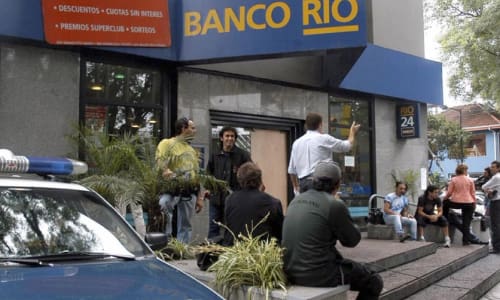
This Buenos Aires heist had it all: hostages, negotiation drama, and a twist ending, literally. In Acassuso, Argentina, on January 13, 2006, five men stormed the local Banco Río branch. Masked and armed, they seized 23 hostages and communicated with the police as they appeared to stall for time. But what unfolded was cinematic.
The thieves did not come for cash in the tills. Instead, they burrowed a tunnel from the bank’s basement to 147 private safety deposit boxes and made off with jewelry, cash, and valuables worth around $20 million.
When police entered the bank, the robbers had gone through a tunnel and into the sewers. They cause no harm to even a single hostage. It’s mastermind, Fernando Araujo, later confessed he had drawn inspiration from art and literature.
That cool, measured leadership would go on to become an Argentine urban legend. He ultimately went in captivation after the heist, but his legacy now endures in movies, books, and Netflix documentaries.
Kent Securities Depot Robbery (2006)
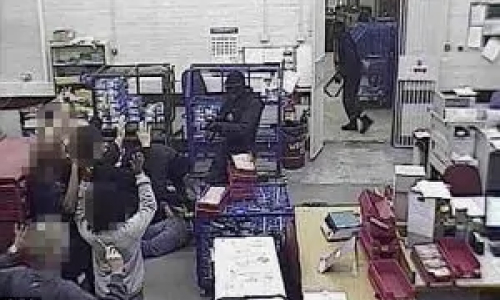
This robbery is the most significant cash hype in England. First, that heist was well-considered and planned. The robbers abducted the depot manager on the way home on 21st February. And they disguise them and shift to a seemingly police car.
The depot manager was also handcuffed and taken to an unknown farm. Simultaneously, his eight-year-old son and wife were hostage in their house. Therefore, the wife was tricked by a misstated accident and was shifted to an unknown farm. So, the depot manager was now under pressure for his family’s security and forced to cooperate, making it one of the most greatest robberies in the history.
The family was being hostage in the Securities Cash Management Ltd. Depot at Tonbridge, Kent, at 1:00 PM. The thieves rounded up all the staff at gunpoint and took about an hour to complete the loot. The alarm was raised later, and the police unbound them all. The heist contains a total of $90 million, and nothing has been recoverable yet.
Banco Central in Brazil Burglary (2005)

The classical event had an extensive adventure element built in. Therefore, Banco Central has entrusted the control of the money supply. They had accumulated a vast amount of used unsequential currency notes. These were being in division for recirculation and destruction.
The burglars planned it well. They rented a house nearby and placed a sign of ‘Landscaping Company selling Grass‘ to cover up their motives. They dug a 250-foot tunnel to a place beneath the bank.
Van loads of mud were transported, and nobody suspected anything because of their name displayed. The tunnel was 13 feet deep and had its lighting system, and has wood-lining.
Read More: The Story of Butch Cassidy and the Sundance Kid
On the weekend, between 6 and 7 August, the gang broke through a one-meter-thick steel/concrete wall to enter the bank vault. This was a messy affair as the total money weighed about 3.5 tons but the actual worth was at about $70 million.
The police arrested five persons and recovered about $5.5 million (involved in tunnel digging). The mastermind was found shot dead on 22nd October. So far, only $7 million has been recovered, while $63 million remains.
Northern Bank Robbery (2004)
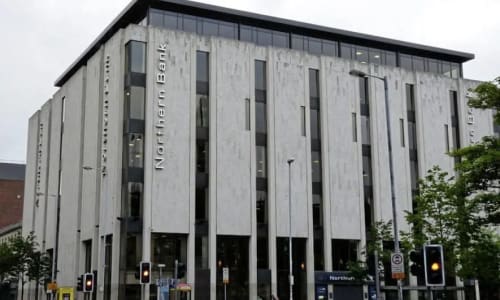
Belfast Headquarters was robbed of a considerable amount of cash on 20th December. The gang members went to the home of two bank officers disguised as police officers and held their families at gunpoint on Sunday evening.
They clearly mention and instruct the officials for cooperation to save their families. They did so and stayed busy after business hours, admitting the gang members in. So, it is one of the most greatest and dangerous robberies in history because of civilians involvement.
The bank carried huge cash for ATMs and Christmas in-store. Soon, the money was in several vehicles, including one ‘Luton‘ van. The gang left, releasing the families. The amount looted comprised 10 million pounds of uncirculated bank notes and other currencies. Reportedly, the Northern Ireland proficient group was suspectful of the heist.
The British and Irish governments developed friction over this one of British history’s biggest cash & dangerous robbery. Everything remain confusing by politics, and nothing was aware of it.
Central Bank of Iraq Robbery (2003)

Saddam Hussein reportedly robbed the Central Bank of Iraq, taking $1.00 billion in one day – just before the U.S. troops bombed Iraq in 2003. Fortunately, the amount was mostly remain safe from the walls of his palace.
The bank’s General Manager also confirmed another professional independent robbery, which amounted to $250 million and 18 billion Iraqi dinars.
Saddam Husain is also said to have paid his son Qusay $950 million through a handwritten note. So, he transferred the money by truck. This amount was unrecoverable even after U.S. troops kills Qusay while fighting. Therefore, this is the biggest heist so far.
Antwerp Diamond Heist (2003)
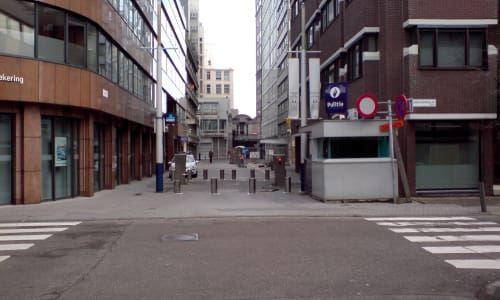
Stealing hundreds of millions of dollars’ worth of diamonds from a vault with a reputation as “the most secure diamond vault in the world,”. And that, my friends, is what Leonardo Notarbartolo and his gang managed to do in Antwerp, Belgium.
Often referred to as the “heist of the century,” this job entailed bypassing ten separate layers of security, such as motion sensors, infrared heat sensors, magnetic locks, and Doppler radar. The thieves’ haul more than $100 million in diamonds, gold, and other gems, all gone without a single alarm sounding to raise.
The Antwerp case is useful because it shows how prolonged preparation and familiarity with an institution can matter as much as hardware. Accounts of the case describe extensive casing before the burglary; WU treats those details as historical evidence about security failure, not as a measure of criminal brilliance.
Read More: The Complete Story of Bonnie Parker and Clyde Barrow’s Life
Investigative accounts describe multiple security layers being defeated without triggering the expected response. The lasting value of the case is therefore institutional: sophisticated security can still fail when attackers study routines, assumptions and weak points over time.
Although Notarbartolo was arrested subsequently, much of the loot was never seen again, adding a further twist to this internationally entangling mystery.
Dunbar Armored Robbery (1997)

The Dunbar Armored robbery in Los Angeles, California, has been the most significant cash haul in the United States – on 13th September 1997. The amount involved was about $19 million.
This proved to be an inside man’s job. Allen Pace, who worked there as a safety inspector, planned and recruited five friends for the robbery. Knowing all the security measures and how to avoid the cameras, Pace and his accomplices entered on Friday night using his keys. He knew the vault would remain open due to massive Friday money movements.
Thus, they all rushed to the locker and subdued the guards before they could raise the alarm. The U-haul was waiting, and the high-denomination notes were load in quickly. Pace knew the bags that contained the nonsequence notes. He also snatched the security camera recording devices.
The police suspected staff involvement and also watched Pace. The gang members were cautious in their spending. However, one member gave a colleague a pack of bills in its original strap wrapping and became immediately trackable by police. All the robbers were arrested, and Pace was sentenced to 24 years in jail. Only about half of the total money was recovered.
The Boston Museum Robbery (1990)
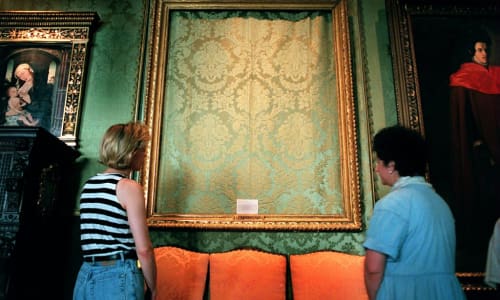
The Boston Museum was lacking of some very unusual Art Treasures in 1990. The massive loss of the world-renown, irreplaceable, and valuable paintings was at over $300 million.
Two unarmed robbers dressed as police officers managed entry into the museum at 1:00 AM, on 18th March, just after celebrations on St. Patrick’s Day. The security head couldn’t explain this late-hour entry. The door guards were immediately overpower, knock down, and handcuff in the basement. The robbers stayed for 1.5 hours collecting their booty of prized paintings.
Moreover, this included 3 Rembrandts and a Chinese Bronze Beaker. They cut away the canvas cruelly from near the frames while hanging. They stacked away “Landscape with an Obelisk” by Govaert Flinck and “The Concert” by Vermeer.
Besides these, they ripped 5 Degas sketches from the short gallery and a Manet Portrait from the Blue room. They flew away from the Bronze Eagle that adorned the Napoleon flag mast. If lives were a part of it, it would also be one of the most greatest and risky robberies in history because of their behavior.
These untidy robbers ransacked the museum wonders like Rembrandt’s only seascape, “Storm on the Galilee.” They remove the painting hastily, leaving rough canvas edges intact in the empty hanging frames at the museum. Unfortunately, the small museum was uninsured and had to bear the loss. The robbers also snatched the surveillance tape during the heist.
Knightsbridge Security Deposit Robbery (1987)
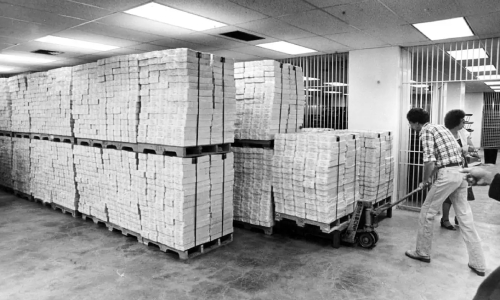
The security deposit is situated in Westminster, London. Two prospective ‘clients’ entered the Knightsbridge Safe Deposit Center on 12th July to rent a safe deposit box.
As soon as they entered the vault, they immediately subdued the manager at gunpoint along with the guards. The shrewd thieves hung a sign outside the vault saying “vault closed temporarily” and invited more of their accomplices. They broke open the safe boxes, left with an estimated hoard of over $70 million, and escaped quietly.
After some time, one guard freed himself and raised the alarm. The fingerprints led the investigators to an Italian, Valerio Vicei—the man arrested after surveillance and his several accomplices on 12th August 1987.
Brinks Mat Warehouse Burglary (1983)
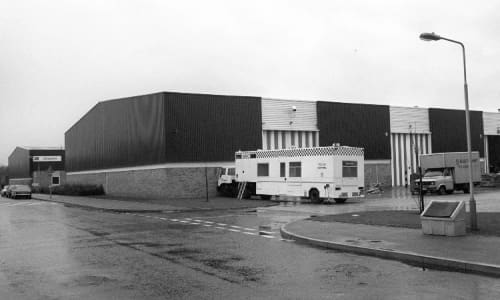
The burglary was planned at Heathrow Airport on 26 November 1983. The gang entered the warehouse with the help of security guard Anthony Black (related to the gang’s mastermind Brian Robinson).
The burglars expected 3 million pounds but landed on ten tonnes of gold bullion. They loaded the gold and fled away. One of the gangs had links with a genuine gold dealer in Bristol. So, he melted the gold to recast it for sale.
Soon, vast amounts of money passing through a Bristol bank has got in police’ attention. Meanwhile, Scotland Yard found the clue, and Black confessed to having helped the raiders.
The main culprits were sentenced to 25 years in jail, and Black got six years. In 1986, Nove was penalize to pay 70,0000 pounds in fine with 14 years in prison for conspiring and handling Brinks Mat gold. Three tons of gold were never traced that had been sold.
Lufthansa Burglary (1978)
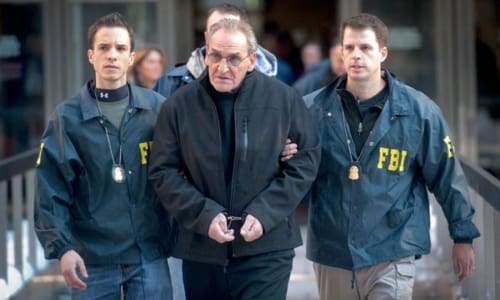
The Lufthansa burglary was pre-plan by the mastermind, Jimmy Burke, the idea generator was Martin Krugman. He had been tip off by Louis Werner, who own Martin $20,000 through gambling debt. He told him that he’s taking the money to West Germany for exchange, where they’ll store it at Kennedy Airport in a cardboard vault.
A guard noticed a van parked near the vault on 11th December at 3:00 AM. He was struck, disarmed, told to keep the alarm silent, and handcuffed. They took hold of more employees at gunpoint and rounded up all the rest at the cafeteria.
The burglars then summoned Rudi Eirich by intercom on some emergency pretext. He was the only one who knew the codes to open the double-door vault. At first sight, they surrounded him with guns and let him see the bounded employees in the cafeteria.
You Might Like to Read: Stephane Breitwieser
They hurried him downstairs to open the vault. Eirich was in shock that the burglars knew the security systems and the precautions. They did not let him open the vault’s second door until the outer door was closing to avoid the alarm.
As soon as the vault was open, they sorted the invoices to select the parcels that contained money. During loading, one burglar’s mask slipped and showed his glimpse. The robbers warn all the employees that their families would hurt if they report to the police. The alarm went on at 4:30 AM. The burglary was of worth $5 million in cash and $875000 in jewels. The whole proceedings took only one hour. No arrests were made!
The Great Train Robbery (1963)
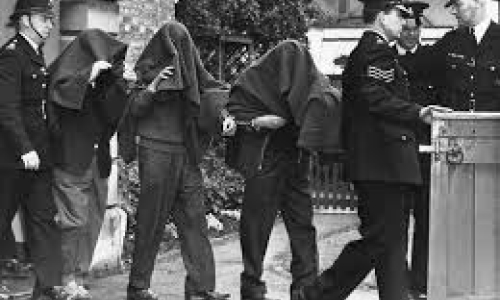
The great train robbery happen at Bridgego Railway Bridge in Buckinghamshire, England. They stop The Royal Mails’ Travelling Post Office (TPO) train by signal tampering. Bruce Reynolds led his 15-member gang. They stole 2.3 million pounds in small currency notes.
This incident was relatively peaceful as they only injure the driver on his head. This one isn’t dangerous robberies but worth millions of dollars being one of the greatest robberies of history. The police soon tracked them from their fingerprints at their hideout at Leatherslade Farm.
Thirteen robbers were caught, tried, and imprisoned. One Ronnie Biggs escaped from prison and is still at large. The last of the lot, Charlie Wilson, had settled in Canada on Rigaud Mountain in complete privacy. His wife made the mistake of calling her mother back in England; thus, Scotland Yard tracked him down.
Cryptocurrency Exchange Hacks – The New-Age Digital Robberies
Robbery is more than vaults and blueprints now. As cybercrime evolved, so did attacks on digital vaults, and cryptocurrency exchanges are now the target of choice. But as the thefts involves pre-planning, they take only seconds and typically span multiple countries.
You Might Like to Read: Art Thieves and Their Legendary Crimes
One of the biggest was in 2022, when hackers compromised the Ronin Network, the blockchain underpinning Axie Infinity, stealing over $600 million in cryptocurrency. The breach was the result of compromised private keys and inadequate decentralization – classic errors in a new world of finance.
And a second huge cyber-heist saw half a billion dollars in NEM tokens vanish overnight from Coincheck, in Japan, in 2018.
Even with high security standards, exchanges as large as Binance and Bitfinex have been the victims of multi-million-dollar breaches. These online heists represent the new frontier of “greatest robberies of history” – in which the guns are malware and the bank vaults are strings of code.
Hollywood Heists in Real Life – When Reel Meets Real
Some robberies are so cinematic, you’d swear they have a script – just they weren’t. Consider the Société Générale Paris Tunnel Robbery (1976), which inspired the French picture “Sans arme, ni haine, ni violence” (Without Weapons, Hatred or Violence).
You Might Like to Read: Jewel Thieves – Inside the World’s Most Daring Plans
Setup Ex-paratrooper Albert Spaggiari spent more than a year planning the job. His crew bored a tunnel into the vault from the sewers and spent four days inside, eating and toasting like it was a holiday. They made off with over 60 million francs ($30 million). Spaggiari escape through the judge’s window when he was in arrest and went on to live out his life in Argentina. It was so movie-ready, it turned into a film, securing its place in the legacy of great robbery films.
Research context
Jerry Clark and Ed Palattella’s A History of Heists: Bank Robbery in America is useful for understanding robberies as more than dramatic events: it connects changing offender methods with the development of bank security, policing and the modern FBI, while also examining how the “noble outlaw” image reshaped public memory. That historical lens is used here as context, not as a claim that every case follows the same pattern. Publisher record ↗
Wrap Up
Across these cases, the strongest comparison is not which offenders were the most daring. It is where plans depended on human access, predictable routines, institutional weakness or insider knowledge; what evidence later exposed the operation; and what happened to the stolen assets afterward.
The record is uneven across cases, so values, offender roles and recovery figures should be treated as case-specific claims rather than as a universal ranking of criminal skill.

lol saddam hussain, the man with most bad luck
The Greatest Robbery i ever know is the one at Bellary town karnataka India. The clock tower of this place which was in the center of the city vanished in one night n nobody knows how it happened. lol :). it was a very huge rock structure.
bellary clock tower ?/ only time will tell