Climbing pants should allow high steps, deep squats and precise foot placement without restricting your movement. For indoor bouldering, comfort, flexible knees and visible footholds are usually enough. Outdoor climbing adds abrasion, variable weather and—on roped routes—the need for a waistband and pockets that work beneath a harness.
You do not need specialist trousers for your first climbing session. Start with clothing that fits properly and lets you move freely; choose more technical fabrics or features only when your routes and conditions justify them.
Climbing pants at a glance: what suits your climbing?
| Where you climb | Main priorities | Useful clothing approach |
|---|---|---|
| Indoor bouldering | Movement, comfort, breathable fabric | Lightweight stretch trousers or durable exercise pants |
| Outdoor sport climbing | Rock abrasion, harness comfort, changing temperatures | Durable trousers with flat waistband and mobile knees |
| Trad and multi-pitch routes | Long-term comfort, harness access, wear resistance | Articulated trousers with well-placed pockets and cuffs |
| Warm-weather cragging | Airflow, sweat management, protection from rock | Lighter woven fabric; avoid excessive bulk |
| Cool or windy crags | Wind resistance and room for thermal layers | Weather-appropriate softshell or layered trousers |
What makes climbing trousers different?
Climbing movements pull fabric across the knees, hips and crotch in ways that walking rarely does. In a questionnaire study of 185 active adult rock climbers at two U.S. events, researchers found unmet needs involving trouser fit, mobility, comfort and protection. Participants identified durability and protection concerns particularly around the knees, seat and crotch. See the peer-reviewed climbing-pants study and the Auburn University thesis for the study and its findings. Because the participants were recruited at events rather than through a representative population sample, the results should not be assumed to describe every climber. A high step may strain the seat seams; a wide bridge or heel hook demands hip mobility; close footholds require a clear view of climbing shoes. A garment with a good pattern can offer more movement than one with a high elastane percentage but a restrictive cut.
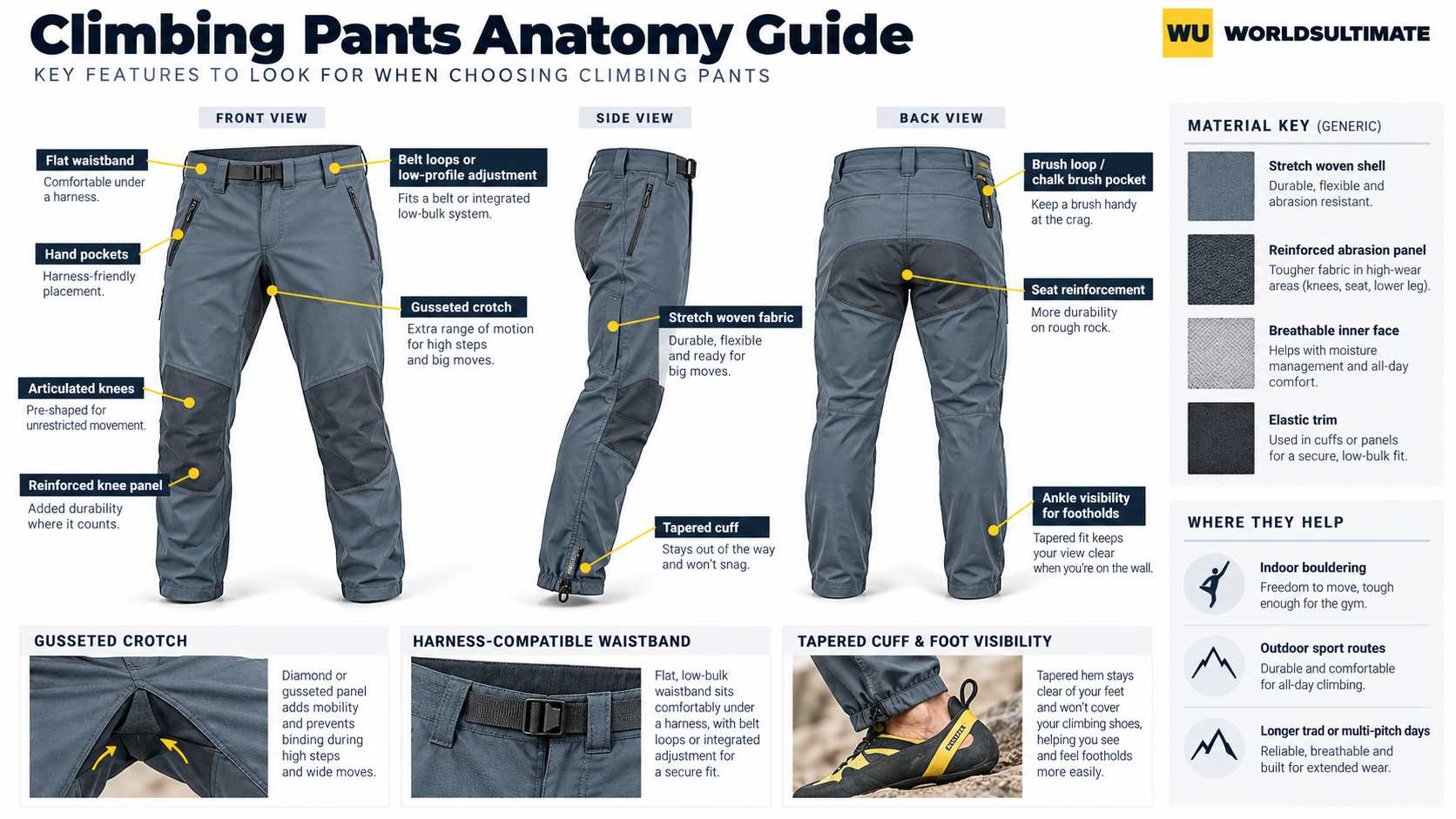
Gusseted crotch and articulated knees
A gusset is a shaped panel added to the crotch to reduce fabric tension when the legs spread or step high. Articulated knees are cut to accommodate a bent-leg position rather than forcing flat fabric to stretch around the joint. These features can improve mobility, but a properly fitting ordinary trouser may also work for easier indoor climbing.
Waistband and pockets under a harness
On roped routes, the harness waist belt sits over the top of the trousers. Thick belt loops, bulky seams or large pockets can press uncomfortably against the hips. A flat, smooth waistband is often more pleasant on long belays. Check whether pocket openings remain accessible once your harness is fitted.
Cuffs, ankle visibility and shoe contact
Loose hems can obscure the toe of your climbing shoe and make small footholds harder to see. Tapered cuffs or an adjustable drawcord can keep excess fabric out of the way. Avoid loose straps that might catch in equipment. The right inseam permits deep knee flexion without riding uncomfortably high.
Climbing pants materials: cotton, nylon, polyester and elastane
| Fabric | Potential advantages | Trade-offs |
|---|---|---|
| Cotton or cotton blend | Soft feel; often comfortable in dry gyms | Absorbs moisture and usually dries more slowly |
| Nylon / polyamide | Can combine abrasion resistance with relatively low weight | Feel and breathability depend on weave and finish |
| Polyester | Often quick drying and easy care | Some constructions hold odour; abrasion resistance varies |
| Elastane / spandex blend | Adds stretch to woven or knitted fabrics | Stretch does not guarantee seam durability |
| Softshell fabric | Often balances mobility, wind resistance and durability | Not all softshells are waterproof; warmth and weight vary |
Fabric weight and weave matter as much as fibre name. A tightly woven nylon trouser can withstand a rough approach better than a thin casual legging, but a heavier garment can feel uncomfortable in a warm gym. Examine the material in context rather than looking for one universally superior fabric.
Are climbing pants waterproof?
Most climbing pants are designed primarily for mobility and abrasion resistance, not prolonged heavy rain. A durable water-repellent finish may shed a brief shower but does not necessarily provide a waterproof barrier. Where sustained rain is likely, take appropriate protective outerwear and plan around the conditions. For mountain approaches, changing weather can matter more than a fashionable technical label.
Bouldering, sport climbing and trad climbing: different needs
Indoor bouldering
Indoor bouldering involves repeated high steps, squats, falls onto designated padded surfaces and contact with textured holds or walls. Choose breathable trousers that permit full movement and withstand regular abrasion at the knees and seat. You can often use comfortable athletic trousers already in your wardrobe.
Outdoor bouldering
Rock surfaces and uneven ground wear fabric faster than most indoor walls. Knee and seat durability matter when brushing against stone, kneeling near problems or sitting on a crash pad. Consider weather changes and the amount of walking needed to reach the boulders. Trousers should not prevent you from seeing and positioning your feet.
Sport climbing with a rope and harness
The harness introduces pressure points and can block pockets. Test your trousers while wearing the harness, particularly when sitting back in it or lifting a foot high. A relaxed waist may be comfortable without a harness but bunch badly beneath one. Our climbing gear guide covers the wider equipment used for roped climbing.
Trad and multi-pitch climbing
Long routes can mean hours in a harness, repeated scraping against stone and changing temperatures between sun and shade. More durable fabric, useful pocket placement and space for a thermal layer may justify a specialised pair. No clothing choice replaces suitable climbing protection, competent belaying and route planning.
What clothing researchers found about climbers’ fit
D. Michaelson, K. P. Teel and V. Chattaraman studied climbers’ functional needs in trousers, examining fit, movement, comfort, protection and durability. Their published research found that participants wanted clothing that accommodated climbing techniques and equipment without obstructing movement.
This is apparel-research evidence rather than a statement from a climbing coach. It reinforces the practical fit tests above—high steps, deep squats, foot visibility and waistband comfort under a harness—without claiming that one garment or design works for every climber.
How climbing pants should fit
The waistband should stay in place without pinching, and the fabric should move freely across your thighs, seat and knees. A slim silhouette can work if the cut is articulated; a loose fit can work if the extra fabric does not catch or obscure footholds. The test is movement, not the label on the size chart.
A five-movement fitting test
- High step: raise one foot onto a stable step or bench; the crotch and seat should not pull tightly.
- Deep squat: crouch fully to test knee articulation and whether the waistband slips.
- Wide stance: move your legs apart and rotate your hips to assess seam strain.
- Foot visibility: stand in climbing shoes and check the cuffs do not hide the toe edges.
- Harness check: if you climb on a rope, wear your harness and test pocket access and waist comfort.
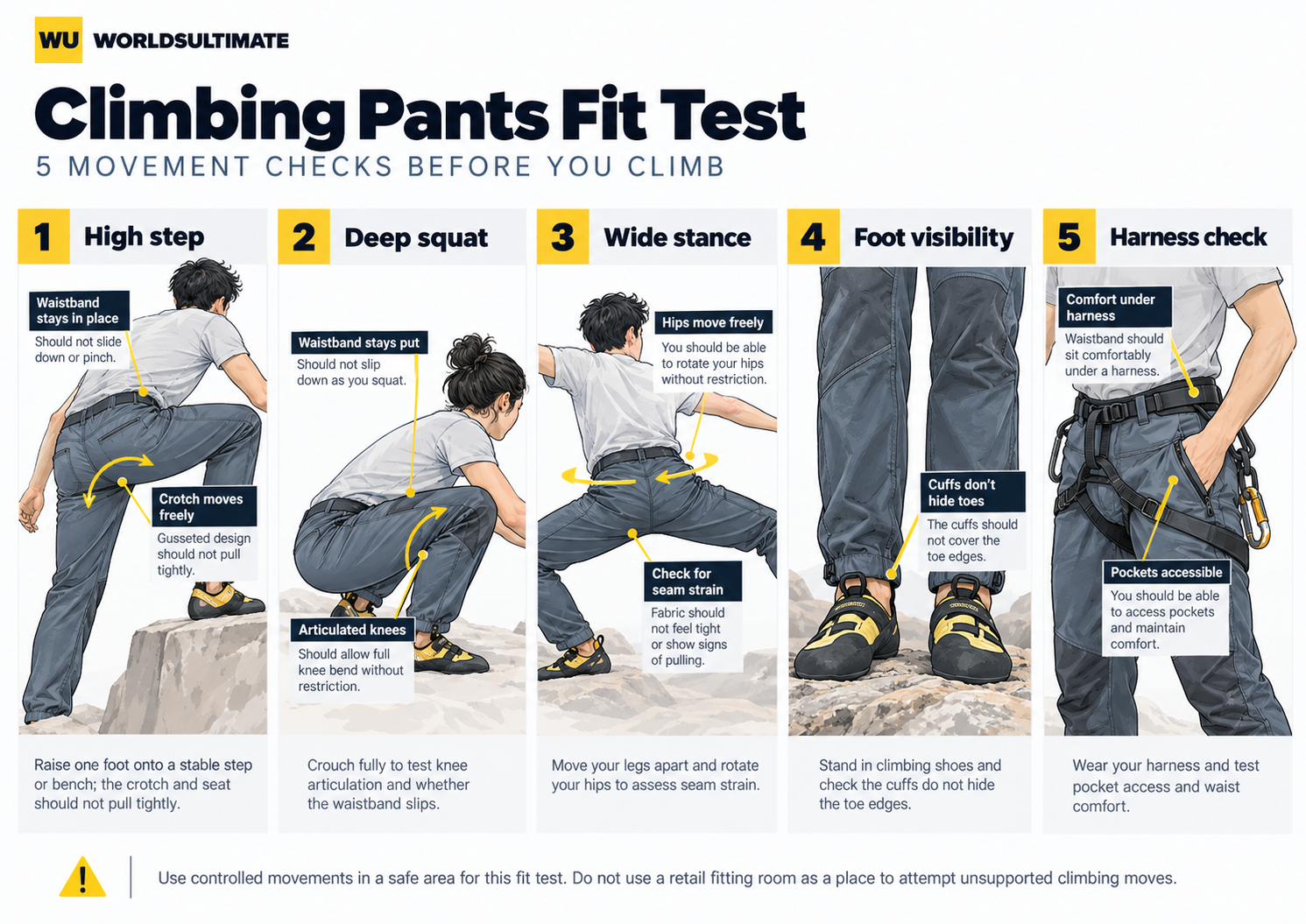
Use controlled movements in a safe area for this fit test. Do not use a retail fitting room as a place to attempt unsupported climbing moves.
Climbing pants versus hiking pants, joggers and leggings
Hiking trousers can be suitable when their cut allows climbing movements and the material tolerates rubbing against rock. Joggers often feel comfortable indoors but may have cuffs or pockets that interfere with shoes and harnesses. Leggings can provide unrestricted movement, although some thin knitted fabrics abrade quickly on rough rock. Stretch jeans may also work for casual sessions, while rigid denim can restrict high steps.
The distinction is functional rather than categorical. Before replacing everyday clothing, ask whether it actually limits movement or wears too quickly during the climbing you do.
Fit considerations for different bodies and ages
Women’s, men’s and unisex ranges can differ in rise, hip shape, thigh volume and inseam options. Choose based on actual dimensions and movement rather than assuming a category will fit. For younger climbers, avoid hems that trail under climbing shoes and waistbands that shift during movement. Size for the current wearer; excessive room is not automatically helpful.
Layering for cool and hot conditions
Warm indoor gyms usually favour lightweight, breathable material. On cold crags, a thin moisture-managing base layer under roomier trousers can improve comfort when stationary. For windier approaches, a softshell may offer more protection than cotton joggers. Bring additional weather protection where rain is forecast.
Overdressing can lead to damp, uncomfortable clothing once you start moving; underdressing can leave you cold during long belays. Adjust the system for the day instead of treating one pair of pants as perfect for every location.
Durability, care and repair
Inspect the knees, seat, crotch seams and hems after repeated contact with rock. These high-wear areas are especially relevant because climbers in the published apparel study reported limited protection and durability around the knees, seat and crotch. Small tears in otherwise sound fabric can often be repaired, following the care instructions for the material. Clean chalk and grit from closures, and avoid harsh laundering that damages stretch components or water-repellent treatments.
Replace a garment when it repeatedly restricts movement, interferes with a harness or develops damage that cannot be repaired reliably. Clothing used for climbing is not a substitute for certified safety equipment.
Common mistakes when choosing climbing pants
- Buying by size label without testing high steps and deep knee bends.
- Focusing on stretch percentage while ignoring seam placement and crotch construction.
- Choosing bulky pockets or waistbands that become uncomfortable under a harness.
- Ignoring cuff length and losing clear sight of climbing shoes.
- Assuming a water-repellent finish makes trousers waterproof.
- Buying heavy protective fabric for a warm indoor gym when simpler clothing would be more comfortable.
Frequently asked questions
Do beginners need special climbing pants?
No. Most beginners can start with comfortable, durable clothing that permits unrestricted movement. More specialised trousers become useful when particular routes, weather or harness use expose limitations.
Can you rock climb in jeans?
You can, provided the jeans allow full mobility. Rigid denim often restricts deep moves, while stretch denim can work for easier indoor sessions. Check the waistband under a harness if rope climbing.
Are leggings good for bouldering?
They can work well for movement and comfort, especially indoors. Thin fabrics may wear rapidly on rough outdoor rock, and some climbers prefer more coverage at the knees.
Should climbing pants be tight or loose?
Neither extreme is necessary. They should permit deep leg movement without pulling across the crotch, and cuffs should not obscure the climbing shoes. Cut and fabric determine comfort more than a slim or relaxed label.
Do climbing pants need reinforced knees?
Not always. Reinforcement may help on abrasive outdoor routes, but can add weight and stiffness. Many indoor climbers are comfortable without it.
Can you use the same pants for hiking and climbing?
Yes, when the fit accommodates climbing movements and the fabric suits the terrain. Assess high steps, hip mobility and harness compatibility before relying on them for long routes.
Related climbing guides
For a wider introduction to equipment, see our climbing gear guide. Our rock climbing beginner’s guide article explains how indoor bouldering, sport climbing and traditional climbing differ.