The most memorable Fast & Furious cars are the 1970 Dodge Charger R/T, orange Toyota Supra Mk IV, Brian’s Nissan Skyline GT-R R34 and Han’s VeilSide Mazda RX-7. But the franchise also introduced audiences to many other Japanese tuners, American muscle cars and film-only stunt builds. This guide identifies 25 standout cars across the films from 2001 through Fast X (2023), naming the character and screen context instead of passing fictional stunt specifications off as real road-test figures.
The series has used a mix of production cars, extensively modified hero vehicles and purpose-built stunt doubles. The same model can appear with different engines, suspensions or safety equipment depending on the scene, so a movie car’s performance is not always the same as its road-going counterpart.
Fast and Furious cars by movie
| Film | Featured cars in this guide |
|---|---|
| The Fast and the Furious (2001) | 1970 Dodge Charger R/T; Toyota Supra Mk IV (A80); Mitsubishi Eclipse (second generation) |
| 2 Fast 2 Furious (2003) | Nissan Skyline GT-R R34; Mitsubishi Lancer Evolution VII; Honda S2000 |
| Tokyo Drift (2006) — brief highlights | Mazda RX-7 with VeilSide Fortune kit; Nissan 350Z; Nissan Silvia S15 ‘Mona Lisa’ |
| Fast & Furious (2009) and Fast Five (2011) | 1987 Buick Grand National / GNX-styled car; 1970 Chevrolet Chevelle SS; Dodge Charger SRT8 police sedans |
| Fast & Furious 6 (2013) and Furious 7 (2015) | 1969 Dodge Charger Daytona-inspired build; Ford Escort Mk I RS1600; W Motors Lykan HyperSport |
| The Fate of the Furious (2017) and F9 (2021) | Dodge ‘Ice Charger’; Mid-engine 1968 Dodge Charger; Rocket-powered Pontiac Fiero |
| Fast X (2023) | Alfa Romeo 2000 GT Veloce; Classic Chevrolet Impala |
The Fast and the Furious (2001)
1. 1970 Dodge Charger R/T
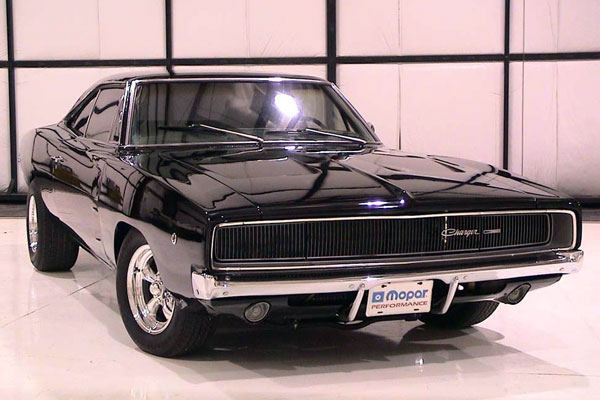
Character / association: Dominic Toretto. Dom’s black muscle car is the franchise’s defining American V8, especially in the climactic race against Brian. Its fictional horsepower dialogue must not be mistaken for a verified output for every production stunt vehicle.
The Charger is a front-engine, rear-wheel-drive muscle car. Its big-block era also features in our classic muscle-car history. The movie presents an enormous supercharged engine and dramatic wheelstands, but production 1970 Charger R/T buyers could choose factory big-block V8 configurations, including the 440-cubic-inch engine. The raised blower and screen sound do not establish an authentic factory specification.
Specifications and value: Factory-era engine: 440 cu in (7.2 L) V8 among R/T options; 426 Hemi optional. Layout: front V8, rear-wheel drive. Value: matching-number R/T and Hemi examples are valued very differently; an auction result must identify provenance.
2. Toyota Supra Mk IV (A80)
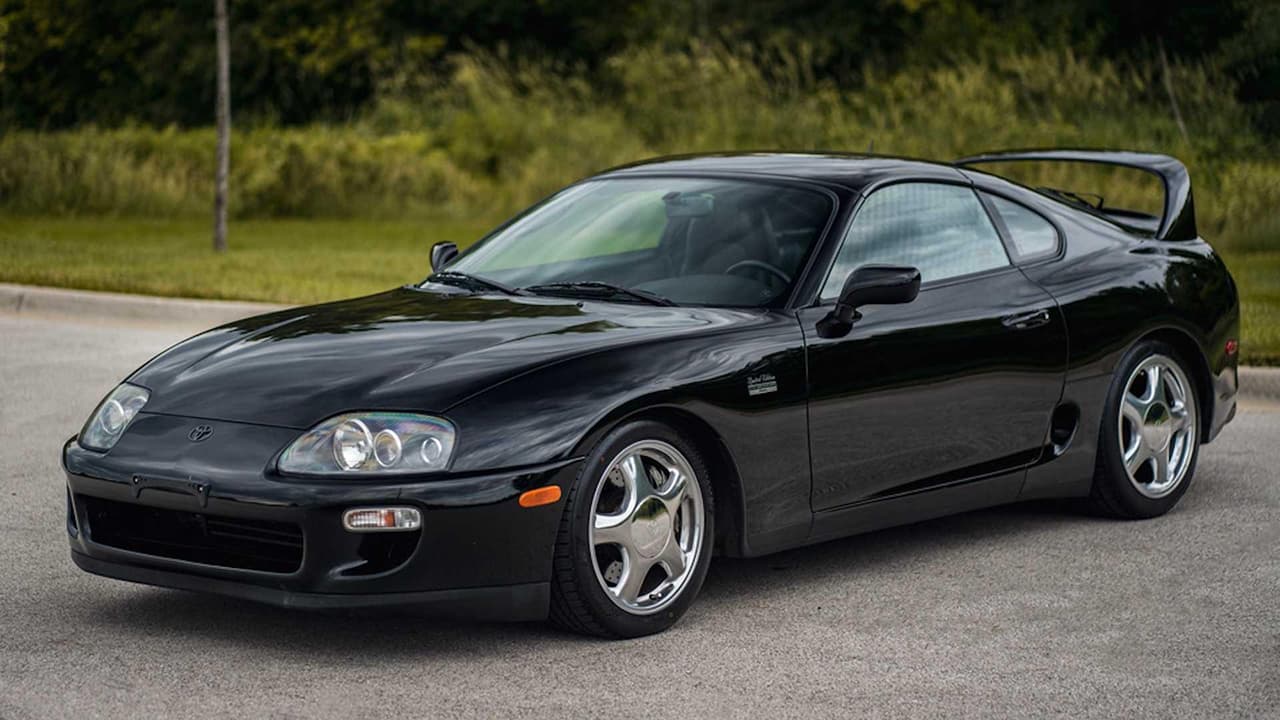
Character / association: Brian O’Conner. The orange Supra is rebuilt in Dom’s garage and becomes Brian’s signature first-film machine. Film cars and stock road cars differ in equipment, so do not treat every racing scene as an independent road test.
The fourth-generation Supra Turbo (A80) used Toyota’s twin-turbocharged 3.0-litre 2JZ-GTE inline-six and rear-wheel drive. Its stout iron-block engine made the real car attractive to tuners, but Brian’s orange bodywork, wheels and movie modifications should not be confused with the standard Toyota brochure.
Specifications and value: Production reference: 2JZ-GTE inline-six, twin turbos, rear-wheel drive; US-market Turbo rated 320 hp. Prices: original MSRP is a historical reference, while modern A80 Turbo and documented movie-car transactions vary sharply.
3. Mitsubishi Eclipse (second generation)
Character / association: Brian O’Conner. Brian’s bright green tuner car introduces the film’s body-kit and neon aesthetic. Its on-screen mechanical specification is not the same thing as the factory specification of every Eclipse trim.
The second-generation Eclipse offered front-wheel-drive and all-wheel-drive configurations depending on trim; the turbocharged GS-T/GSX used Mitsubishi’s 2.0-litre 4G63. Brian’s vividly painted coupe was a modified film build, not a factory green limited edition.
Specifications and value: Production reference: 2.0-litre turbo four on GS-T/GSX trims; drivetrain depends on trim. Value: ordinary Eclipse prices cannot be used to price a documented screen-used example.
4. Mazda RX-7 FD
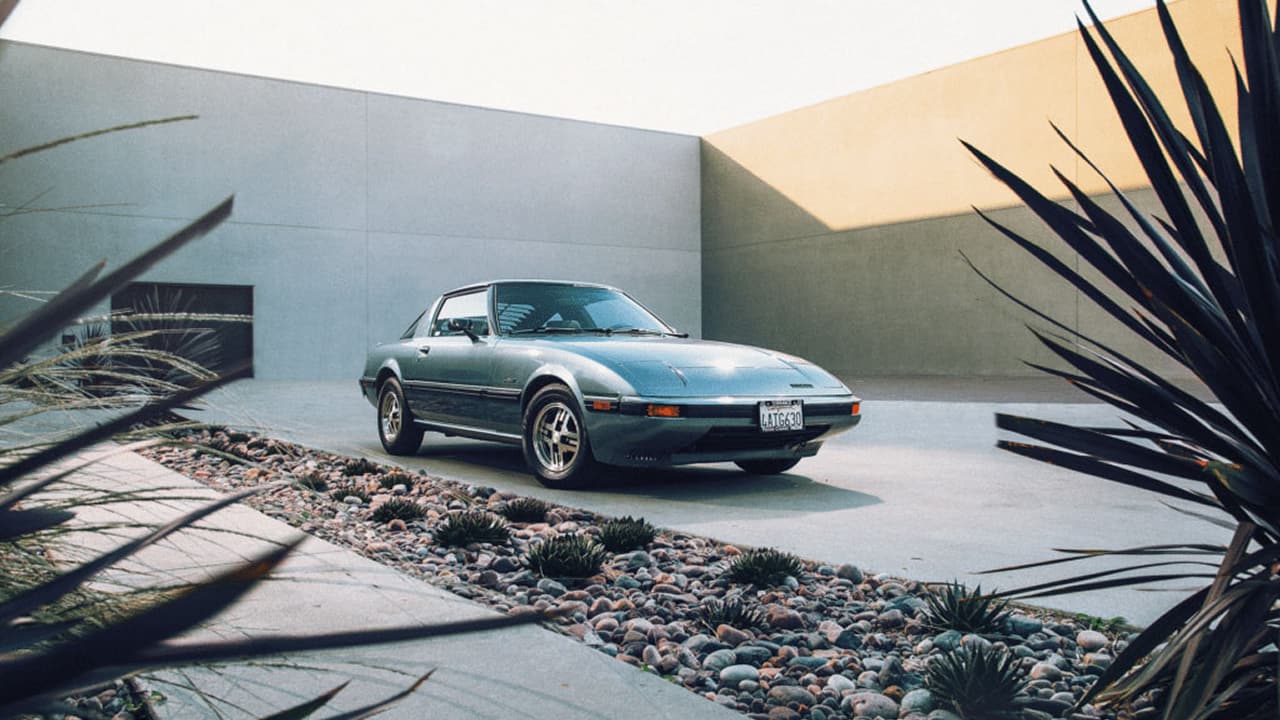
Character / association: Dominic Toretto. Dom’s red rotary-powered RX-7 appears in the opening street-race setting, distinct from Han’s later VeilSide-modified RX-7 in Tokyo Drift.
The FD-generation RX-7 used a twin-rotor 13B-REW rotary engine, sequential twin turbochargers and rear-wheel drive. In US specification, the 1993 car was rated at 255 hp. Dom’s red RX-7 and Han’s orange VeilSide build are different franchise cars and should not share captions or model-year claims.
Specifications and value: Production reference: 1.3-litre nominal twin-rotor rotary, rear-wheel drive. Values depend on originality, corrosion, engine rebuild history and documentation of any film connection.
5. Honda Civic EJ1 coupés
Character / association: Dom’s crew. The black Civic coupés are closely associated with the nighttime truck-heist scenes. They represent the early franchise’s emphasis on accessible tuner platforms.
The black Civic coupés are based on Honda’s fifth-generation compact platform, a lightweight front-wheel-drive design with small four-cylinder engines. Their cargo-truck heist role is film fiction: factory Civics did not possess extraordinary getaway-car acceleration without modification.
Specifications and value: Production reference: transverse inline-four, front-wheel drive. In this film, styling and formation driving matter more than a claimed universal engine output; authentic stunt-car identification requires production records.
2 Fast 2 Furious (2003)
6. Nissan Skyline GT-R R34
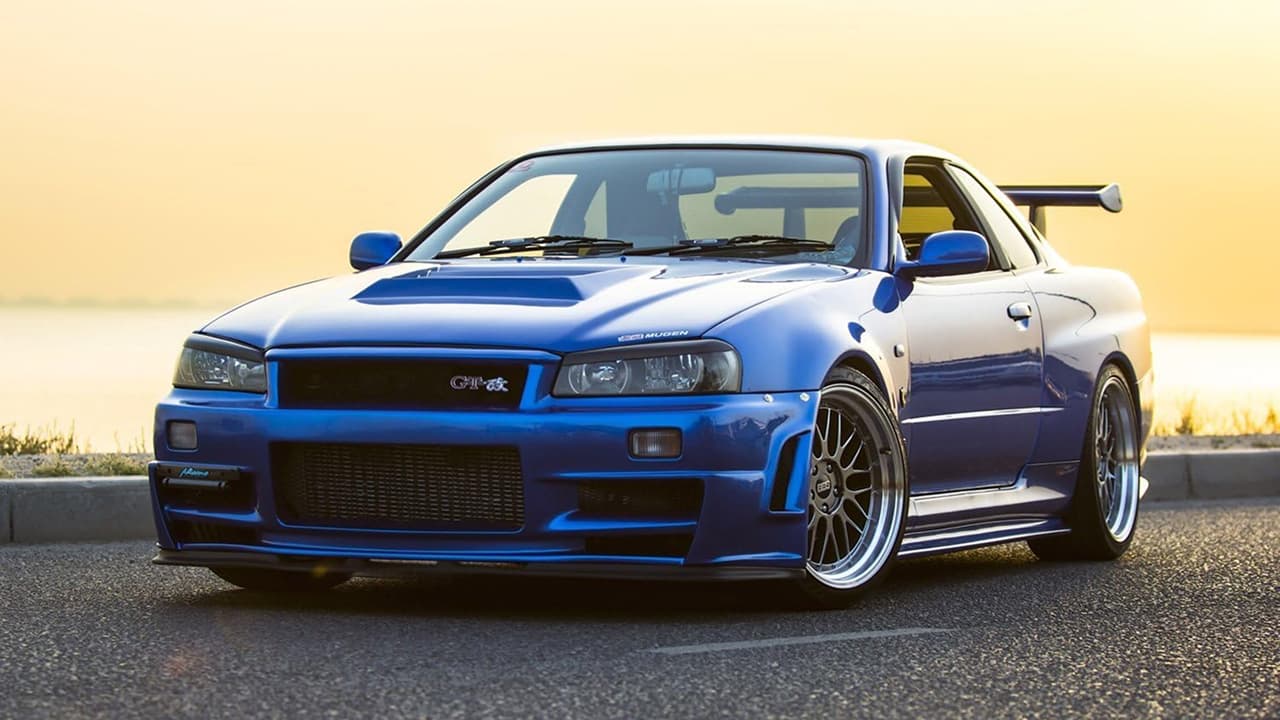
Character / association: Brian O’Conner. Brian’s silver-and-blue R34 anchors the opening Miami race. MotorTrend’s test of actual production vehicles explains why movie-specific drivetrain changes and performance numbers matter.
The production R34 GT-R used the 2.6-litre twin-turbo RB26DETT six-cylinder, a six-speed manual and ATTESA all-wheel drive. Remarkably, the movie’s R34 had its front driveshaft removed for more dramatic rear-wheel-drive shots, as documented in a contemporary test of the screen car.
Specifications and value: Production reference: RB26DETT, factory quoted 280 PS under Japan’s period rating convention. MotorTrend recorded 0–60 mph in 6.0 seconds for its tested film example, not for all stock R34 GT-Rs. R34 pricing varies by market, variant and import status.
7. Mitsubishi Lancer Evolution VII
Character / association: Brian O’Conner. A brightly painted Evo VII becomes Brian’s official undercover vehicle and exemplifies rally-derived performance adapted for the street-racing aesthetic.
The real Evo VII combined a turbocharged 2.0-litre 4G63 four-cylinder engine with all-wheel drive and rally-derived hardware. The 2003 film car was a visually modified production sedan, still mechanically stock according to contemporary testing; it was not an Evo IX.
Specifications and value: Production reference: turbo 2.0-litre inline-four, all-wheel drive, five-speed manual on the tested film vehicle. MotorTrend recorded 0–60 mph in 7.3 seconds for its heavily used screen car, considerably slower than an ideal stock example.
8. Honda S2000
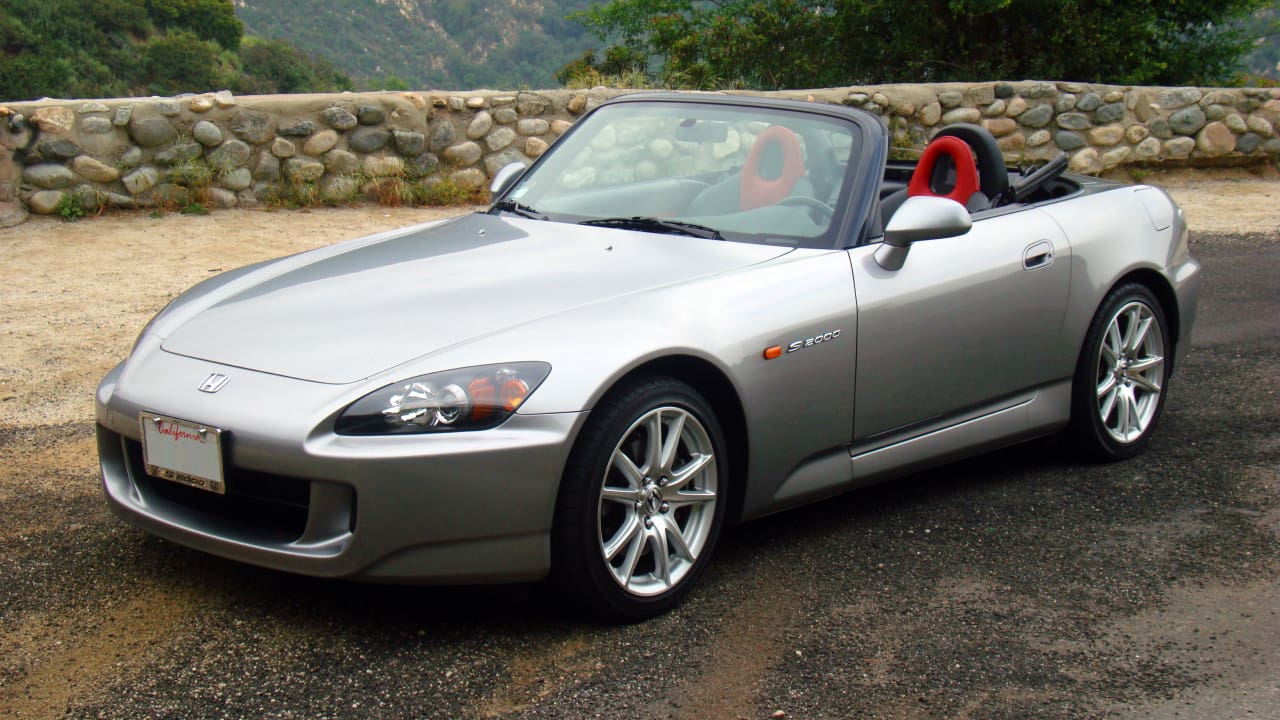
Character / association: Suki. Suki’s pink convertible features prominently in the bridge-jump race and remains one of the sequel’s most recognisable custom cars.
Honda’s S2000 was a lightweight, rear-wheel-drive roadster, originally powered by the high-revving 2.0-litre F20C four-cylinder. Suki’s pink car wore custom graphics, cabin trim and an aftermarket supercharger; that powertrain is not a factory S2000 specification.
Specifications and value: Production reference: F20C 2.0-litre naturally aspirated four, six-speed manual, rear-wheel drive. The tested film S2000 had a Paxton/Comptech supercharger, and MotorTrend measured 0–60 mph in 5.7 seconds. Collector price depends on condition and the specific model year.
9. 1969 Yenko Camaro replica
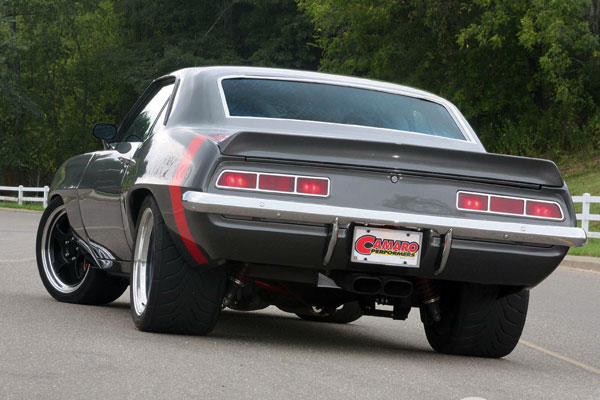
Character / association: Brian O’Conner and Roman Pearce. The Chevrolet is acquired through a wager and used in the finale’s boat jump. Reporting on the production identifies the film vehicle as a replica, not an original rare Yenko specimen.
A genuine 1969 Yenko Camaro is an exceptionally rare dealer-tuned Chevrolet; the filmed lookalike was a replica. The tested hero-style car used a 427-cubic-inch big-block V8 and a four-speed manual, but other stunt doubles used less valuable engines and automatic transmissions.
Specifications and value: Tested film-car specification: 427 cu in (7.0 L) V8, rear-wheel drive; MotorTrend measured a 13.7-second quarter-mile. A reproduction Camaro must never be priced as an original Yenko without supporting documentation.
Tokyo Drift (2006) — brief highlights
10. Mazda RX-7 with VeilSide Fortune kit
Character / association: Han. The orange-and-black RX-7 is the standout drift build. The body kit radically alters the FD’s appearance; the detailed model and screen history belongs on our Tokyo Drift child page.
Han’s car begins with Mazda’s rear-wheel-drive FD RX-7 chassis, but the dramatic VeilSide Fortune widebody kit transforms the silhouette. Although it carries the famous orange-and-black livery, visual resemblance alone does not authenticate a particular car as film-used.
Specifications and value: Underlying platform: FD RX-7, twin-rotor 13B-series turbo architecture. A factory RX-7, a VeilSide conversion and a documented movie vehicle have different costs and collector markets.
11. Nissan 350Z
Character / association: Takashi (D.K.). The dark, graphics-covered 350Z is D.K.’s rival car, closely associated with drift racing in the parking structures.
D.K.’s Nissan 350Z (Z33) was built around a naturally aspirated VQ-series 3.5-litre V6, a front-mid-engine layout and rear-wheel drive. Dark bodywork and graphics distinguish the on-screen drift car, while its sideways action depends on suspension, tyres, driver skill and filming conditions.
Specifications and value: Production reference: VQ35DE 3.5-litre V6 for early Z33 years, with later engine revisions across the model run. A modified film 350Z is not representative of a stock car’s resale value.
12. Nissan Silvia S15 ‘Mona Lisa’
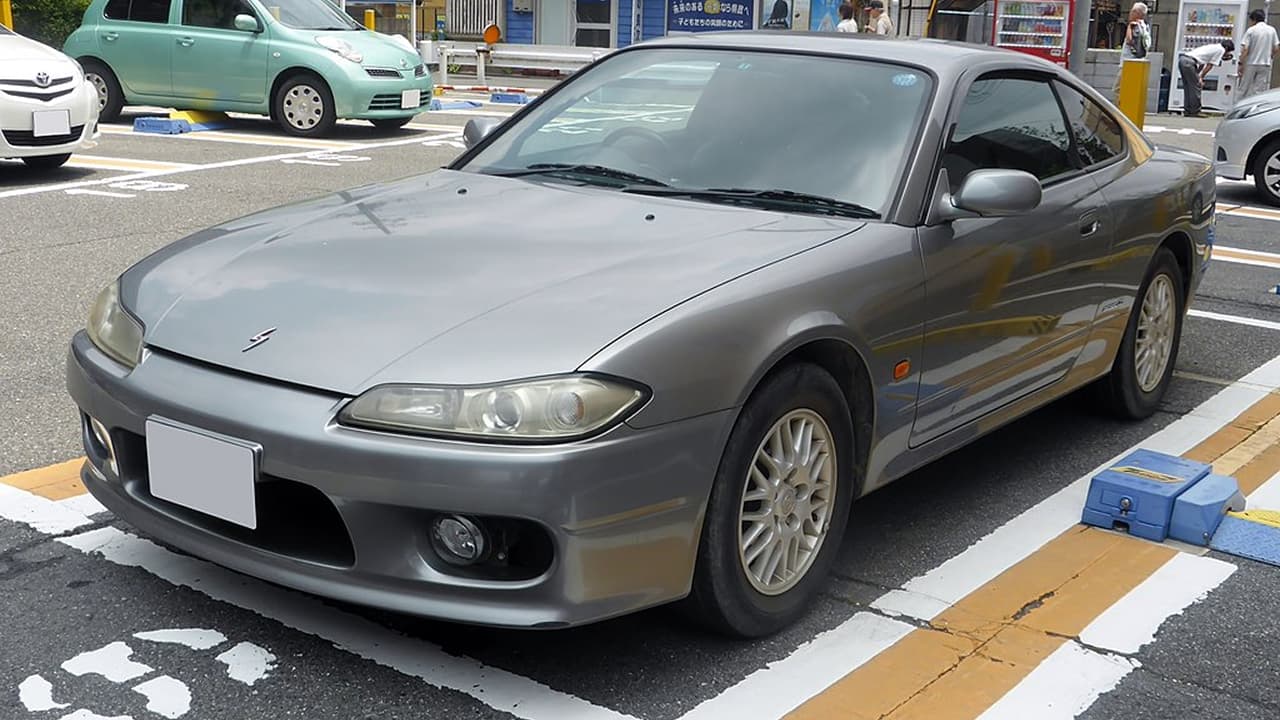
Character / association: Han and Sean. Sean damages the borrowed S15 during an early drift attempt. The car is a distinct film build, not simply any factory Silvia S15.
The Silvia S15 is a rear-wheel-drive Japanese sports coupe. The desirable Spec-R version used the turbocharged SR20DET two-litre four-cylinder and six-speed manual. Its role as a borrowed drift car in Tokyo Drift explains the ‘Mona Lisa’ nickname rather than any factory Nissan model designation.
Specifications and value: Production reference: SR20DET 2.0-litre turbo four on Spec-R; lower-performance naturally aspirated variants also existed. Market prices differ by trim, legality, originality and drift damage.
13. 1967 Ford Mustang fastback with RB26 swap
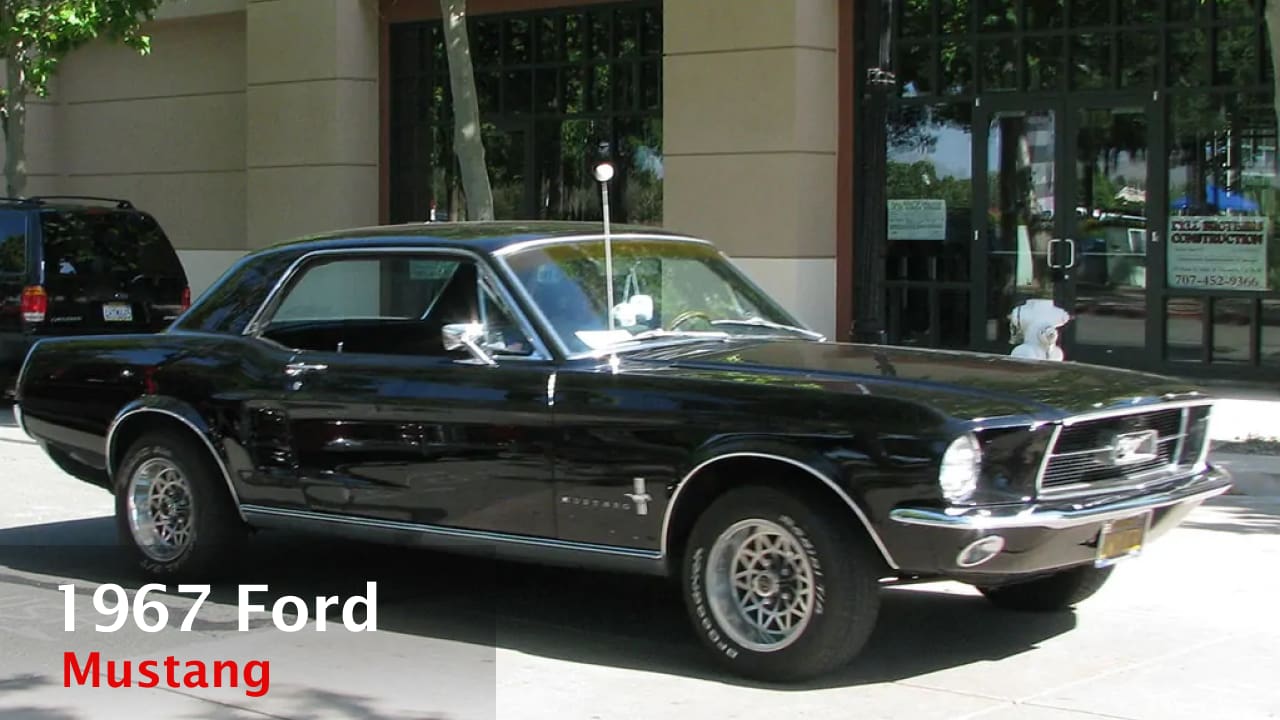
Character / association: Sean Boswell. The finale’s Mustang combines American bodywork with Nissan Skyline-derived six-cylinder power. The swap is central to the film, not a specification of a factory 1967 Mustang.
The screen Mustang wears the silhouette of a 1967 American fastback, but it is famous for an unusual Nissan RB26 engine conversion tied to the story. The original Mustang never left Ford’s factory with a Skyline GT-R engine; restored stock Mustangs and engineered swaps are separate collector categories.
Specifications and value: Underlying chassis: 1967 Ford Mustang fastback, rear-wheel drive. Film build: Nissan RB26-derived straight-six conversion. Pricing depends on authenticity, engine workmanship, body condition and provenance.
Han’s RX-7, D.K.’s 350Z and Sean’s Mustang are explored in greater detail in Tokyo Drift Cars.
Fast & Furious (2009) and Fast Five (2011)
14. 1987 Buick Grand National / GNX-styled car
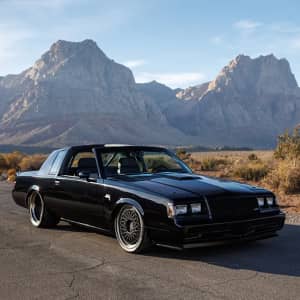
Character / association: Dominic Toretto. Dom’s opening fuel-tanker sequence uses a turbo Buick appearance; stunt cars were not all genuine limited-production GNX examples.
Buick’s Grand National used a turbocharged 3.8-litre V6 rather than a conventional V8. The limited GNX was a distinct and more valuable 1987 specification; applying the ‘GNX’ label to every black movie Buick is misleading when film doubles may be ordinary Grand Nationals.
Specifications and value: Production reference: 3.8-litre turbo V6, rear-wheel drive. Verified GNX identification and a documented movie provenance can materially change price.
15. 1970 Chevrolet Chevelle SS
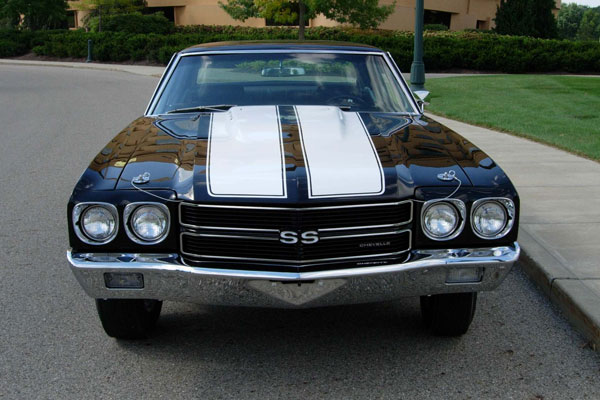
Character / association: Dominic Toretto. Dom’s older Chevrolet muscle car reinforces his character’s connection to classic American performance.
The 1970 Chevelle SS is associated with Chevrolet’s traditional American big-block muscle era. The 454-cubic-inch engine option is especially famous, but it should not be inferred from a brief exterior movie shot without build evidence.
Specifications and value: Production reference: optional 454 cu in (7.4 L) V8; rear-wheel drive. Correct identification requires build documentation because restored SS clones and factory examples command different collector prices.
16. Dodge Charger SRT8 police sedans
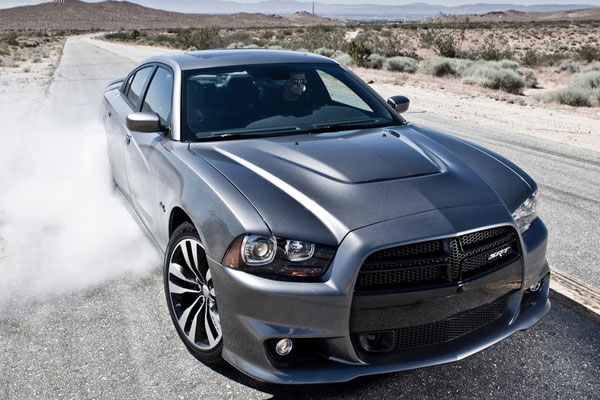
Character / association: Dom and Brian. Fast Five’s Rio vault chase relies on black police-style Chargers. The stunt sequence is filmmaking, not a realistic measure of a production Charger’s towing capacity.
The Rio pursuit uses modern Dodge Charger sedans in black police-style presentation. A production Charger has a front-engine, rear-wheel-drive architecture with available all-wheel-drive variants; vault-towing and destruction sequences rely on stunt engineering.
Specifications and value: Production reference: engine and output vary widely by Charger model year and trim. Movie police-car appearance does not establish that every camera car was a production-spec police interceptor.
Fast & Furious 6 (2013) and Furious 7 (2015)
17. 1969 Dodge Charger Daytona-inspired build
Character / association: Dominic Toretto. Fast & Furious 6 gives Dom a winged classic Dodge whose screen construction and action sequences should not be confused with a pristine factory-original Daytona.
The iconic Daytona shape includes a long aerodynamic nose and a towering rear wing developed for NASCAR homologation. The film version draws from that 1969 Dodge heritage, but the action car’s parts and construction should not be treated as an untouched factory Daytona.
Specifications and value: Production reference: 1969 Daytona based on the B-body Dodge Charger; available 440 V8 or optional 426 Hemi. Authenticated original Daytonas have a very different valuation from recreations.
18. Ford Escort Mk I RS1600
Character / association: Brian O’Conner. Brian drives the classic rally-style Escort during the motorway/tank pursuit in Fast & Furious 6.
Ford’s Mk I Escort RS1600 was a compact rear-wheel-drive rally homologation car powered by the high-revving 1.6-litre BDA twin-cam four-cylinder. Brian’s blue-and-white Escort reflects that agile, lightweight rally tradition rather than the franchise’s usual supercharged muscle-car formula.
Specifications and value: Production reference: 1.6-litre BDA inline-four, rear-wheel drive. Historic Escort RS1600 values depend on genuine specification, competition history and restoration quality.
19. W Motors Lykan HyperSport
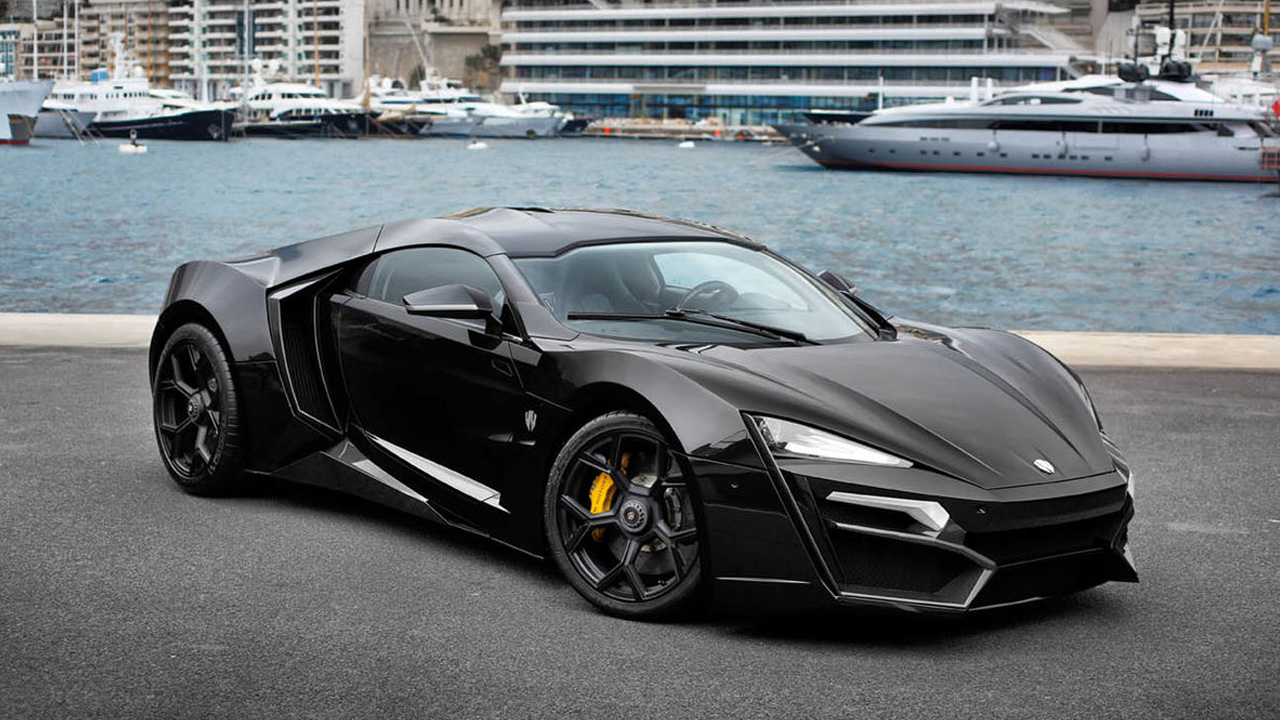
Character / association: Dom and Brian. Furious 7 places the rare Middle Eastern hypercar at the centre of the Abu Dhabi tower-jump sequence. Film stunts used production props or doubles, not an assumption that a customer Lykan was driven between towers.
The Lykan HyperSport was developed by W Motors and was widely publicised for its limited production and multi-million-dollar original asking price. The spectacular Abu Dhabi sequence used film-specific stunt solutions; the towers scene should not be interpreted as a production-car capability.
Specifications and value: Publicised road-car reference: 3.7-litre twin-turbo flat-six, rear-wheel drive, 780 PS claimed. Original manufacturer headline price was approximately $3.4 million; this is not a verified 2026 sale value.
20. Off-road Dodge Charger
Character / association: Dominic Toretto. Furious 7 also features a modified Charger configured for the mountain chase, showing how the franchise remakes a familiar model for different stunts.
The mountain-chase Charger has heavily reworked ride height, tyres, suspension and protective bodywork for an off-road film sequence. It belongs to the same screen-car family as Dom’s classic Charger, but it is not a separate Dodge dealership trim.
Specifications and value: Underlying design: classic rear-drive V8 Charger; engine and running gear vary by stunt build. A custom prop cannot be valued from a normal classic Charger price guide alone.
The Fate of the Furious (2017) and F9 (2021)
21. Dodge ‘Ice Charger’
Character / association: Dominic Toretto. The Fate of the Furious converts the familiar Charger idea into an ice- and snow-oriented stunt car. It is a specialised movie build rather than a normal road-going trim.
The Ice Charger is a purpose-built movie variation with dramatic reinforced bodywork and hardware tailored for the frozen pursuit. Although it visually references a classic Dodge, the vehicle is a screen creation with varying practical stunt configurations.
Specifications and value: Reference architecture: modified Dodge Charger-inspired V8 stunt car, not a separately homologated production model. No normal original MSRP exists for an ‘Ice Charger’.
22. Mid-engine 1968 Dodge Charger
Character / association: Dominic Toretto. F9 depicts a dramatically reworked 1968 Charger with mid-mounted engine architecture, not a conventional front-engine production Charger.
The F9 Charger is notable for relocating the engine behind the cabin, unlike a conventional 1968 Dodge Charger with its front-mounted V8. Its unusual layout is central to the film’s outrageous engineering theme, rather than evidence of a little-known factory edition.
Specifications and value: Original 1968 Charger: front-engine, rear-wheel drive, with a range of V8 options; film custom: mid-engine configuration. Costs depend on the individual fabricated build.
23. Rocket-powered Pontiac Fiero
Character / association: Roman Pearce and Tej Parker. F9’s space-flight sequence turns a Pontiac Fiero into an outrageous custom vehicle. Its rocket-powered configuration exists for the film’s fantasy rather than as an ordinary road-car specification.
Roman and Tej’s Pontiac Fiero uses the familiar small, mid-engined 1980s American sports-car silhouette, then adds fanciful propulsion for the franchise’s space sequence. Stock Fieros used ordinary four-cylinder or V6 engines and were never rocket-powered production cars.
Specifications and value: Factory Fiero reference: transverse mid-engine, rear-wheel drive; 2.5-litre four-cylinder or 2.8-litre V6 depending on trim and year. The rocket equipment is movie fiction, not a road-car spec.
Fast X (2023)
24. Alfa Romeo 2000 GT Veloce
Character / association: Han. Han’s orange classic Alfa Romeo gives Fast X an unexpected European coupe among the franchise’s tuner and muscle-car mainstays. Production reporting describes major mechanical changes to the screen cars.
The orange Alfa coupe is a 1970s 2000 GT Veloce rather than the modern Giulia sedan. Its twin-cam four-cylinder and rear-wheel-drive heritage give it genuine classic appeal, while the film’s car was mechanically reworked for stunt reliability.
Specifications and value: Production reference: approximately 2.0-litre Alfa twin-cam four-cylinder, rear-wheel drive. Restored original GTV and custom-engineered screen cars occupy different price categories.
25. Classic Chevrolet Impala
Character / association: Dante Reyes. Dante’s colourful older Chevrolet brings a custom American lowrider flavour to the street-race action. Its customised appearance makes it distinctive, but the exact model year and mechanical configuration depend on which filming car is examined.
Dante’s flamboyantly finished classic Impala is another example of the franchise using custom street-car culture to define a character. Chevrolet produced Impalas across many generations, so engine, year and market value should be tied to the particular screen body rather than a generic ‘Impala’ entry.
Specifications and value: Production reference: American front-engine, rear-wheel-drive full-size Chevrolet in the relevant classic era; engines varied. No single factory horsepower or original price reliably describes every classic Impala.
Movie cars versus production cars
Film vehicles can differ significantly from factory specifications. For behind-the-scenes context, see MotorTrend’s franchise car list, its test of vehicles actually used for 2 Fast 2 Furious, and Top Gear’s film-by-film gallery. The same model can be represented by multiple cars built for close-ups, driving scenes and stunts.
Fast and Furious car questions
What car does Dominic Toretto drive?
Dom is most closely associated with the 1970 Dodge Charger R/T, though the franchise uses multiple Charger builds, as well as a Chevrolet Chevelle SS and other performance cars.
What is Brian O’Conner’s most famous car?
Brian’s orange Toyota Supra Mk IV and silver-and-blue Nissan Skyline GT-R R34 are among his most recognisable cars, from the 2001 original and 2003 sequel respectively.
Are Fast and Furious cars real?
Many began as genuine production cars, but screen vehicles may have different engines or safety equipment from stock models, while major stunts can use replicas, modified shells, rigs and visual effects.
Does this list cover every car in the series?
No. It covers 25 recognisable selections; the movies contain many more background, stunt and hero cars. The list stops at released films through Fast X (2023) and excludes vehicles from unreleased instalments.
Related automotive reading
For real-world handling and budgets, read Best Drift Cars or Cheap Drift Cars. For collectible older cars, explore Classic Cars.