
WORLDSULTIMATE · AFRICA & SAFARI / VISITOR BEHAVIOUR
What Not to Do on a Safari in Africa
A safari brings you close to wild animals, but it does not give you permission to approach, feed or disturb them. Follow your guide, respect the park’s rules, and never push for a photograph that requires breaking them.
ILLUSTRATIVE SAFARI IMAGE · PROVENANCE REVIEW REQUIRED
01 · OVERVIEW
Safari mistakes to avoid
Don’t feed or touch wildlife, get out where it is prohibited, leave authorised routes, litter, or pressure your guide for a closer photograph. Start with the mistakes below. Exact viewing distances, vehicle exits and activity restrictions depend on where you go.
Don’t assume every safari has the same rules
Before your safari, ask where you may stop, how far you must stay from animals, and whether you may get out of the vehicle. A game drive, guided walk and gorilla trek have different instructions. Follow the briefing for the activity you actually booked.
Don’t leave the vehicle without checking. Ask your guide whether getting out is permitted at that spot. A designated stop is different from a roadside wildlife sighting. Seeing another visitor outside a vehicle does not establish permission for you to do the same.
Don’t feed or touch wildlife. If an animal approaches, listen to your guide before moving or changing position. Put the camera down long enough to hear the instructions. A close encounter is not an invitation to reach out or offer food.
Don’t pressure your guide for a closer photograph. Ask whether you can stop or change position before requesting a better angle. If the guide says no, accept it. Another vehicle moving closer does not mean you have permission to follow.
Don’t crowd a sighting or stay longer than allowed. Ask: “Are we allowed to stop here, and how long can we stay?” Leave when instructed, even if you haven’t got the photograph you wanted.
Don’t drive outside authorised routes, leave litter, or deliberately disturb animals. Keep your viewing plans within the park’s instructions. The aim is to watch what the animals are doing, without trying to make them move for your camera.
Examples of rules at specific safari destinations
In the Mara Triangle, a busy sighting can mean a shorter stop. Mara Conservancy’s published rules limit viewing to 10 minutes when more than five vehicles are waiting. Waiting vehicles must stay 100 metres from the sighting. Checked 3 October 2026; this is a Mara Triangle rule, not a rule for every African reserve.
For standard gorilla tracking, Uganda Wildlife Authority describes one hour of observation with the gorillas. That is not the length of the whole trek. Check which activity you have booked, because another permit product may have different conditions.
Don’t use a distance quoted for one park as a rule for the whole continent. The linked Kenya Wildlife Service material needs further verification, so this guide does not present its indexed 20-metre figure as a confirmed current instruction. Ask for the rule at your park.
For Uganda tracking activities, check the current booking terms as well as the briefing. The linked July 2024 guidelines cover tracking procedures; the 2026–2027 notice concerns tariff changes. The older July 2024–June 2026 tariff is historical. These documents answer different questions, and none replaces the instructions for your visit.
What to check before your safari
Ask your operator or guide five things before you go: which activity you have booked, where to report, where you may leave the vehicle, which wildlife-viewing rules apply, and whether there are visitor restrictions. Get the answers for your actual park and permit.
For a guided walk, confirm that the activity is authorised and follow the guide’s briefing. Permission to travel by vehicle does not also give you permission to walk. For gorilla or chimpanzee trekking, check eligibility and health requirements before paying.
Before bringing a drone or restricted packaging, check the national and park rules. Don’t assume an item is allowed because you used it on another trip.
Pack for your route. Check your airline’s baggage allowance, required documents, weather, footwear and insurance. Bring suitable layers, sun protection and weather protection. There is no single baggage allowance that applies to every safari.
What the record supports—and where it stops.
A concise conclusion, the evidence supporting it, and the uncertainty that remains.
Follow the park’s rules and your activity briefing.
The linked official sources give examples for particular parks and activities. They support checking local instructions rather than assuming one rule applies across Africa.
This guide uses official publications, historical research and WU interpretation. It does not report a first-hand WU safari or expert interview. Some source wording and image provenance remain unverified; the source notes explain the gaps. Candidate evidence records remain unapproved.
IN CONTEXTPreparing for your safari
These images illustrate trip preparation and vehicle-based photography. They do not prove that a particular park’s rules were followed. Their photographer, licence, date and location have not been verified.
A photograph can document visible conditions. It cannot establish cause, trend or risk without supporting records.
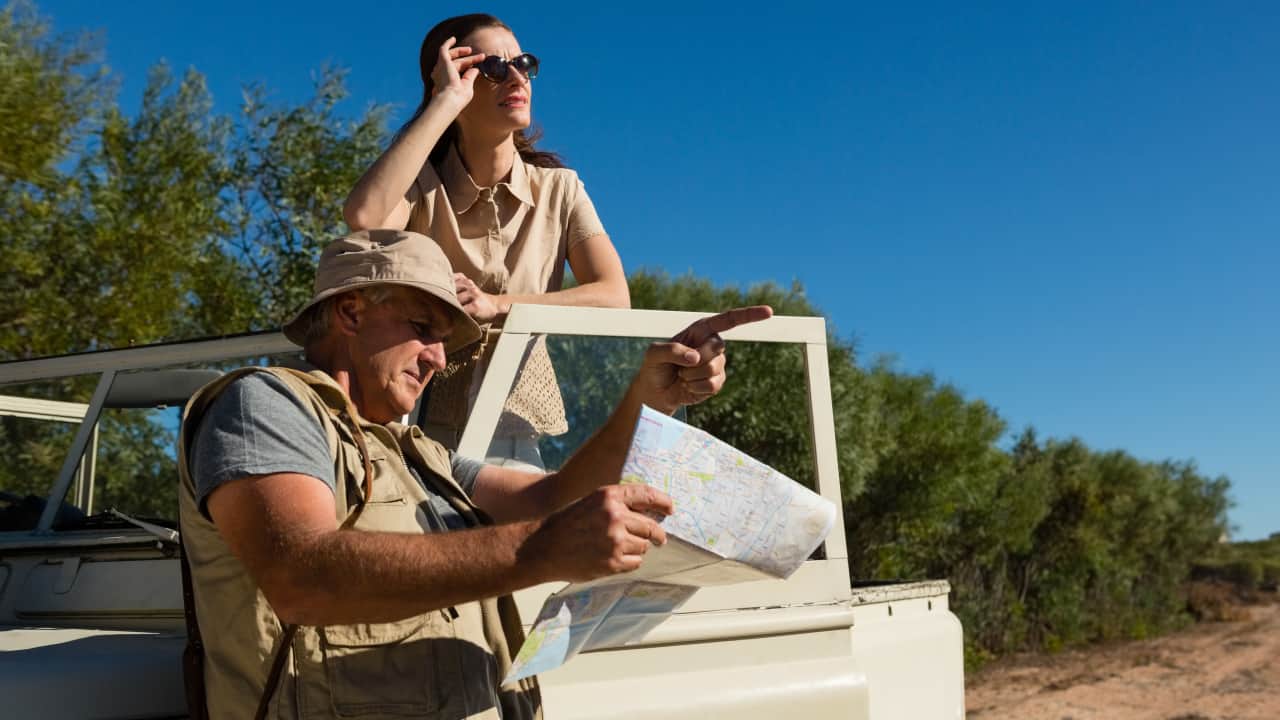
Check the exact park rules

Carry only what the route permits
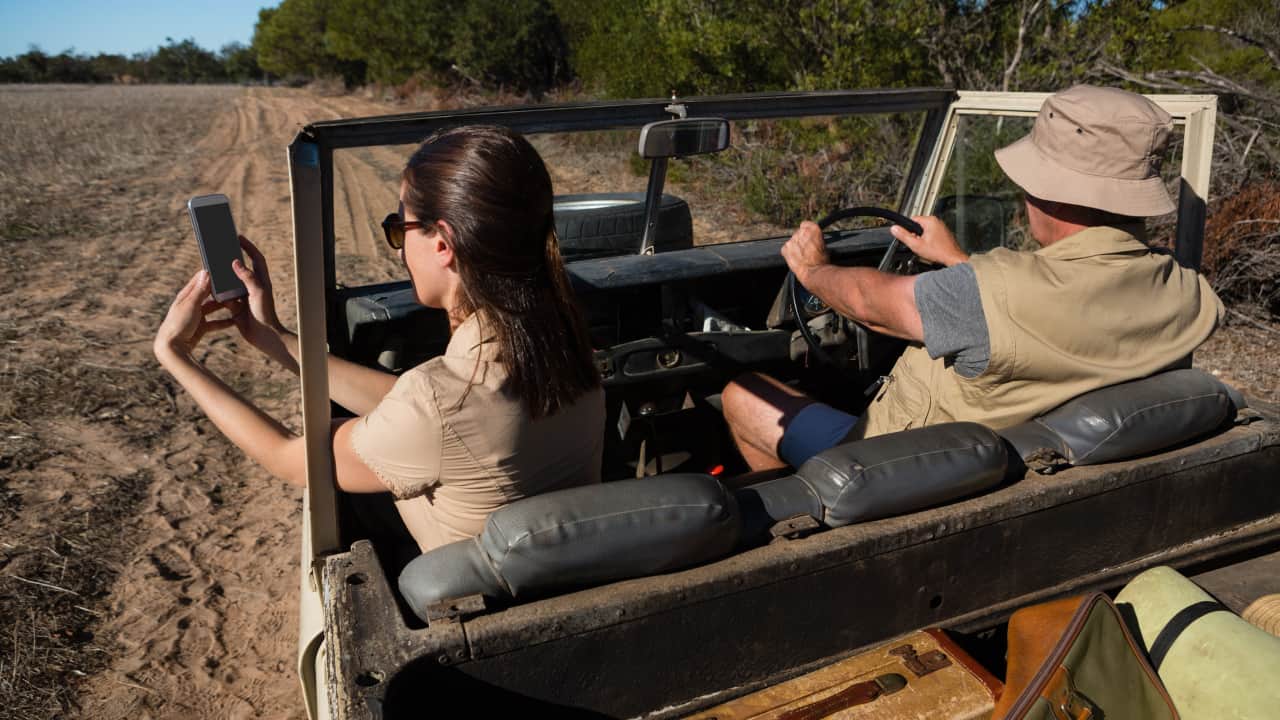
Distance and behaviour are regulated
EVIDENCE AND CONTEXT
What the record supports. And where it stops.
Four Footprints: use these four checks to think about your safari choices. They are practical planning considerations, not proof that a trip produces conservation or community benefits.
Writer | Passionate Traveler | Chief editor of ‘Worlds Ultimate http://www.worldsultimate.net/ also CEO at www.futuristicartists.com by profession and lover of world cultures, languages, souls, food, oceans, wild spaces and urban places by nature. Share beautiful and practical stories from around the world. Visited luxurious hotels and destinations around the world including Marrakech, Mauritius, Singapore, Malaysia, USA, Greece, China and aims to inspire fellow Worlds Ultimate to pursue their dream career in travel.
The sources and context help explain what is known, what remains uncertain and where to read further.
Understanding the details.
Wildlife: don’t feed, touch or deliberately disturb animals. Respect the viewing instructions even when a closer photograph looks tempting.
Habitat: stay on authorised routes and take your litter away.
Community: ask who operates the activity and what is documented about local participation. Don’t assume that booking a safari automatically benefits nearby residents.
Traveller: match your preparation to your route and activity. Discuss relevant needs before booking, and check that you meet the activity’s requirements.
For help preparing your camera, see our wildlife photography tips. For wider family planning, see our guide to family safaris in East Africa. Both are linked below; the park authority still sets the rules for your activity.
Why the briefing matters: a study published on 13 February 2020 examined 53 gorilla-tourism encounters at Bwindi between May and August 2014. Researchers recorded breaches of the then-applicable distance rule in 52 encounters, about 98%, although roughly 96% of pre-trek briefings explained it. These historical findings do not measure compliance today.
Researchers also checked the nearest tourist–gorilla distance every two minutes. In 1,094 of 1,604 observations, or 68.2%, a tourist was 7 metres or less from a gorilla. That percentage describes repeated observations, not the proportion of all tourists who broke a rule. It does not establish today’s minimum distance or an infection rate.
The useful lesson: keep following the instructions throughout the encounter, not just while listening to the briefing. If you cannot keep the required distance, ask the ranger what to do.
How this guide was checked: reviewed on 3 October 2026 using KWS and UWA publications, Mara Conservancy’s rules and the linked gorilla-tourism study. Official documents describe rules and procedures; the study describes a historical sample. WU provides the practical interpretation. These sources cover selected places and activities, not every African protected area.
Keep the investigation correctable.
Kenya Wildlife Service · Park Rules ↗
Official park-rules reference. Indexed text reviewed 3 October 2026; direct PDF fetch timed out. Hosting path is dated 2019; confirm current park instructions.
Kenya Wildlife Service · Nairobi National Park ↗
Park-specific reference, not continent-wide guidance. Direct fetch failed during 3 October 2026 review; current wording requires confirmation.
Uganda Wildlife Authority · Conservation Tariff 2024–2026 ↗
Historical tariff: stated validity July 2024–June 2026 has ended. Do not use it alone to establish current charges or conditions.
Uganda Wildlife Authority · Gorilla and Chimpanzee Tracking Guidelines ↗
Official July 2024 guidelines accessed 3 October 2026. Confirm any later amendments and the terms of the exact activity.
Uganda Wildlife Authority · Tariff changes 2026–2027 ↗
Official change notice linked by UWA's rates page; accessed 3 October 2026. Check effective dates and booking terms; no prices are reproduced here.
Mara Conservancy · Mara Triangle park rules ↗
Sector-specific crowding rule: more than five waiting vehicles triggers a 10-minute viewing limit; waiting distance 100 metres. Checked 3 October 2026.
Uganda Wildlife Authority · Gorilla tracking ↗
Official activity description; one-hour observation context. Checked 3 October 2026; confirm exact permit conditions.
Weber, Kalema-Zikusoka & Stevens — Gorilla-tourism rule adherence ↗
Published 13 February 2020; observations May–August 2014. Original research checked 3 October 2026. Encounter and repeated-observation statistics are historical, not current compliance or infection rates.
Weber, Kalema-Zikusoka & Stevens — Gorilla-tourism rule adherence · Publisher version ↗
Published 13 February 2020; observations May–August 2014. Original research checked 3 October 2026. Encounter and repeated-observation statistics are historical, not current compliance or infection rates.
READER SIGNAL
Did this investigation answer the question?
ADD YOUR EVIDENCE
Your record can add missing context.
Include the place, date, what happened and a source editors can inspect. Submissions are moderated and do not automatically change the conclusion.
Audience submission · Add your evidence
Submit documented evidence
Your evidence enters a private moderation inbox. Automated spam and duplicate checks run first; a WU editor must then verify and approve it before it can appear publicly.