Which car brands make the most expensive cars? Rolls-Royce, Bugatti, Pagani, Koenigsegg and Ferrari are among the names associated with multi-million-dollar bespoke commissions and limited-run hypercars. But most expensive can describe the price of the cars, the brand’s estimated financial value or its parent company’s stock-market valuation. Those are different questions. This guide compares 13 premium and specialist manufacturers by their vehicles and positioning, rather than inventing a financial ranking.
How expensive car brands are compared
The 13 manufacturers below are a curated selection, not an audited ranking by average selling price. To compare vehicle prices, use named model launch prices or documented transactions; one-off commissions may have no published price. For a completely different question—financial brand value—Brand Finance’s 2026 automotive report ranks Toyota first ($62.7 billion), Mercedes-Benz second ($46.6 billion) and BMW third ($43.8 billion). These figures describe intangible brand value, not the market price of vehicles or company equity.
[toc]
Start with the brand profiles and their distinctive production models. For specific expensive cars, public auction records and manufacturer-announced prices, see the separate vehicle comparison.
1. Ferrari

Few names can stir the soul like Ferrari; it is one of the most expensive car brands. As emblematic of racing royalty, Italian flair, and the V12 symphony as it gets, there is no carmaker in the world bigger than Ferrari. Founded by Enzo Ferrari in 1939 and based in Maranello, Ferrari is a symbol of speed, performance, and luxury.
The real force behind Ferrari is its theory of scarcity. They don’t mass-produce. They curate. Every car – be it a 250 GTO from the ‘60s, or a brand new SF90 Stradale – is treated as a piece of art. And it works as they are in perpetual demand, always outnumbered by those who want them. So, buyers pay a premium that allows Ferrari to maintain an aura it has had to shake off only occasionally.
Armed with a world record-setting IPO and a stranglehold over Formula 1, Ferrari’s position in the market is unchallenged. Its brand is grounded in passion, performance, and athletic images so beautiful they make the impossible look easy.
| Notable Models | Founded | Headquarters |
| Ferrari 250 GTO, Ferrari F40, LaFerrari, 812 Superfast | 1939 (as Auto Avio Costruzioni) | Maranello, Italy |
2. Mercedes-Benz

For decades, the Mercedes-Benz brand has been synonymous with luxury and style. The C-Class line has been the king of Mercedes as it reflects the innovative and powerful features inside. From inventing the first automobile in 1886 to pioneering in electrification, autonomous driving, and design, the three-pointed star remains unstoppable.
Mercedes is ruling the luxury car/performance car segments. Its AMG-badged performance division has sirens like the AMG GT Black Series, while the Maybach sub-brand takes elite comfort to palatial levels.
In recent years, the company has placed a focus on sustainability and digitalization. It’s unveiling its line of EQ electric vehicles, like the EQS and EQE AMG, and bringing the future into the present. Whether cruising in a bulletproof S-Class or sprinting in a G63 AMG, Mercedes is the brand that whispers class - and sometimes screams velocity.
| Notable Models | Founded | Headquarters |
| Mercedes-AMG One, S-Class, G-Wagon, EQS | 1926 (merger of Daimler and Benz) | Stuttgart, Germany |
3. Porsche

To me, Porsche is what happens when German precision meets motorsport madness. Established by Ferdinand Porsche in 1931, this Stuttgart company is known for unparalleled engineering, particularly its iconic 911 collection. It has been the epitome of a fast and cool icon for over 60 years.
What sets Porsche apart isn’t just performance – it’s also balance. They are a brand that seems to be able to combine on-road ability with track-dominating potential. A 911 Turbo S can commute and crush Nürburgring lap times in the same day.
Today, Porsche is charging toward electrification with its Taycan EV, yet is still innovating with hybrid systems and GT-series cars. Whether it is a Cayenne Turbo GT or a GT3 RS, Porsche delivers precision without compromise.
Porsche is also more profitable than any automobile manufacturer by a considerable margin; it earns more money per car than any other manufacturer. Thus, making it one of the world’s most expensive car brands.
| Notable Models | Founded | Headquarters |
| 911 Turbo S, 918 Spyder, Taycan Turbo S, Carrera GT | 1931 | Stuttgart, Germany |
4. BMW

BMW stands as a global symbol of performance, precision, and premium quality with its iconic grille and a reputation for engineering excellence. It is known as the “Ultimate Driving Machine as it emerges German efficiency with dynamic road presence, offering a refined balance between sportiness and luxury.
BMW was founded in 1916 and began as an aircraft engine manufacturer before shifting to motorcycles and eventually becoming a titan in the automotive world. Its post-war rebirth laid the foundation for legendary models. Like the 3 Series and M Division vehicles, which redefine what sports sedans could be.
In recent years, BMW has pushed deep into electrification and digital innovation with models like the i4, i7, and the bold XM hybrid SUV, without compromising its roots. Whether it’s a luxury sedan or a track-hardened M car, BMW continues to uphold its legacy of delivering excitement with discipline.
| Notable Models | Founded | Headquarters |
| M3, 3 Series, 7 Series, i7, X5 | 1916 | Munich, Germany |
5. Lamborghini

When it comes to pure automotive theatre, there’s no destination quite like Lamborghini because it is one of the most expensive car brands. With names like Aventador, Huracán, and, yes, Countach, Lambo cannot be said to just manufacture cars – they build highway-legal earthquakes.
Established by Ferruccio Lamborghini in 1963 to take on Ferrari, the company has evolved into a symbol for extreme design and unapologetic performance. Sharp edges, scissor doors, and ear-shattering V12s are hallmarks of the breed.
You Might Like to Read: The Ultimate Guide to the Best: Lamborghini Murciélago
Lamorghini is owned by the Volkswagen Group today under the Audi brand. Lamborghini has brought us models like the Revuelto, a plug-in hybrid with 1,001 hp, confirming that even bulls can be tamed. But even as it embraces electrification, Lamborghini is still faithful to its DNA: loud, proud, and brilliant.
| Notable Models | Founded | Headquarters |
| Aventador, Huracán, Revuelto, Sian | 1963 | Sant’Agata Bolognese, Italy |
6. Bugatti
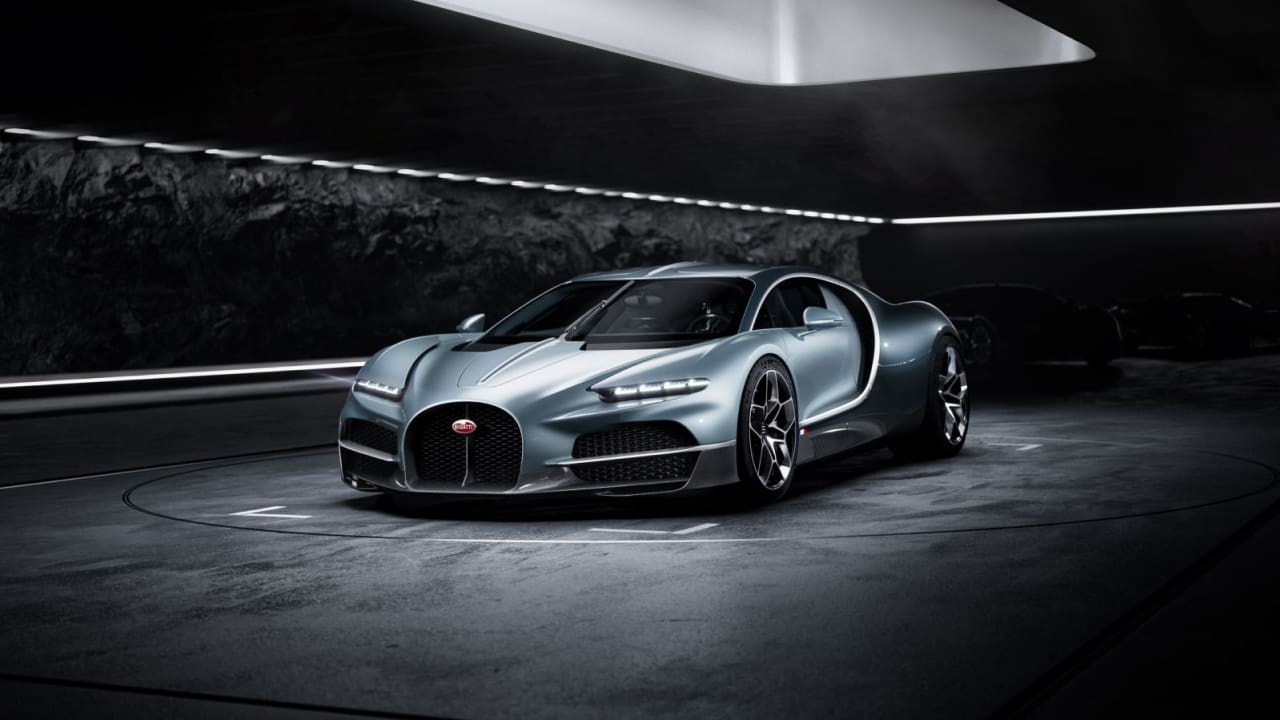
Few names in the hypercar world have quite the same mythos as Bugatti. French by birth, Italian by resurrection, and now based in Molsheim, Bugatti is the marque of superlatives, the fastest, most exclusive, and one of the most expensive car brands.
Under Volkswagen’s ownership (and now a Rimac-led partnership), Bugatti produced the Veyron, whose specifications and top-speed history we examine separately, then followed it with the Chiron. But nothing sealed its primacy as emperor of excess like the one-of-a-kind La Voiture Noire, a nearly $19 million statement piece.
Bugatti cars are not made for the masses – they are designed for collectors, royalty, and billionaires. From its quad-turbocharged W16 engine to its hand-stitched interior, every element is a revelation of technical excellence sublimated by artistic obsession.
| Notable Models | Founded | Headquarters |
| Veyron, Chiron Super Sport, La Voiture Noire, Bolide | 1909 | Molsheim, France |
7. McLaren Automotive

McLaren isn’t just a name of a car, it is an ethos about being fast. Established in 2010 as the sibling of the storied McLaren Racing family. McLaren Automotive emerged from the ashes of the iconic McLaren F1 (1992-1998) to become one of the most technically advanced carmakers on Earth.
What makes McLaren stand out is its single-minded determination to lightness, aerodynamics, and talk to the driver. Every automobile on a carbon-fiber monocoque is tuned for race-level dynamics and styled with wind tunnel-validated aggression.
Models such as the P1, Speedtail, and Artura combine performance with a level of precision, whereas the Ultimate Series cars push into hypercar territory. McLaren’s ‘no-compromise’ philosophy makes every model a tribute to racing heritage and British innovation.
| Notable Models | Founded | Headquarters |
| McLaren F1, P1, 765LT, Speedtail, Artura | 2010 (as road car division) | Woking, England |
8. Aston Martin

Aston Martin is what you get when British craftsmanship meets cinematic cool. Immortalized by James Bond and hand-built in Gaydon, UK, Aaron Martin cars are more than mere machines – they are rolling art.
Whether it’s the throaty roar of a Vantage V12 or the smooth, graceful curves of the DB11, Aston Martins are built for that magical mix of old-world design and raw power. Their hyper car, the Valkyrie, made in association with Red Bull Racing’s Adrian Newey, has redefined what a road car is capable of.
The brand has seen its share of financial woes over the years. However, its recent redemption through executive chairman Lawrence Stroll (and investment from Saudi Arabia’s PIF) has brought fresh momentum. Aston Martin is now moving into electrics with bold designs on the horizon.
| Notable Models | Founded | Headquarters |
| Valkyrie, DB11, Vantage, DBS Superleggera | 1913 | Gaydon, England |
9. Maserati

With a trident badge and a symphony as an exhaust note, Maserati combines Italian passion with sporting elegance. Though in its consistency and quality over the years, Brand Penhaligon’s has had its ups and downs, its romantic image and racing heritage have anchored it in luxury lore.
Established in 1914, Maserati gained its initial renown from competition-bred cars before evolving into grand tourers that emphasized emotions over numbers. The MC20, introduced in 2021, represented a dramatic return to high-performance levels, and it featured a new twin-turbo V6 and carbon-fiber chassis.
Maserati’s new vehicles, like the Grecale Trofeo and the GranTurismo Folgore (EV), are a renewed effort toward electrification and high-end engineering. Both somehow preserve the musical character that makes you say, “Yep, that’s a Maserati.’’
| Notable Models | Founded | Headquarters |
| MC20, GranTurismo, Quattroporte, Levante | 1914 | Modena, Italy |
10. Rolls-Royce Motor Cars

If luxury had a king, its name would be Rolls-Royce. Founded in 1904, Rolls-Royce has a heritage in coachbuilt luxury that is unsurpassed. Be you at the wheel of their Ghost, or a passenger in their Phantom, the ride is all about grace, power, and perfection.
The brand is now owned by BMW and is still in the process of growing while preserving its royal heritage. The Cullinan SUV brought luxury to off-road surfaces, and the coming Spectre EV proves the company has one eye on the electric age, but not at the expense of its soul.
No two cars are the same, since they are made by hand at Goodwood, often down to the thread count on the seats and the patterning on the starlight ceiling. Rolls-Royce does not simply vend fine automobiles; it provides custom-built serenity cloaked in silence with a touch of thunder.
| Notable Models | Founded | Headquarters |
| Phantom, Ghost, Cullinan, Spectre (EV) | 1904 | Goodwood, England |
11. Bentley

Bentley Motors is the most expensive car brands in the world. From the second you open the door of a Bentley, you’re enveloped in hand-sewn leather, genuine wood veneers, and old-world luxury combined with modern engineering muscle.
Founded in 1919 and now part of the Volkswagen Group, Bentley combines hand-finished luxury with high-performance grand touring. The Continental GT, Flying Spur and Mulliner commissions are examples of its premium positioning, though their prices depend heavily on powertrain and personalisation.
With the Bentayga, Bentley discovered a new way for the ultra-luxury SUV to be. Now, with its announcement that it will have a fully electrified product line by 2030, Bentley is making moves to shape its legacy for a new generation of elite buyers.
| Notable Models | Founded | Headquarters |
| Continental GT, Bentayga, Flying Spur Mulliner | 1919 | Crewe, England |
12. Pagani Automobili

Pagani is art and performance crossing paths. Horacio Pagani founded this boutique Italian manufacturer in 1992 to produce ultra-limited, carbon fiber masterpieces that are as much sculpture as speed machines.
Every Pagani creation is put together with an almost obsessive attention to detail, using state-of-the-art aerospace materials and classic design philosophy. The Zonda series set a new benchmark for bespoke engineering, while the Huayra brought active aerodynamics and futuristic interiors.
Nowadays, the Pagani Utopia keeps the flame alive, continuing to pair a gated manual with a twin-turbo V12 in an age of dual-clutch conformity. Pagani produces fewer than 40 cars per year, each one rarer than a Picasso and valued just as highly.
| Notable Models | Founded | Headquarters |
| Zonda HP Barchetta, Huayra BC, Utopia | 1992 | San Cesario sul Panaro, Italy |
13. Koenigsegg

The smallest of the brands by commercial value, Koenigsegg punches well above its weight when it comes to technological prowess and domination on the track. The Swedish company’s founder, Christian von Koenigsegg, had formed the brand in 1994. Since then, the marque has produced some of the world’s fastest, lightest, and most technologically advanced hypercars.
For a separate look at electric hypercars, see Most Expensive Electric Cars.
Now, keep in mind each Koenigsegg is a high-end technical moonshot. From the One:1’s power-to-weight ratio to the Jesko Absolut’s claimed 330-plus-mph top speed, Koenigsegg is constantly rewriting the rulebook. They were also developing groundbreaking tech such as the cam-less Freevalve engine and 3D-printed titanium components.
Koenigsegg competes through low-volume production, specialist engineering and unusually ambitious powertrain designs, rather than vehicle sales volume. Its privately held financial value cannot be inferred reliably from an unrelated quoted number; the CC850 and Jesko models are more relevant evidence of its high-end market position. See the manufacturer’s model information.
| Notable Models | Founded | Headquarters |
| Agera RS, Jesko Absolut, Gemera, Regera | 1994 | Ängelholm, Sweden |
Which brands specialise in the most expensive vehicles?
| Manufacturer | Why it belongs in this selection | Example vehicle |
|---|---|---|
| Rolls-Royce | Individually commissioned coachbuilding | Droptail, Boat Tail |
| Bugatti | Low-volume W16 and successor hypercars | La Voiture Noire, Tourbillon |
| Pagani | Hand-built limited-edition hypercars | Huayra Codalunga, Utopia |
| Koenigsegg | Engineering-focused limited production | Jesko, CC850 |
| Ferrari | Special-series sports cars and rare collector models | Daytona SP3, F80 |
| Lamborghini | Limited-run flagship supercars | Veneno, Revuelto |
| McLaren | Ultimate Series and track-only specials | Solus GT, Speedtail |
| Bentley | Grand touring and Mulliner commissions | Batur |
| Aston Martin | Special projects and flagship engineering | Valkyrie, Victor |
| Porsche | High-end sports cars and limited editions | 911 GT3 RS |
| Mercedes-Benz | AMG performance and rare collector history | AMG ONE |
| BMW | Premium performance and individual commissions | 3.0 CSL |
| Maserati | Italian luxury grand tourers and specialist halo cars | MC20 |
Which is the most expensive car brand?
There is no single defensible winner without specifying a measure. Bespoke Rolls-Royce commissions can command reported prices in the tens of millions, while Bugatti and Pagani publicly disclose prices for some ultra-limited models. The result differs if you rank average transaction prices, a manufacturer’s single most expensive vehicle, or financial brand value. Neither Brand Finance’s Toyota-led brand-value ranking nor an isolated auction record establishes which company has the highest average selling price.
For a purchase-price comparison, use verified figures for individual models; for corporate financial comparisons, use a dated valuation study with one consistent methodology. Cars.com’s April 2026 US listing-based average MSRP analysis, for example, explicitly excludes exotic brands such as Rolls-Royce and McLaren, so it cannot answer the global all-brand question.