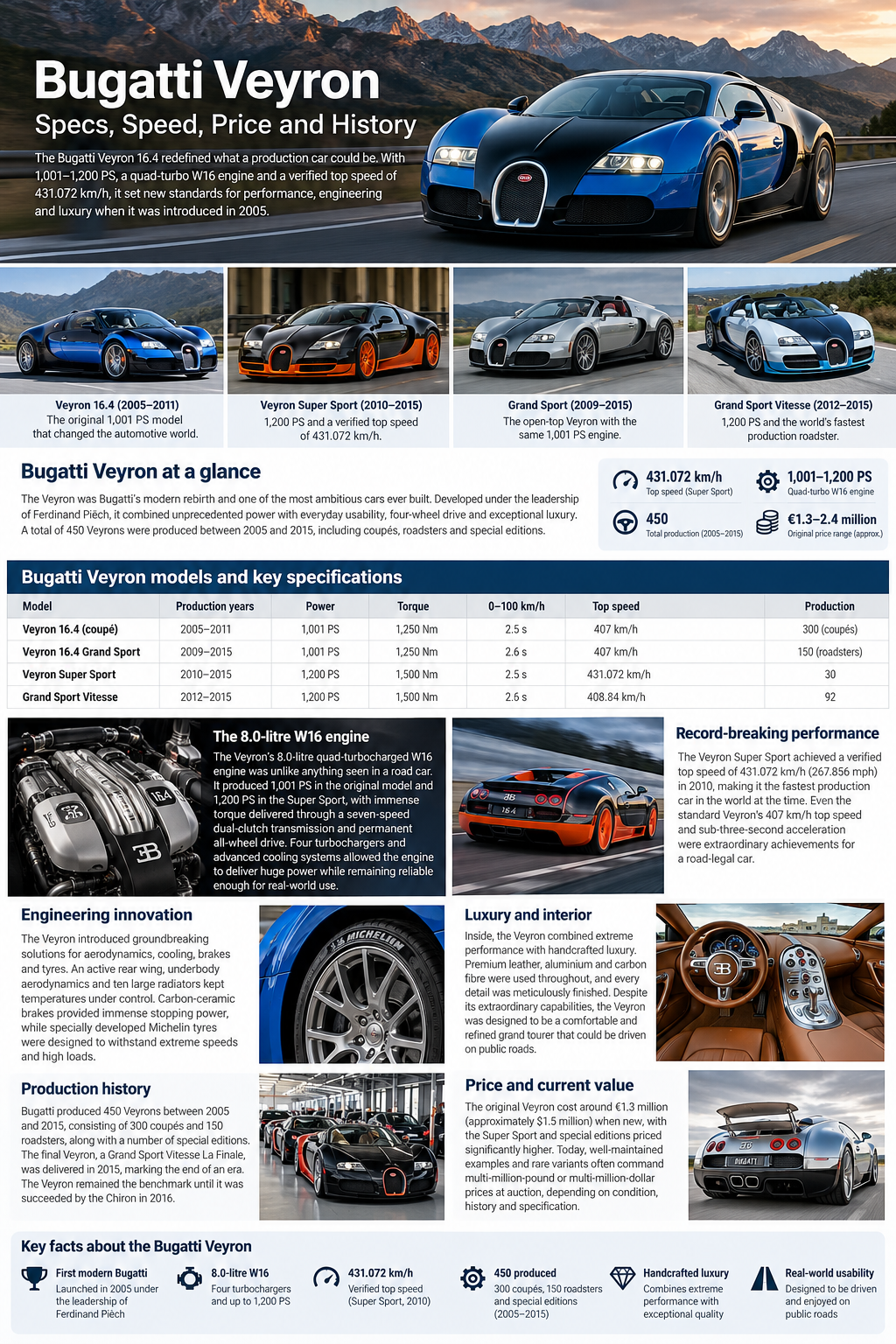
The Bugatti Veyron is an 8.0-litre, quad-turbocharged W16 hypercar built in Molsheim, France, between 2005 and 2015. The original Veyron 16.4 produced 1,001 PS (approximately 987 mechanical horsepower) and reached around 407 km/h. The later Super Sport recorded a two-way average of 431.072 km/h (267.856 mph) in 2010. Bugatti ultimately made 450 Veyrons: 300 coupés and 150 roadsters. Original list prices and auction values are different measures, and neither should be presented as an undisputed current asking price.
Bugatti Veyron key specifications
| Specification | Original Veyron 16.4 | Super Sport |
|---|---|---|
| Engine | 7,993 cc quad-turbo W16 | 7,993 cc quad-turbo W16 |
| Power | 1,001 PS (987 hp) | 1,200 PS (1,184 hp) |
| Torque | 1,250 Nm | 1,500 Nm |
| Gearbox | 7-speed dual-clutch | 7-speed dual-clutch |
| Drive | All-wheel drive | All-wheel drive |
| Top speed | 407 km/h | 431.072 km/h documented test record; customer speed limited |
| 0–100 km/h | About 2.5 sec | About 2.5 sec |
Figures distinguish metric PS from mechanical hp and manufacturer claims from an independent test. Car and Driver measured 0–60 mph in 2.5 seconds for a 2008 Veyron and documented its road behaviour, braking and fuel economy.
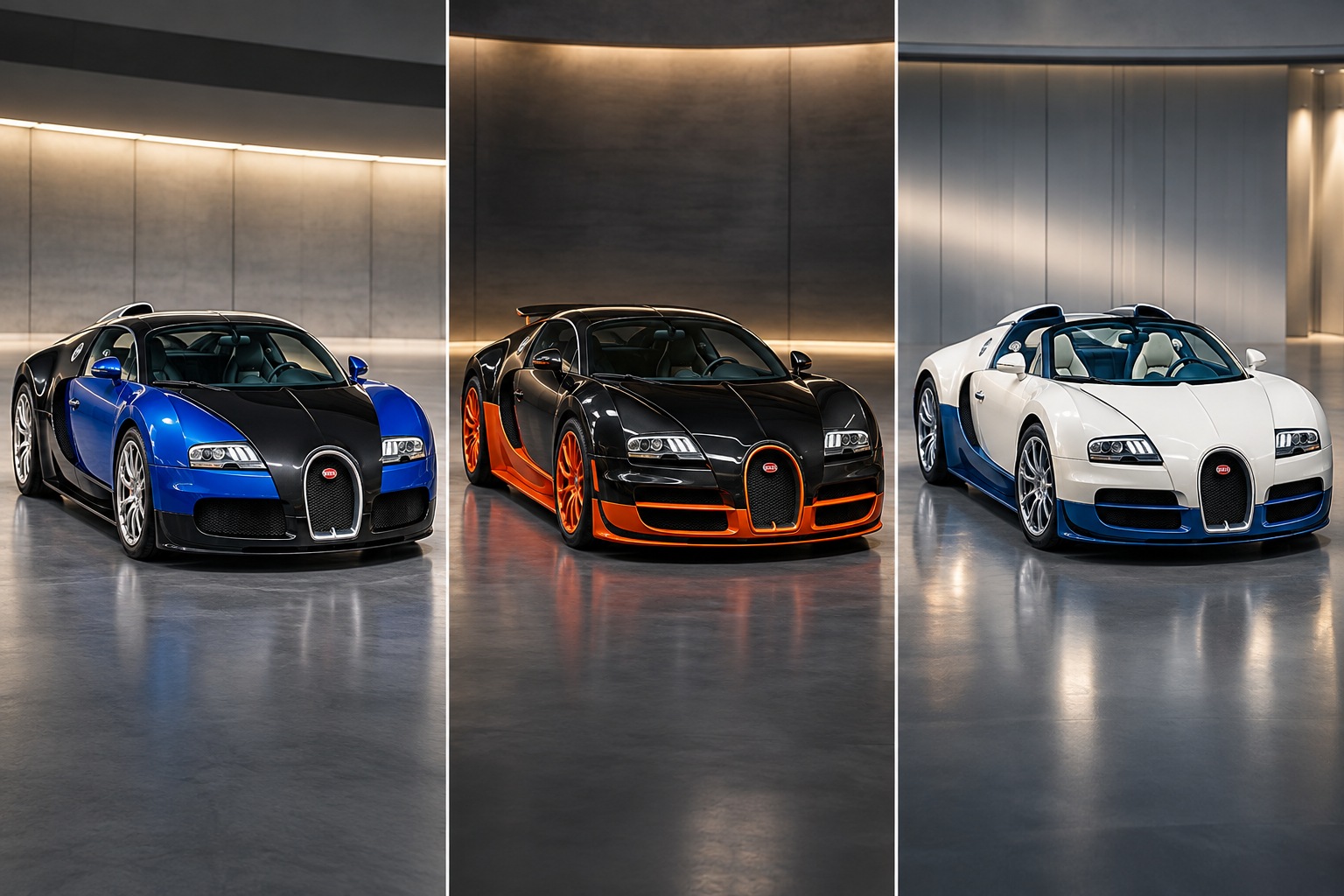
How the Veyron was developed
Ferdinand Piëch helped set the ambitious technical direction for the reborn Volkswagen Group-era Bugatti: a road-legal car with roughly a thousand metric horsepower, a top speed exceeding 400 km/h and luxury-car refinement. After Volkswagen acquired the marque in 1998, concept studies evolved into the production Veyron, introduced in 2005. Its name recalls racing driver Pierre Veyron. The car was assembled in a dedicated atelier in Molsheim rather than on a conventional high-volume assembly line.
The extraordinary specification created problems beyond generating power. Engineers had to manage heat from the sixteen-cylinder engine, deliver torque reliably through the gearbox and all-wheel-drive system, create effective high-speed aerodynamics, and keep the car stable under braking. Packaging and testing all of those systems helps explain why the Veyron was a major engineering programme rather than simply a powerful engine in an exotic body.
Bugatti Veyron models compared
Veyron 16.4 — original coupé
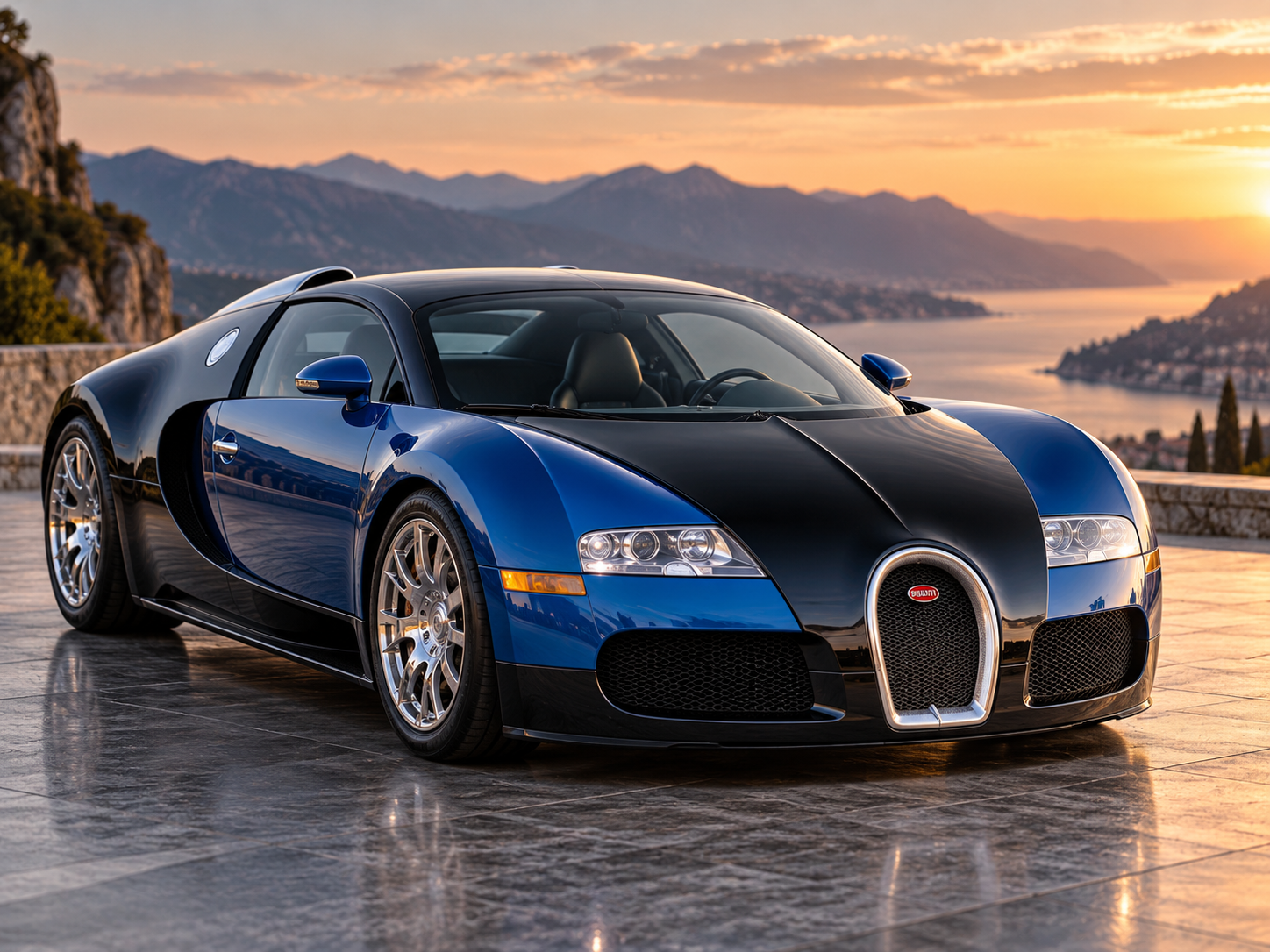
The original coupé established the formula with its quad-turbo W16, seven-speed dual-clutch gearbox and all-wheel drive. Rated at 1,001 PS and 1,250 Nm, it provided remarkable acceleration without abandoning leather-lined grand touring. Its approximately 407 km/h capability required appropriate high-speed mode and controlled conditions; this is not a safe or ordinary public-road speed.
Veyron Grand Sport — open-top grand tourer
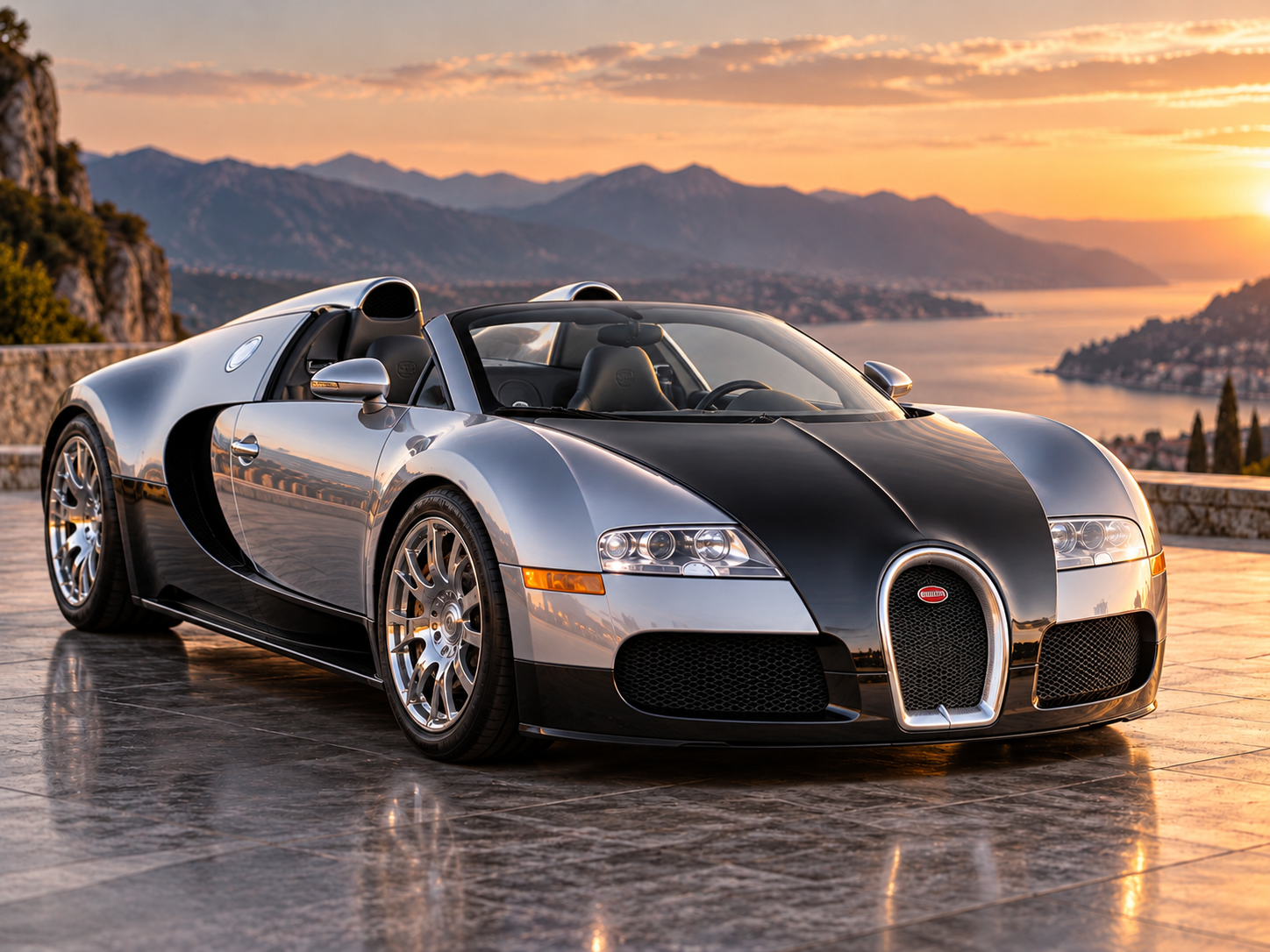
The 1,001 PS Grand Sport introduced a removable hard roof while retaining the core Veyron drivetrain. A roofless car needs additional structural stiffness and rollover protection, making the conversion more complex than simply removing a coupé roof. Bugatti quoted different speed limits with the roof installed and removed; the open-top operating limit was lower than the coupé’s high-speed capability.
Veyron Super Sport — the record-setting coupé
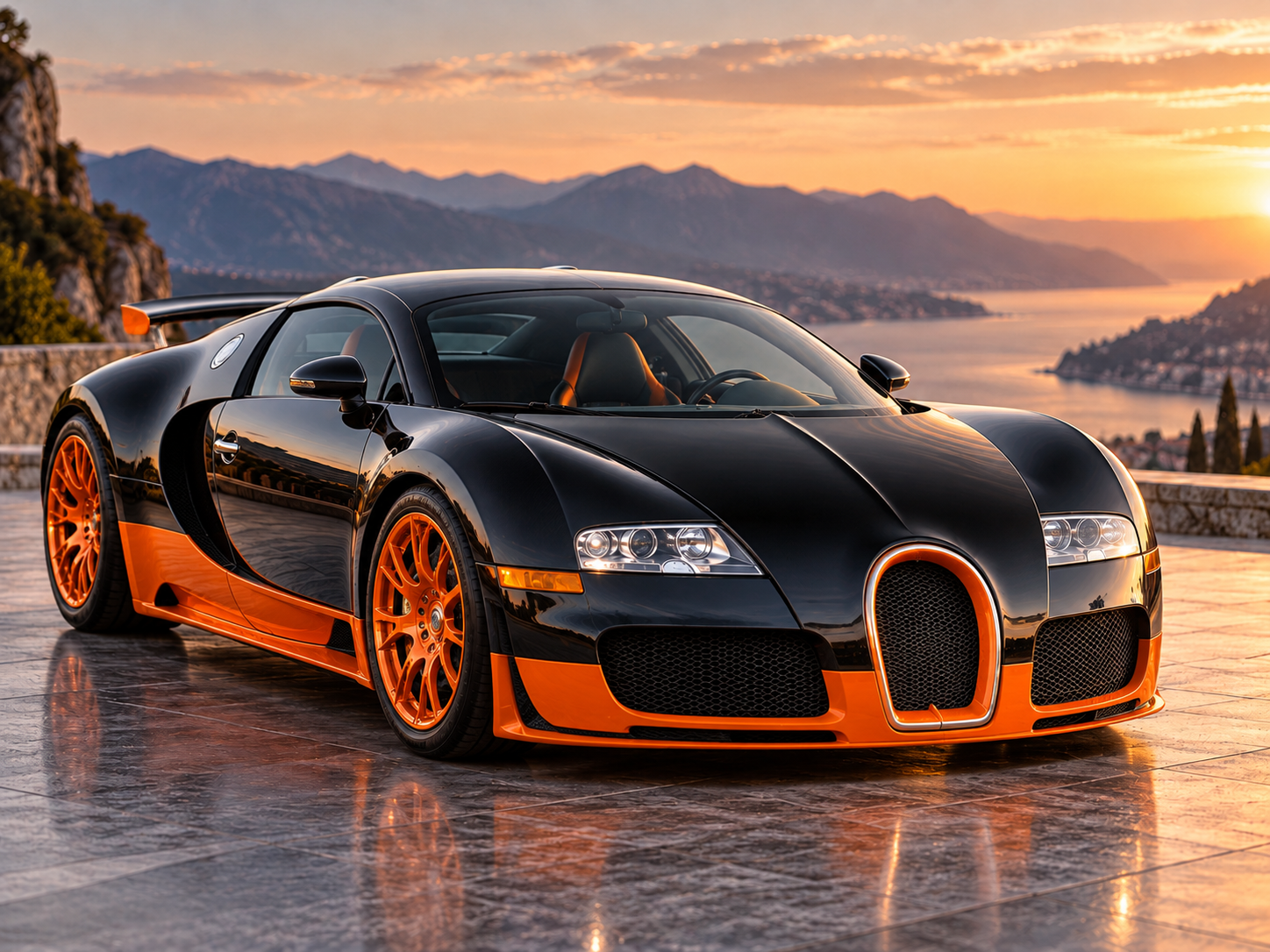
The 2010 Super Sport used uprated turbocharging, cooling, powertrain components and bodywork to reach 1,200 PS and 1,500 Nm. Test driver Pierre-Henri Raphanel recorded a 431.072 km/h two-way average at the Volkswagen test facility near Ehra-Lessien. The headline record was achieved under specific test conditions; production Super Sports were electronically limited to a lower top speed, in part because of tyre operating requirements.
Veyron Grand Sport Vitesse — 1,200 PS roadster
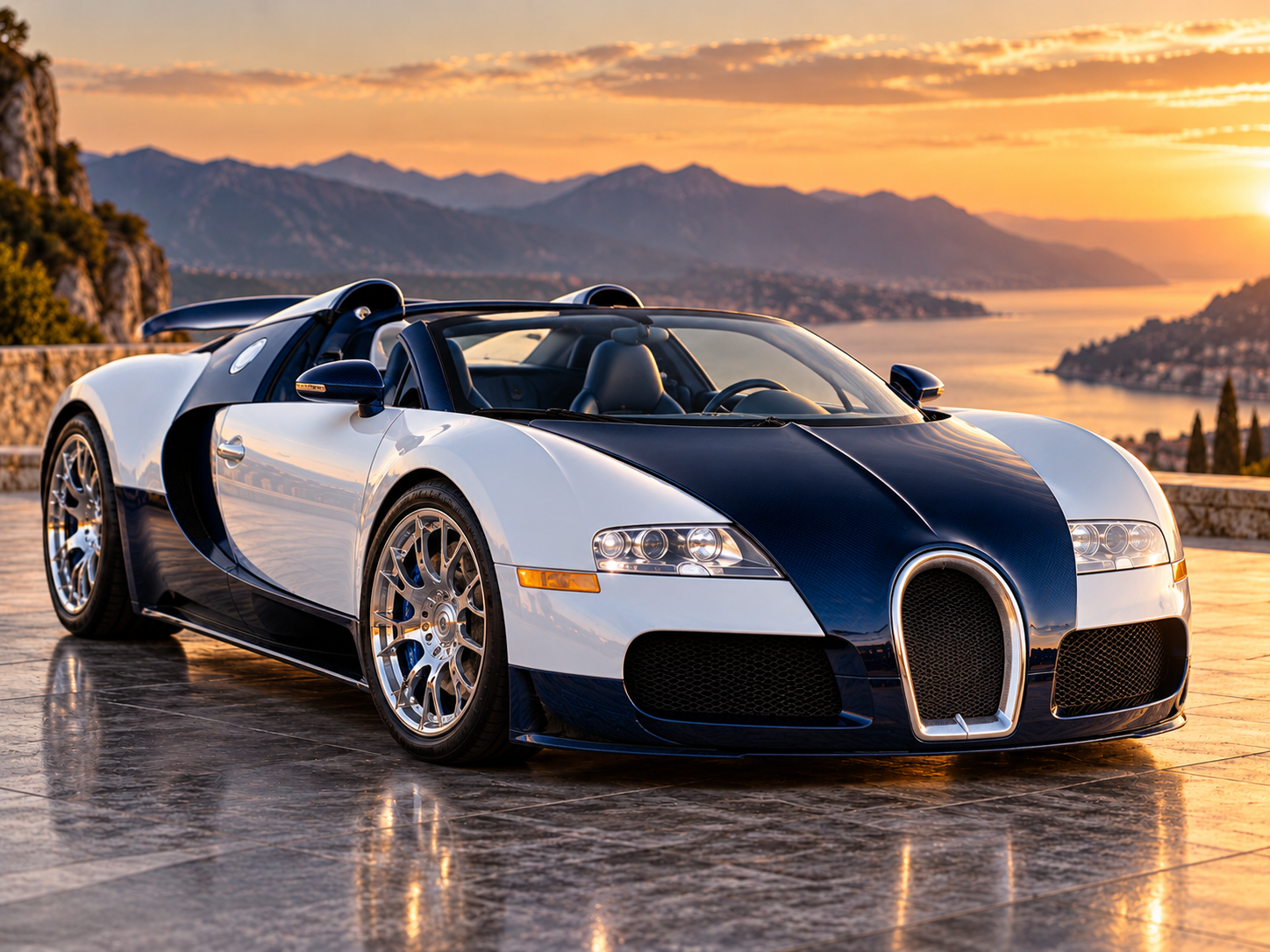
The Vitesse adapted Super Sport-level output to the reinforced Grand Sport roadster. In 2013, a special open-top record run reached 408.84 km/h, a separate result from the closed-roof Super Sport record. Bugatti details the engineering and different operating limits in its Grand Sport Vitesse retrospective. The Vitesse delivered 1,200 PS and 1,500 Nm.
How the quad-turbo W16 and drivetrain work
The Veyron’s 7,993 cc W16 uses sixteen cylinders in a compact W configuration, four turbochargers and 64 valves. Its unusual architecture allowed Bugatti to fit exceptional power into a mid-engined two-seat car. The seven-speed dual-clutch gearbox and all-wheel drive were engineered to distribute that output, rather than simply sending it to the rear tyres. Reliability at these torque levels depended on integrated cooling, lubrication, electronics and drivetrain development.
A power figure alone does not explain its character. Many early 2000s supercars prioritised lower weight or more direct driving feel. The Veyron deliberately combined enormous traction, effortless acceleration and premium refinement; that made it unusually fast while still tractable at ordinary speeds. The trade-offs were mass, complexity and exceptional maintenance demands.
Top speed, aerodynamics and braking
The original car’s approximately 407 km/h figure and the Super Sport’s 431.072 km/h record refer to different versions. The Grand Sport Vitesse’s 408.84 km/h open-top run was another distinct achievement. Manufacturer speed claims, electronically controlled customer limits and independently observed figures should not be merged into one ranking.
Active aerodynamics and adjustable ride height helped the Veyron balance drag, downforce and stability. Its rear wing doubled as an airbrake under severe deceleration, while specially engineered tyres and carbon-ceramic brakes managed extreme loads. Simplistic statements that the tyres always wear out in exactly fifteen minutes, or that fuel consumption is the same in every driving mode, are misleading without describing the operating conditions and the calculation used.
Interior and everyday usability
Bugatti paired the engineering with leather, machined-metal finishes and a restrained two-seat cabin. The car was intended to function as a luxurious grand tourer, not only as a speed-record instrument. A contemporary road test praised its manageability at low speed but noted limited visibility, cabin noise and minimal luggage space. This contrast between staggering performance and practical imperfections is central to understanding the Veyron.
Production numbers and special editions
Bugatti built 450 Veyrons during 2005–2015, comprising 300 coupés and 150 roadsters across their variants. The Super Sport belongs within the coupé total and the Grand Sport Vitesse within the roadster total, rather than being additional cars. The final Veyron was a Grand Sport Vitesse named La Finale. Editions such as Pur Sang, Sang Noir, Fbg par Hermès and the Legends series are limited design or configuration programmes and should not be mistaken for separate volume-produced model lines.
The manufacturer’s final-production announcement is the appropriate primary source for total output.
Original price versus current Veyron value
The Veyron was a seven-figure car when new, but its price changed with model year, market, taxes and variant. Contemporary road tests cited about $1.25 million for a 2006 example and approximately $1.66 million for a 2008 example; later high-output and roadster variants cost more. These are historical figures, not a 2026 manufacturer’s retail price. Bugatti no longer produces the Veyron.
Present-day sale values depend on condition, mileage, original specification, service documentation, accident history and the precise edition. Online asking prices are not completed transaction records. For meaningful current valuation, compare recent dated auction sales and model-matched market evidence, accounting for buyer’s premiums and currency. A universal exact 2026 price would be unsupported.
What does it cost to own and maintain?
The Veyron has specialised tyres, wheels, suspension, braking hardware, cooling and active aerodynamic systems. Maintenance requires appropriately trained specialists and full model-specific documentation. A prospective buyer should review service records, tyre age and condition, outstanding work, accident and repair history, and the provenance of any claimed rare edition. Costs vary widely by condition and work required; sensational internet claims about fixed annual bills are not substitutes for a written specialist estimate.
The Veyron’s legacy
The Veyron helped define the modern luxury hypercar: an engineering programme aimed at extraordinary speed, comfort and exclusivity together. Its production ended in 2015 and the Chiron followed in 2016. Later Bugattis and competitors surpassed some of its figures, but the Veyron remains a pivotal early twenty-first-century achievement for combining four-digit metric horsepower and 400 km/h performance with road-car refinement.
Why did the Veyron need so much cooling?
Four turbochargers and sixteen cylinders produce enormous heat, especially during repeated acceleration and prolonged high-load operation. Cooling requirements shaped the Veyron’s side intakes, internal airflow paths and packaging. It is not enough to build an engine capable of 1,001 PS briefly; a usable road car must protect the engine, gearbox, occupants and surrounding equipment over a range of ambient temperatures. This explains some of the vehicle’s weight and mechanical complexity, and why ordinary modification advice from less powerful sports cars should not be applied uncritically.
Veyron 16.4 versus Super Sport: which differences matter?
The original 16.4 remains the definitive first-generation Veyron, but the Super Sport goes well beyond a software power increase. Bugatti revised the turbocharging and air supply, raised power to 1,200 PS and changed external aerodynamic surfaces for higher-speed stability. It also arrived years after the original car, giving the engineering team time to refine chassis and drivetrain integration. A comparison based solely on the maximum-speed record misses those changes. Conversely, the original car should not be described as a Super Sport just because its styling has been modified or its engine tuned.
Grand Sport versus Grand Sport Vitesse: what changed?
Both are open-top Veyrons, but the Grand Sport retained the 1,001 PS engine, while the Grand Sport Vitesse adopted the 1,200 PS and 1,500 Nm specification. The higher-output Vitesse required associated chassis, cooling and drivetrain changes. On both roadsters the roof configuration matters, because airflow and high-speed operating limits change when the rigid roof is removed. When researching advertised figures, note whether a number refers to a closed-roof car, an unrestricted record attempt, or a normal electronically limited driving mode.
How should buyers interpret Veyron auction prices?
A published auction estimate is an expectation, not a hammer price. A reported hammer price may exclude buyer’s premium, taxes, export costs and currency conversion, and it does not necessarily represent what the seller received after fees. Private-sale reporting can be even harder to verify. For a fair comparison, record the chassis or edition, date, currency, condition, mileage and the type of figure being cited. Different examples can vary dramatically in specification and documentation. A highly publicised special-edition sale does not set a dependable price for all 450 Veyrons.
Did the Veyron invent the hypercar?
No single car can be credited with inventing the entire category. Earlier machines such as the McLaren F1 already pursued exceptional performance, and Bugatti itself had a substantial racing and engineering history long before the Volkswagen Group era. The Veyron’s distinctive contribution was the scale of its power, its 400 km/h capability and its attempt to combine that performance with an unusually polished road-going environment. That made it a reference point for later manufacturers even where their philosophies differed.
Bugatti Veyron FAQs
How fast is a Bugatti Veyron?
The original Veyron 16.4 had an approximately 407 km/h top-speed capability. The Super Sport achieved a measured 431.072 km/h record run; a different figure applies to customer speed-limited cars.
How much horsepower does it have?
The original Veyron and Grand Sport were rated at 1,001 PS (approximately 987 mechanical hp). The Super Sport and Grand Sport Vitesse were rated at 1,200 PS (approximately 1,184 mechanical hp).
How many were made?
450, including 300 coupés and 150 roadsters across all Veyron configurations.
Is the Veyron still being built?
No. Production ended in 2015.
Is the Veyron a good investment?
No investment return is guaranteed. Provenance, maintenance history, originality and completed sale data matter more than speculative claims of inevitable appreciation.
Sources and related reading
Primary and firsthand references: Bugatti on Veyron production; Bugatti on the Vitesse; Car and Driver instrumented test. The guide distinguishes historical manufacturer claims from road-test findings.
See also Most Expensive Cars in the World, Most Expensive Car Brands and Classic Cars.

This car is stunning, speedy and light but sounds horrible.
Thanks for sharing this info. We have been looking about this on google and I am happy to find your site. I will return in the future for more info.