A Mediterranean cruise is easiest to get wrong when the itinerary looks irresistible on paper. “Rome” may mean a long journey from Civitavecchia; a Greek island may mean queuing for a tender; and a seven-night trip with six ports can leave remarkably little time to enjoy the ship. The best route is the one whose port days suit your pace—not necessarily the one with the most famous names.
Start here: For city museums, architecture and food, compare western routes. For islands, archaeology and harbour towns, compare eastern and Greek-island routes. For more time in each place, favour an itinerary with longer port calls or overnight stays rather than the greatest number of destination names.
Western vs eastern Mediterranean cruises
| Route type | Typical destinations | Best suited to | Principal compromise |
|---|---|---|---|
| Western Mediterranean | Barcelona, Marseille, Italian ports, sometimes Palma and the Riviera | Art, cities, food and first-time European cruises | Rome and Florence can require long transfers from their cruise ports |
| Eastern Mediterranean | Athens, Greek islands, Turkish and eastern Adriatic ports, depending on voyage | Archaeology, islands and smaller coastal towns | Tendering, heat, steep streets and changing regional entry requirements |
| Adriatic-centred | Croatia, Montenegro, western Greece and ports serving Venice | Historic harbours and scenic coastlines | Actual embarkation ports may be far from advertised heritage cities |
| Long cross-Mediterranean | A selection spanning Spain, Italy, Greece or the Adriatic | Travellers with more time who want both sides of the basin | Longer travel, more transfers and a higher total trip cost |
These are broad route patterns, not guaranteed sailing schedules. A Western Mediterranean voyage may focus on Spain, France and Italy, while another may combine Italian ports, the Adriatic and Greece. Look at the exact dated port list before making a choice: the route name alone will not tell you whether Rome requires a full-day transfer or whether a Greek island uses tender boats.
Which Mediterranean route should you choose?
Western Mediterranean: for cities and cultural landmarks
Western routes often bring together Barcelona, southern France, Naples and Italian gateway ports. They offer an unusually broad choice of museums, architecture and food, but consecutive walking-heavy days can be tiring. A call advertised as “Rome” may be at Civitavecchia; a call marketed as “Florence” may use Livorno. Before booking, compare hours docked minus transfer and return buffers, not simply the advertised number of ports.
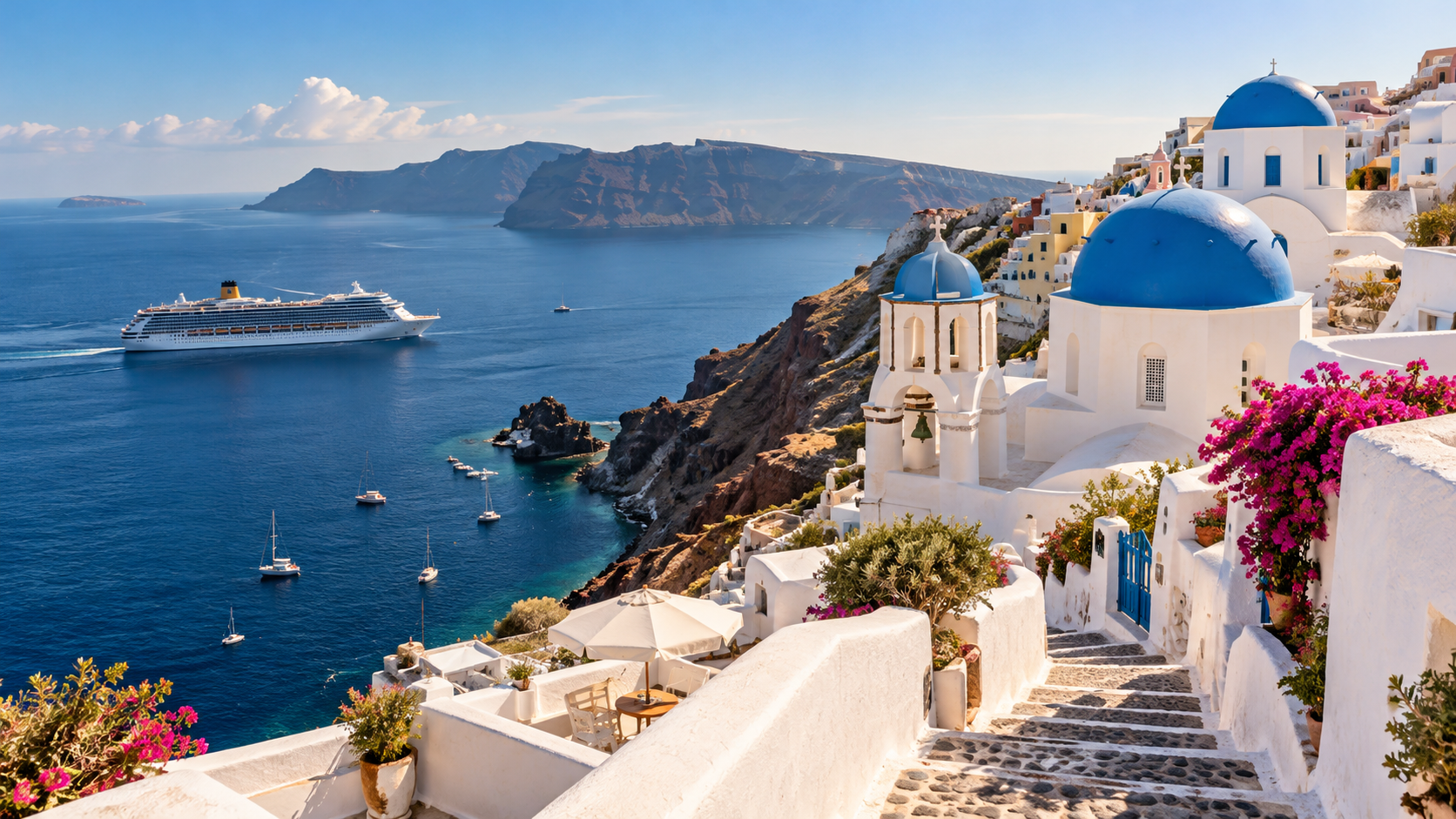
Greek islands and eastern Mediterranean: for coastal scenery and archaeology
Eastern Mediterranean sailings may combine Piraeus, Crete, Santorini, Mykonos, Rhodes and Turkish or Adriatic ports. A small island can be the highlight of a voyage, yet a short stop is less useful if disembarkation requires a tender, the shore excursion is tightly scheduled or climbing is difficult. Ask whether the ship berths alongside, how tenders are allocated, and whether you have time for a quieter alternative to the most visited viewpoint.
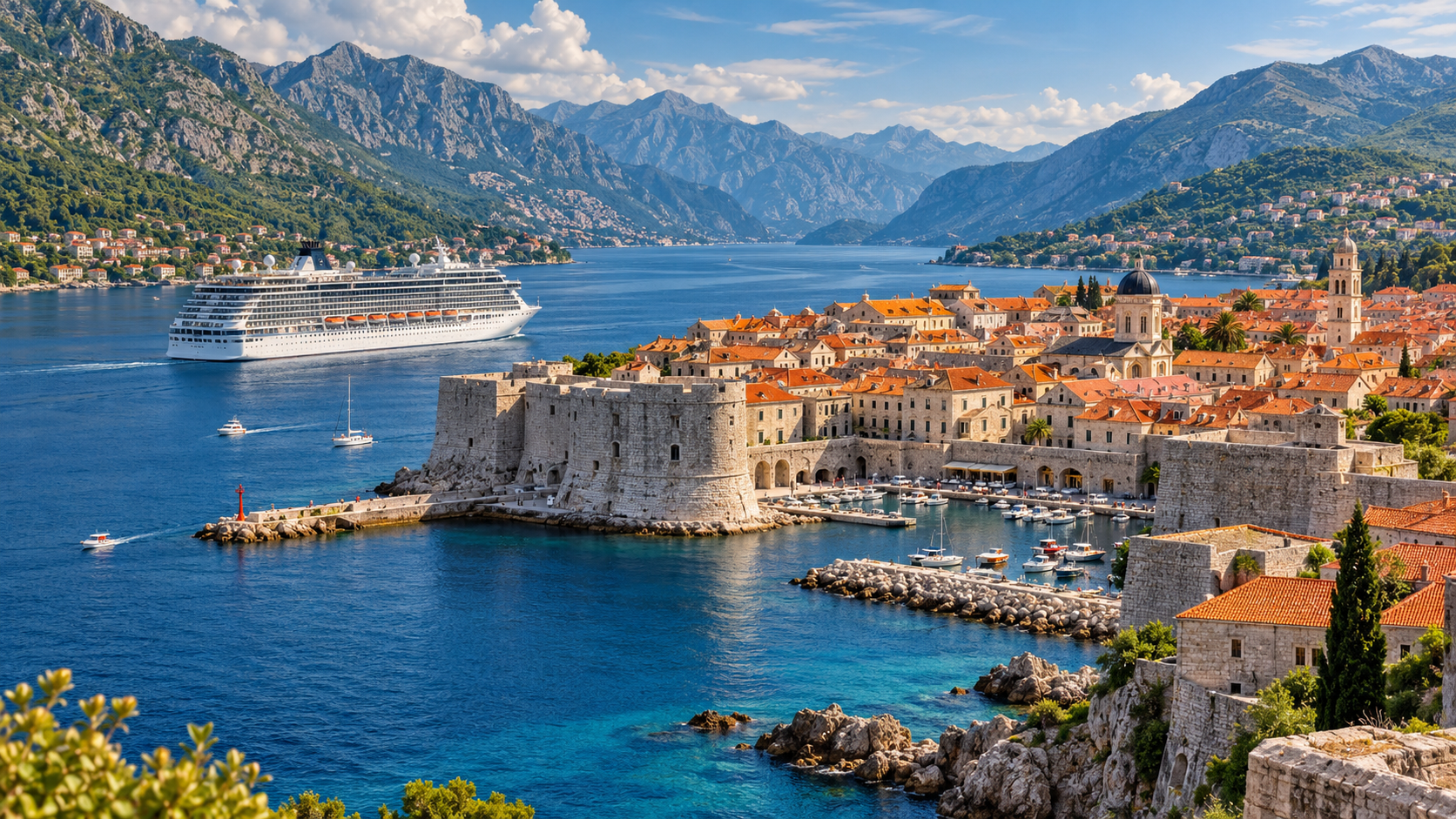
Adriatic and mixed routes: for historic ports
Dubrovnik, Split, Kotor and the eastern Italian coast feature on various Adriatic itineraries. Historic centres can offer rewarding short visits, but crowds and local visitor management matter. Do not assume a cruise marketed as “Venice” sails through the historic lagoon: restrictions on large vessels have changed how the city is accessed. UNESCO documented Italy’s large-vessel restriction; verify the actual terminal and transfer with the operator for your sailing.
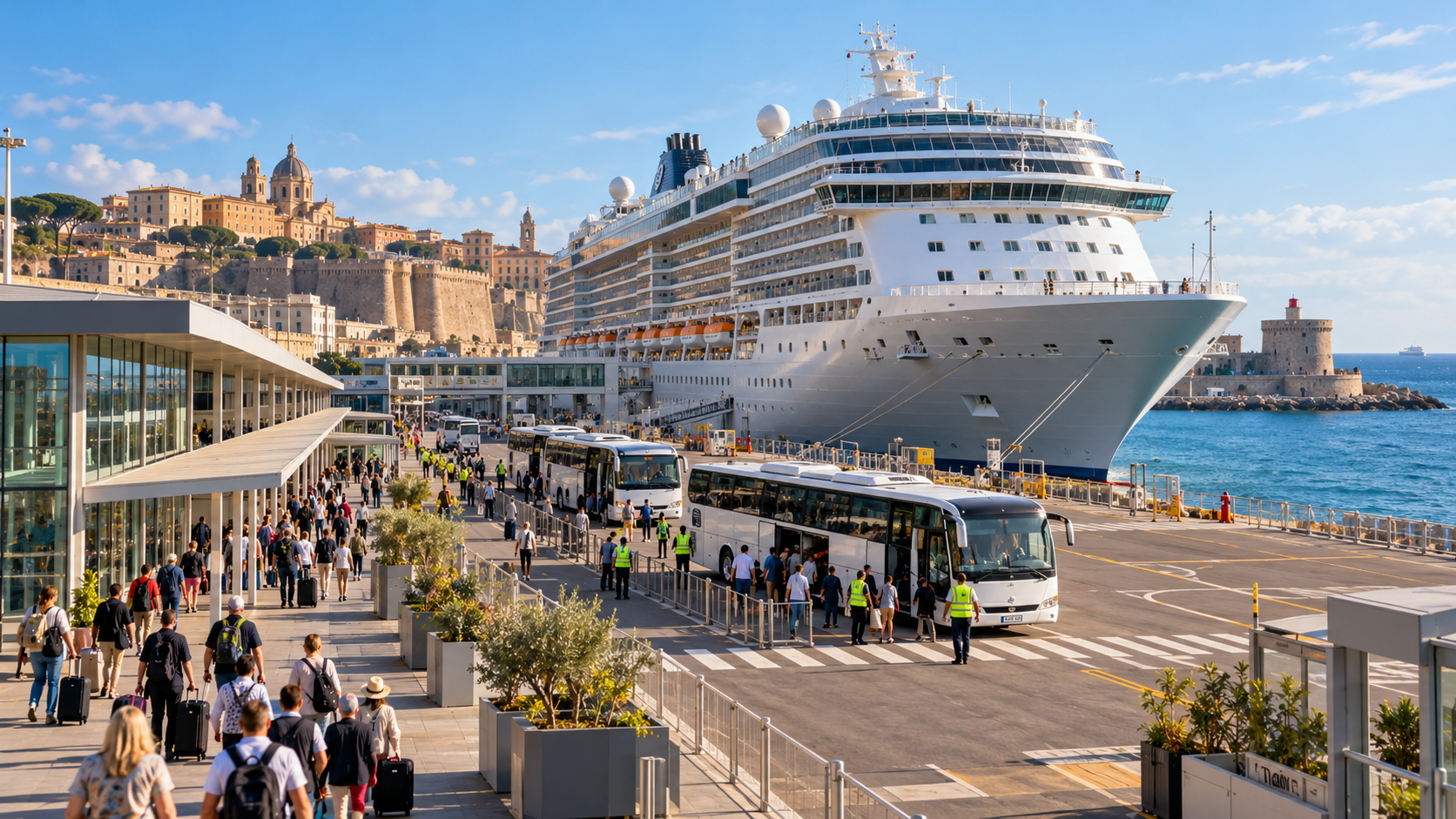
Port access: the part brochures rarely compare clearly
| Advertised city or region | What to verify | Decision consequence |
|---|---|---|
| Rome | Which Civitavecchia terminal and transport service you use | Allow for travel each way before reserving timed entry in Rome |
| Barcelona | Assigned cruise terminal and the shuttle or taxi connection | Terminal location affects luggage, transfers and embarkation-day timing |
| Florence / Pisa | Whether the vessel calls at Livorno or a different regional port | Choose one realistic main excursion rather than promising to see everything |
| Venice | Actual port or mainland terminal used by the vessel | Arrival and sightseeing logistics can differ substantially from the itinerary label |
| Greek islands | Berth or tender, walking gradient and return deadline | A popular island is not necessarily an easy port day |
Barcelona’s port authority identifies terminal-specific shuttle and taxi arrangements and notes that its cruise facilities are being reorganised in stages towards 2030. Its passenger information should take priority over an old map or a third-party transfer estimate: Port of Barcelona passenger information and terminal reorganisation plan.
At Civitavecchia, the port operator documents both dock-to-service-centre shuttles and an additional direct connection between the cruise docks and railway station; its posted arrangements and prices are subject to change. Confirm the service for your sailing with official Port Mobility guidance. A transfer estimate is never a substitute for knowing the ship’s all-aboard time.
Seven-night or fourteen-night Mediterranean cruise?
A seven-night cruise can work well when you have one clear priority: a western city circuit or a compact Greek-island experience. But a list of five famous cities in one week can become five early starts and repeated transfers. A ten-to-fourteen-night route creates more room for a wider geographic range or additional sea days; it does not automatically mean more time ashore. Read the schedule for arrival time, departure time, overnight calls, tender operations and back-to-back long excursions. A thirteen-hour port call with a distant transfer may be less relaxed than six hours beside a walkable old town.
Illustrative seven-night western route
Barcelona embarkation → southern French or Balearic call → Livorno or another Italian gateway → Civitavecchia → Naples → one or more sea/coastal days → disembarkation. This is an illustration of itinerary logic, not a verified sailing to book. Compare any real route against its official departure calendar.
Illustrative extended route
Civitavecchia → southern Italy → Sicily → Adriatic ports → western Greece → Crete → Piraeus. Longer voyages may mix these areas, but the exact sequence, distances and entry requirements vary. Choose the cities that matter most and verify their port times before treating an itinerary map as a promise.
Best time to cruise the Mediterranean
Spring and autumn can offer a more comfortable balance for sightseeing than the hottest midsummer weeks, although weather, daylight, crowds and fares vary by port and sailing. April or early May may bring cooler sea conditions and seasonal opening hours in smaller destinations. June to August gives long days but raises the chance of hot, crowded excursions. September and October can suit travellers prioritising city walks; autumn storms can still disrupt particular routes. Winter programmes exist but are not interchangeable with summer island itineraries: check how many destinations and shore services actually operate. The best month is therefore a trade-off, not a universal ranking.
How to calculate useful time ashore
Start with the published time in port. Subtract disembarkation or tender delays, the transfer out, a sensible return buffer and the transfer back. What remains is your approximate usable visit—not a fixed entitlement. For example, an eight-hour call with ninety minutes of travel in each direction, sixty minutes of boarding buffers and forty minutes of tender or port movement leaves roughly four hours and twenty minutes. The numbers are illustrative, not a timetable for a particular port.
This simple calculation helps explain why two ships advertising the same city may offer quite different holidays. For families, older travellers and anyone with mobility limitations, add rest and accessible-transfer time rather than planning every minute of the call.
Costs beyond the headline fare
The fare alone is not a meaningful comparison. Add flights to and from the actual embarkation ports, accommodation before departure, transfers, port excursions, gratuities where applicable, speciality dining, drinks, connectivity, insurance and any visa or entry costs. A one-way Barcelona-to-Athens itinerary may require a different flight plan from a Barcelona round-trip. Independent excursions are not always cheaper once taxis and missed-return risk are included. Compare total cost for the same cabin category, travel dates and inclusions rather than collecting unrelated headline prices.
Ship choice and suitability
Large resort-style ships offer extensive onboard facilities, which may be valuable on itineraries with sea days or for multigenerational groups. A smaller vessel may provide a quieter atmosphere, but small-ship access is route-specific and does not guarantee a closer berth or less crowding ashore. Choose the destination pattern first, then use our cruise-lines comparison for the operator and ship-style decision. The family cruise-line guide explains how children’s facilities, cabins and passenger mix change suitability; the couples guide compares atmosphere and quieter options.
Accessibility, documents and local impact
Mobility suitability depends on the exact ship, gangway, tender policy, local terrain and excursion transport. A wheelchair-accessible cabin does not establish that an island landing is accessible. Request port-by-port accessibility details from the operator and avoid relying on general “accessible cruise” marketing claims.
A Mediterranean itinerary can cross Schengen and non-Schengen borders. Passport, visa and entry procedures depend on nationality, residency, direction of travel and the specific countries called at. The European Commission states that its Entry/Exit System became fully operational in April 2026; entry rules and authorisations should be checked directly with official EU guidance and each destination’s authorities before travel. Avoid paying third-party websites for an authorisation that has not been officially opened for applications.
Cruise impacts are not limited to passenger satisfaction. Large simultaneous port calls can affect streets, transport and historic environments. The Barcelona port-city agreement and the Venice lagoon restrictions are concrete reasons to check local policy as well as the ship’s itinerary, rather than assuming port access will remain unchanged forever.
Mediterranean cruise planning checklist
- Choose whether your main priority is cities, islands, archaeology, scenery or onboard rest.
- Compare the actual embarkation and disembarkation ports, especially on one-way sailings.
- Check every advertised “city” against the named cruise pier and transfer time.
- Identify tender ports and accessibility restrictions before booking excursions.
- Calculate useful hours ashore, including a return buffer.
- Check local heat, seasonal operating hours and weather-disruption possibilities.
- Compare the full trip cost, not only the ship fare.
- Verify passport and entry requirements for the entire routing.
- Plan clothing and essentials using our cruise packing list and cruise clothing guide.
Three itinerary choices that change the whole trip
Choose the berth, not just the city on the map
Barcelona is a good example of why terminal detail matters. The Port of Barcelona lists the World Trade Center South terminal roughly 400 metres from the city, while Terminal A and Terminal B are around 2 kilometres away and Terminal E about 3 kilometres away. They cannot be treated as interchangeable for a passenger managing luggage, limited mobility or a tight connection. Check the terminal allocated to your departure rather than relying on a generic “Barcelona cruise port” transfer instruction. The port authority’s current terminal directory is the starting point.
Look for one great day, not four impossible ones
Suppose your first Italian port is Livorno. You might be tempted to squeeze Florence, Pisa and a Tuscan village into one shore excursion. That is possible only under particular schedules and transport arrangements, and it leaves little room for delayed buses or a slow museum queue. Choose your priority: a proper visit to Florence, a shorter Pisa-focused outing, or a quieter day closer to the coast. A trip that returns comfortably to the ship is often more rewarding than a hurried checklist.
Decide how much of the holiday happens at sea
A large ship with restaurants, shows and family facilities can be good value on a cruise with sea days. It may matter less if you intend to leave before breakfast every morning and return exhausted. Compare consecutive port-intensive days, sea-day count and cabin location together. One afternoon spent on deck between two demanding city visits can be more valuable than another short port call.
Port-day decisions: five common examples
| Port or call | What can consume your time | Better planning question |
|---|---|---|
| Civitavecchia for Rome | Ship-to-station transfer, train travel, city transport, return buffer | Is one major Rome neighbourhood or attraction a better day than three scattered stops? |
| Livorno for Florence or Pisa | Lengthy onward journey and attraction reservations | Which single place do I most want to see? |
| Naples | Choice between city, archaeological sites and coastal trips | Do I want Pompeii, the city itself or the coast—not all at once? |
| Santorini | Tender allocation, hill access and possible cable-car queues | What happens if getting ashore takes longer than expected? |
| Dubrovnik or Kotor | Concentrated arrivals, local traffic and crowded old-town streets | Can I plan a calmer walk or an off-peak start? |
For Civitavecchia, the official port mobility service lists both dock-to-service-centre shuttles and a direct train-station connection on qualifying days. Routes and operating windows must be checked for the sailing date. Treat the port authority as the source for transfers and the cruise operator as the source for the ship’s all-aboard deadline.
When the Mediterranean cruise season changes the experience
| Period | What often improves | What to watch |
|---|---|---|
| April–May | City sightseeing before the strongest summer heat | Cooler water, variable weather and holiday closures |
| June | Long daylight and a wider choice of summer services | Crowds and rising heat in southern ports |
| July–August | Beach-focused days and warm swimming conditions | Heat exposure, school-holiday demand and busy tender ports |
| September–October | Potentially more comfortable walking and still-active routes | Rain, shorter daylight and changing island services later in autumn |
| November–March | Some quieter city-centred and winter cruise programmes | Fewer route choices, rougher conditions and seasonal closures |
Do not automatically rule out winter: selected Mediterranean operators now offer more off-season itineraries. Yet a quiet January city voyage is a different holiday from swimming and island-hopping in September. Pick the month around the activities that matter, then check the actual calls and opening hours.
A practical way to compare two shortlisted sailings
Give each sailing a simple four-part comparison: the places you genuinely want to visit; usable time ashore; how demanding the sequence feels; and the full journey cost. A Barcelona round-trip with three manageable city stops may suit a first-timer better than a longer one-way sailing with extra flights and distant ports. Someone returning to Europe for the third time may prefer the exact opposite: smaller towns and a few extra nights. There is no single winning itinerary without knowing the traveller.
For example, compare Sailing A with five port calls and two sea days against Sailing B with six ports and one sea day. If two of Sailing B’s ports need lengthy transfers, its extra stop may provide less worthwhile time ashore. Keep the comparison specific to the published timetable; any sample like this is a planning demonstration, not a real-time sailing recommendation.
Frequently asked questions
Is western or eastern Mediterranean better for a first cruise?
Western routes often suit travellers who want landmark cities and established urban transport, provided they accept transfers and intensive days. Eastern routes can be a better fit for islands and archaeology, but check tendering, hills and access before deciding.
Is a Mediterranean cruise worth it if I dislike crowds?
It can be, but choose port timing and ship scale carefully. Prefer longer calls, flexible shore plans and visits beyond the most crowded central landmark. Peak summer and multiple simultaneous ship arrivals can make short city excursions less satisfying.
Do Mediterranean cruises visit Rome and Florence directly?
Not generally. Many itineraries use the port of Civitavecchia for Rome and Livorno for Florence or Pisa. The advertised city is a destination served by the port, not necessarily the place where you disembark.
Which is better: seven nights or fourteen?
Seven nights works for one coherent region. Ten to fourteen nights can support a broader circuit, but only if the timetable gives you useful destination time. Count substantial port calls and avoid judging solely by the number of flags on the map.
Where this guide fits in the cruise destination silo
This article focuses on Mediterranean route selection and shore logistics. To compare the Mediterranean against Alaska, the Caribbean, Norwegian fjords, Antarctica and other regions, return to our worldwide cruise destinations guide. If you have already chosen the Mediterranean, compare the cruise-line experience separately instead of confusing operator preferences with destination quality.
Sources and practical details to recheck
Port arrangements and published sample itineraries were checked against the Port of Barcelona, Port Mobility Civitavecchia, UNESCO, European Commission and published operator route pages in October 2026. The operator examples establish that certain route patterns are sold, not that one operator is recommended. This is a researched planning synthesis, not a claim that WorldsUltimate personally sailed every itinerary. Berths, services, prices, entry rules and sailings can change; verify them for your departure.