Bonnie Parker and Clyde Barrow were a Texas criminal couple whose 1932–1934 crime spree became one of the most mythologised stories of the Great Depression. They robbed stores and some banks, stole cars, took hostages, and were linked to multiple killings. Their fame was amplified by photographs recovered after the 1933 Joplin shootout and by decades of films and popular retellings.
The historical record is less romantic than the legend. FBI records show that the federal Bureau joined the pursuit because stolen cars crossed state lines; Bonnie and Clyde were killed in a law-enforcement ambush near Sailes, Louisiana, on 23 May 1934. This profile separates documented events from later mythology.
Who Were Bonnie Parker and Clyde Barrow?
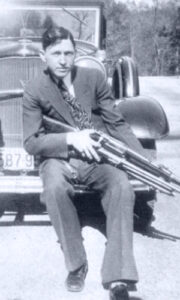
Clyde Champion Barrow was born in Ellis County, Texas, in 1909 and grew up in a poor farming family that later moved to West Dallas. By his late teens he had a record involving car theft and burglary. He served time at Eastham Prison Farm and was paroled in February 1932.
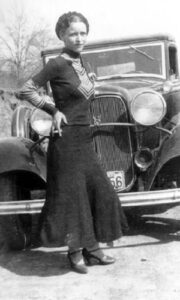
Bonnie Elizabeth Parker was born in Rowena, Texas, in 1910. She married Roy Thornton as a teenager, but the relationship did not last. FBI records state that she met Clyde in Texas in January 1930, when she was 19 and he was 21.
The pair became associated with a changing group usually called the Barrow Gang. Members at different times included Buck Barrow, Blanche Barrow, W. D. Jones, Raymond Hamilton and Henry Methvin.
What Crimes Did the Barrow Gang Commit?
The popular image of Bonnie and Clyde as spectacular bank robbers is incomplete. Their crimes included stolen cars, robberies of stores and gas stations, some bank robberies, kidnappings and violent encounters with law enforcement. The FBI later described them as suspects in numerous killings as well as robbery, kidnapping and interstate car-theft offences.
Because responsibility for individual shootings was often disputed or reconstructed later, WU does not assign every killing to Bonnie personally. The FBI’s historical summary says the pair were believed to have committed 13 murders by the time they died, but that figure should be understood as a historical law-enforcement attribution rather than a modern forensic accounting.
For broader event-based coverage rather than individual biographies, see Biggest Heists in History. For people and groups across different periods, see Famous Thieves in History.
Why the Joplin Photographs Mattered
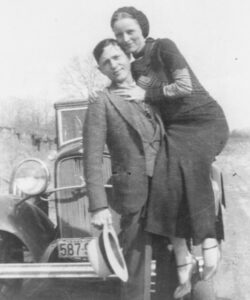
One of the most important turning points in their public image came after the gang’s 1933 confrontation with police in Joplin, Missouri. Rolls of film left behind were developed and the resulting photographs were widely published. Missouri State Archives material notes that these images helped turn Bonnie and Clyde into nationally recognised figures.
The photographs mattered because they created a visual story that was easier to romanticise than the underlying record. Posed images of the couple with guns and a car helped create the “outlaw lovers” image that later films and books amplified.
The FBI’s Role in the Manhunt
The FBI—then the Bureau of Investigation—did not initially have jurisdiction over the pair’s state crimes. According to the Bureau’s historical case file, federal involvement grew after evidence connected them with stolen vehicles transported across state lines. A federal warrant was issued in May 1933.
Federal agents distributed identification material and followed leads across several states. The Bureau’s own history makes an important distinction: it helped tighten the net around the gang, but the final ambush was carried out by Texas and Louisiana law officers.
The Eastham Breakout and the Final Months
On 16 January 1934, Clyde helped five prisoners escape from Eastham Prison Farm. FBI records state that two guards were shot during the breakout. Henry Methvin was among the escapees and later became important to the final phase of the manhunt.
On 1 April 1934, two highway patrolmen were shot near Grapevine, Texas. A few days later, a constable in Oklahoma was mortally wounded. These events intensified the pursuit and further weakened any credible version of the pair as harmless or Robin Hood-style outlaws.
How Did Bonnie and Clyde Die?
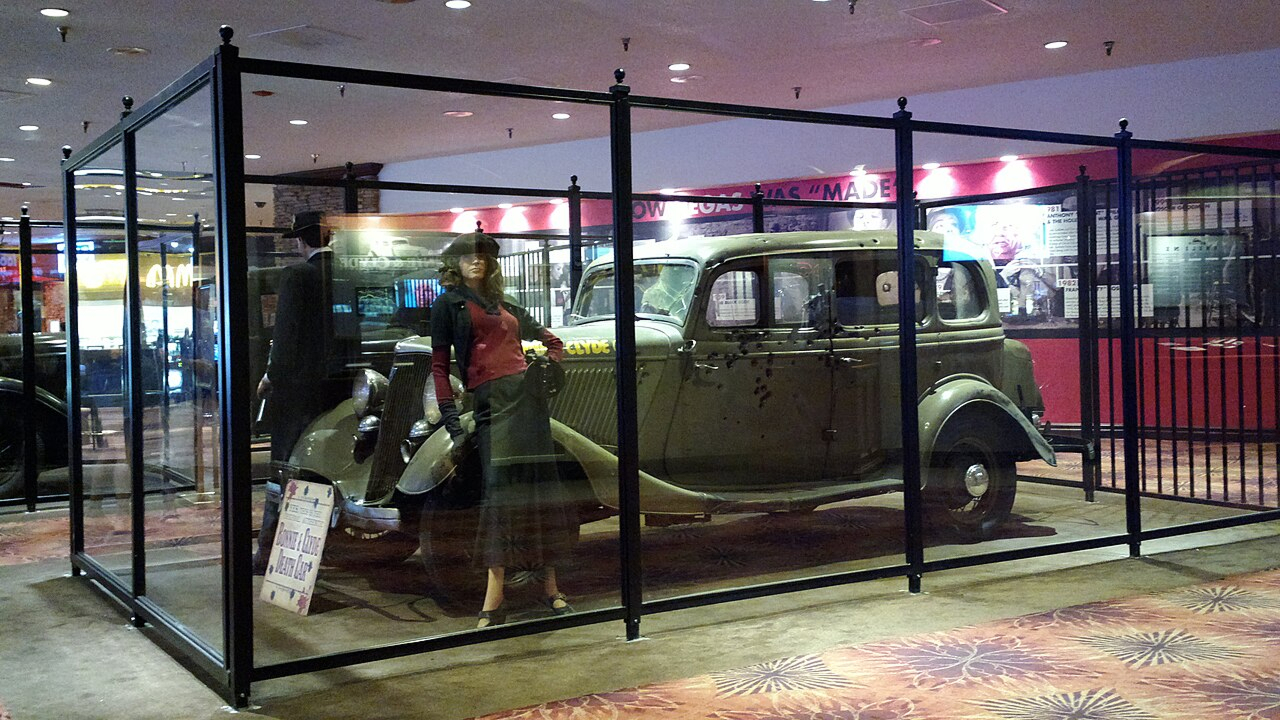
Before dawn on 23 May 1934, officers from Louisiana and Texas concealed themselves near Sailes in Bienville Parish, Louisiana. Bonnie and Clyde approached in a Ford automobile and were killed when the officers opened fire. The FBI’s case history describes the ambush as the end of one of the most extensive manhunts of the period.
Frank Hamer, a former Texas Ranger, was part of the posse. Later retellings often shift details about who planned what, the exact number of shots fired, or the precise mechanics of the ambush. Those details vary by source, so WU does not present a single dramatic shot-count as settled fact.
Bonnie Parker’s Role: What Is Clear and What Is Not
Bonnie was unquestionably part of the fugitive group and participated in the life of the gang. What is less secure is the claim that she personally committed every violent act later attached to the pair. Even the FBI’s retrospective writing has distinguished between Clyde’s use of weapons and uncertainty over whether Bonnie fired a fatal shot.
That distinction matters. Historical profiles should not turn uncertainty into either exoneration or exaggeration. Where sources disagree about individual acts, the disagreement should remain visible.
Bonnie and Clyde: Record vs Myth
| Popular claim | What the record supports |
|---|---|
| They were mainly glamorous bank robbers | They committed a wider mix of crimes, including car theft, store robberies, kidnappings and violent offences. |
| They were Depression-era Robin Hoods | There is no strong evidence that they systematically redistributed stolen money to the poor. |
| Bonnie personally committed every killing attributed to the gang | Her participation in the gang is clear, but responsibility for specific shootings is not equally documented. |
| The FBI killed Bonnie and Clyde | The final ambush was carried out by Texas and Louisiana law officers; the Bureau supported the wider pursuit. |
| The Joplin photographs helped create their legend | Well supported by historical reporting and Missouri archival material. |
Why the Legend Became Bigger Than the Record
Bonnie and Clyde’s image outlived them because photography, newspapers, poetry and later film turned a violent crime story into a recognisable cultural narrative. Bonnie’s own writing contributed to that process, while the 1967 film Bonnie and Clyde became one of the most influential fictionalised versions of their story.
The Library of Congress classifies the 1967 film as a fictional crime drama based on Parker and Barrow. That distinction is useful: the film belongs to cultural history, but it should not be used as evidence for the details of the real crime spree.
Key Timeline
- 1909: Clyde Barrow is born in Texas.
- 1910: Bonnie Parker is born in Texas.
- January 1930: Bonnie and Clyde meet in Texas.
- February 1932: Clyde is paroled from prison.
- 1932–1934: The pair travel with changing members of the Barrow Gang during their main crime spree.
- 1933: Joplin photographs help turn them into national media figures; federal interstate-car-theft charges bring the Bureau formally into the pursuit.
- 16 January 1934: Eastham Prison Farm breakout.
- 1 April 1934: Two highway patrolmen are killed near Grapevine, Texas.
- 23 May 1934: Bonnie and Clyde are killed in the Louisiana ambush.
Sources and Evidence Limits
- FBI · Bonnie and Clyde — federal case history, jurisdiction, pursuit, crimes attributed to the pair and the 1934 ambush.
- Missouri State Archives — historical context for the Joplin incident and the photographs left behind.
- Library of Congress · Headlines & Heroes — contemporary newspaper context and Bonnie Parker’s poem.
- Library of Congress · Bonnie and Clyde (1967) — film record used only for cultural-history context.
Evidence limit: Bonnie and Clyde became mythologised almost immediately, so later retellings often blend documented events with folklore, film imagery and disputed recollections. WU gives priority to contemporary records and institutional archives, and labels uncertain attribution rather than presenting it as settled fact.