Quick Information About Red-Fronted Macaw
- Kingdom: Animalia
- Phylum: Chordata
- Class: Aves
- Family: Psittacidae
- Order: Psittaciformes
- Species: A.rubrogenys
- Genus: Ara
- Length: 55 to 60 centimetre
- Weight: approximately 525–550 grams
- Lifespan: varies with circumstances; no reliable species-wide lifespan figure established here
- IUCN conservation status: Critically Endangered (current IUCN/World Parrot Trust listing; see conservation discussion below)
- Distribution: dry inter-Andean valleys of south-central Bolivia
Image identification note: Historical site images have not all been independently verified against their original photographer records. For confirmed identification, compare the red forecrown, red shoulder patches, largely green body and pale skin around the eye with the World Parrot Trust species description.
Explore the 17 macaw species comparison to distinguish this Bolivian bird from similar green macaws.
Classification
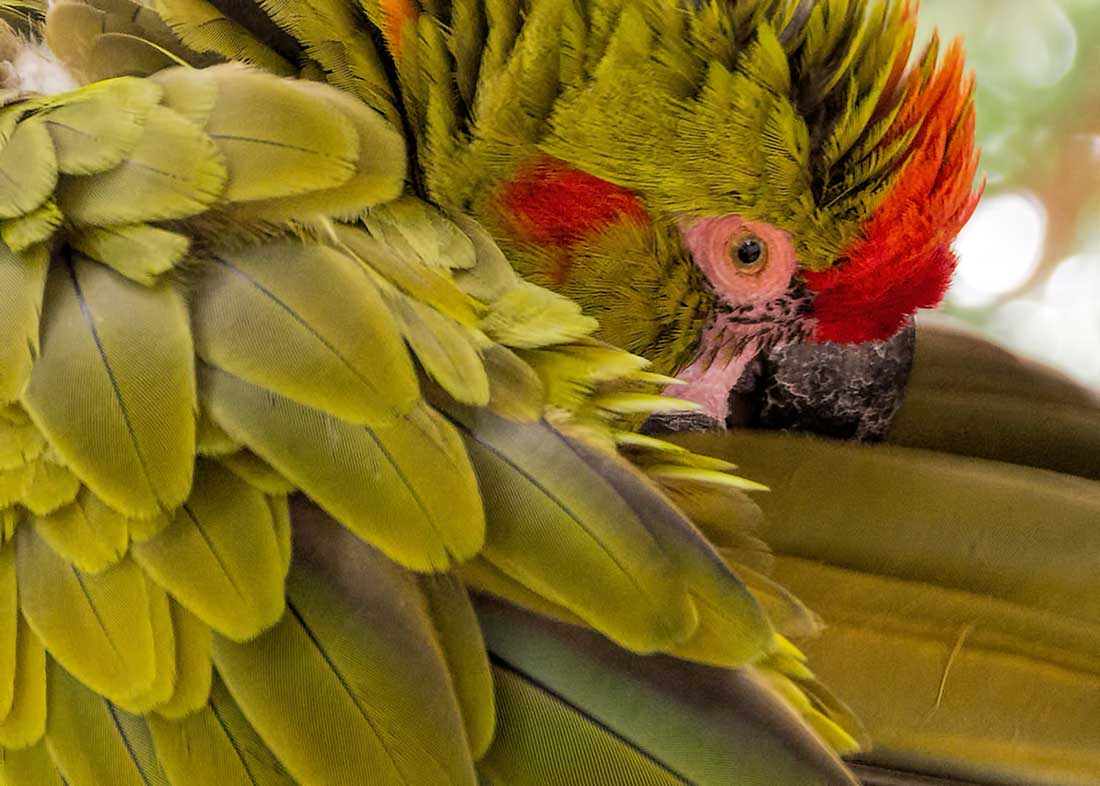
The scientific name of Red-fronted macaw is ‘Ara rubrogenys.’ Adding to it, the Red-fronted macaw is categorised in the class Aves. It is placed in the order ‘Psittaciformes’, the family ‘Psittacidae’, and the phylum ‘Chordata’.
Habitat
The Red-fronted Macaw is endemic to the dry inter-Andean valleys of south-central Bolivia. It uses arid scrub, cactus woodland and wooded gorges, generally at around 1,100–2,700 metres elevation. Unlike many forest macaws, it normally nests in holes and crevices on steep river cliffs; occasional nesting in palm cavities has also been recorded.
How to identify the Red-fronted Macaw
The red-fronted macaw is 55 to 60 cm long. And also known as one of the lightest macaws. Predominantly green with a red forehead and a red patch over the ears. The wing coverts edged bright red to orange. As well as it has red at the bend of wings and striking teal-blue primary wing feathers. Uniquely, it has an area of pinkish skin around the eyes extending to the beak. The olive-green tipped tail ranges from green to blue and the underside of the tail is yellow.
Sounds and vocal behaviour
[wu_embed_yt video_id=”BjlHSNiwVc8″]
Red-fronted macaws produce loud vocalizations as musical and high-pitched notes when communicating. They have two distinct vocalizations:
- Quiet twitter vocalization- occur between partners. The calls between the pair begin with a loud squawk and decline into a soft ‘coo’ and ‘chuckle.’
- Alert-vocalizations- these are given in response to predators and consist of loud vocalization for long intervals.
The behaviour of Red-fronted macaw
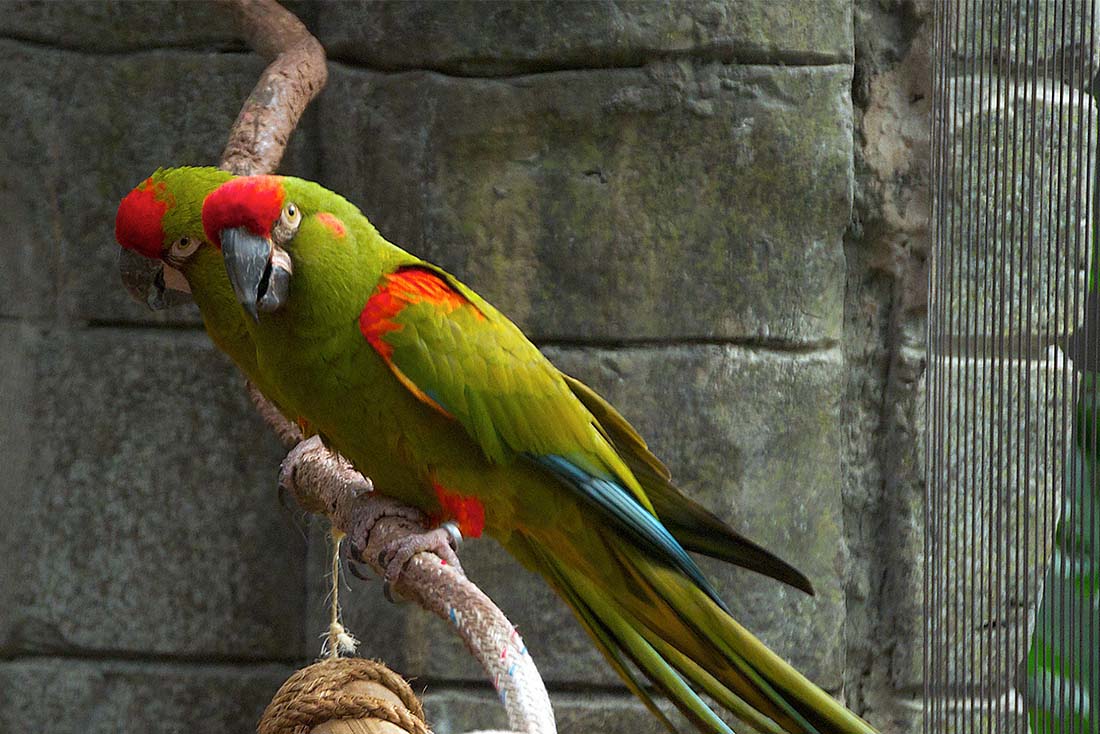
The macaws are active in 23 to 42% of the time during the midday (hottest hours)-playing (predominant behaviour is resting). They spent 11-18% time on social interactions and are rarely found alone. Moreover, the activity level of Red-fronted macaw depends on the age and number of individuals in the flock and of course, they are affectionate, docile, inquisitive and playful. Red-fronted macaw keeps close to nesting sites, flying up and down the cliffs and drainage areas around the valley. While sitting in groups red-fronted macaws exhibit four different play patterns. These patterns include pecking at each other, beak wrestling, fencing, alternating jerks of the body and tossing objects.
Red-fronted macaw diet
Red-fronted macaws are herbivores, frugivore and granivore. They mostly feed on vegetables, fruit (trees such as Jatropha hieronymi are the main source of nutrition) and nuts. Most grasses found in the Bolivia valleys also consumed. Furthermore, cactus (Cereus) include in the diet and serve as a source of both food and water in their arid habitat. Like many macaws, they often chew on sticks or tree bark. As a result of habitat destruction, there are fewer native food sources available. And the birds have turned to cultivated crops. The preferred crop is corn. As the birds will invest hours of time in evading farmer’s attempts to ward them off.
Reproduction of Red-fronted macaw
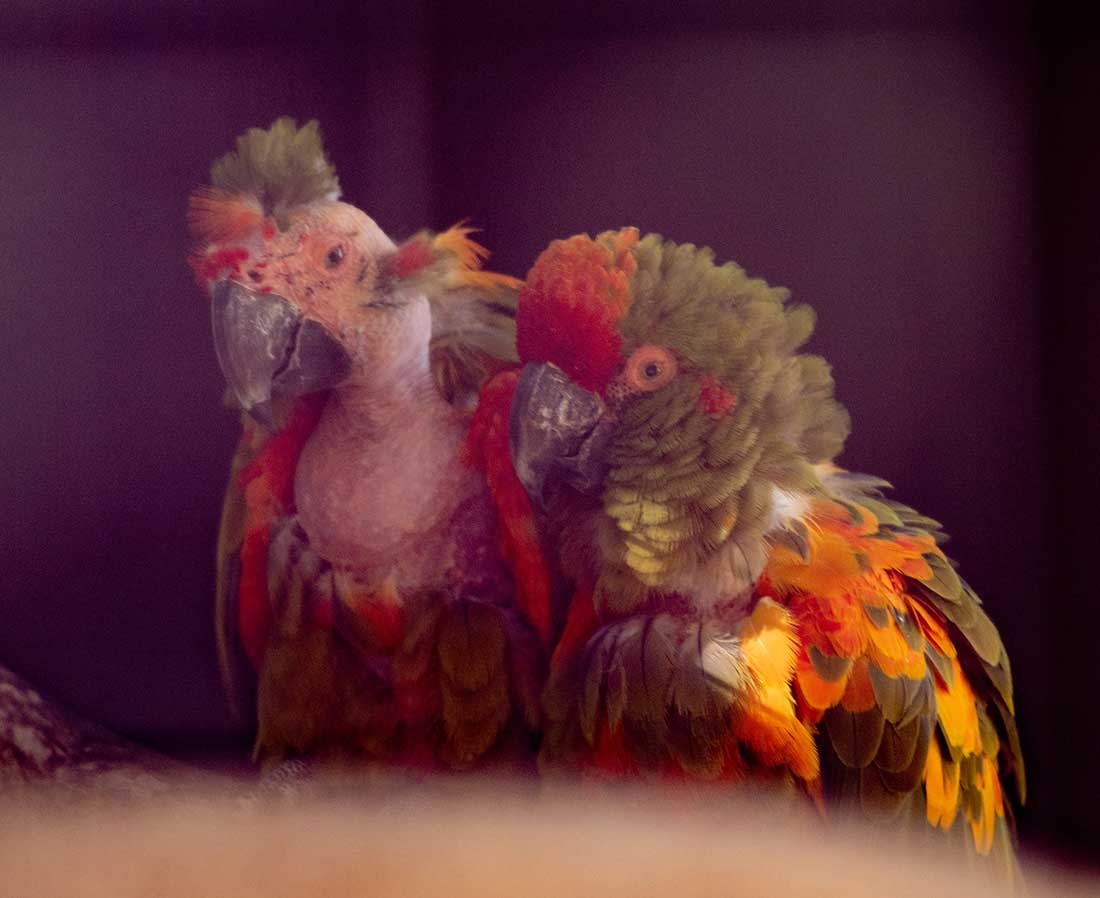
The Red-fronted Macaw were first bred in captivity in 1978. However, thet found to be prolific breeders. The World Parrot Trust describes a clutch of one to three eggs. Breeding generally occurs from October to March, with nests mainly in cliff cavities. The babies fledge after about 3 months in the nest. In like manner, Parent macaws fed with additional high-fat diet like sunflower seed, during the breeding season. And the young also require a high-fat diet as well as additional protein.
Diseases and ailments
- Heavy metal poisoning
- Pancreatitis (pancreas becomes inflamed)
- Gout (joint inflammation)
- Psittacosis (zoonotic infectious disease and parrot fever)
- Proventricular Dilatation Disease (a condition affecting the nerves supplying the gastrointestinal tract of birds)
Though it is difficult to identify the illness, so here are some visible signs to be aware of:
- Ruffled plumage
- Listlessness
- Drooping wings
- Sagging body
- Extreme mood changes
- Having no appetite
- Bulges in feathering
- Partially closed or watery eyes
- Swelling of the eyelids
- Rasping
- Difficulty breathing
- Excessive saliva
- Dirty vent
- Any change in the faeces not apparently diet-related
Red-fronted macaw price
There is no dependable, universal market price for this threatened bird. The Red-fronted Macaw is listed under CITES Appendix I, and its capture, transport and export are prohibited under Bolivian law. Buyers should not treat online price claims as evidence of legal origin.
Temperature
There is no evidence-based single indoor temperature that is suitable for every Red-fronted Macaw. Captive care requires suitable shelter, ventilation and veterinary advice appropriate to the bird and its circumstances.
Red-fronted macaw as pets
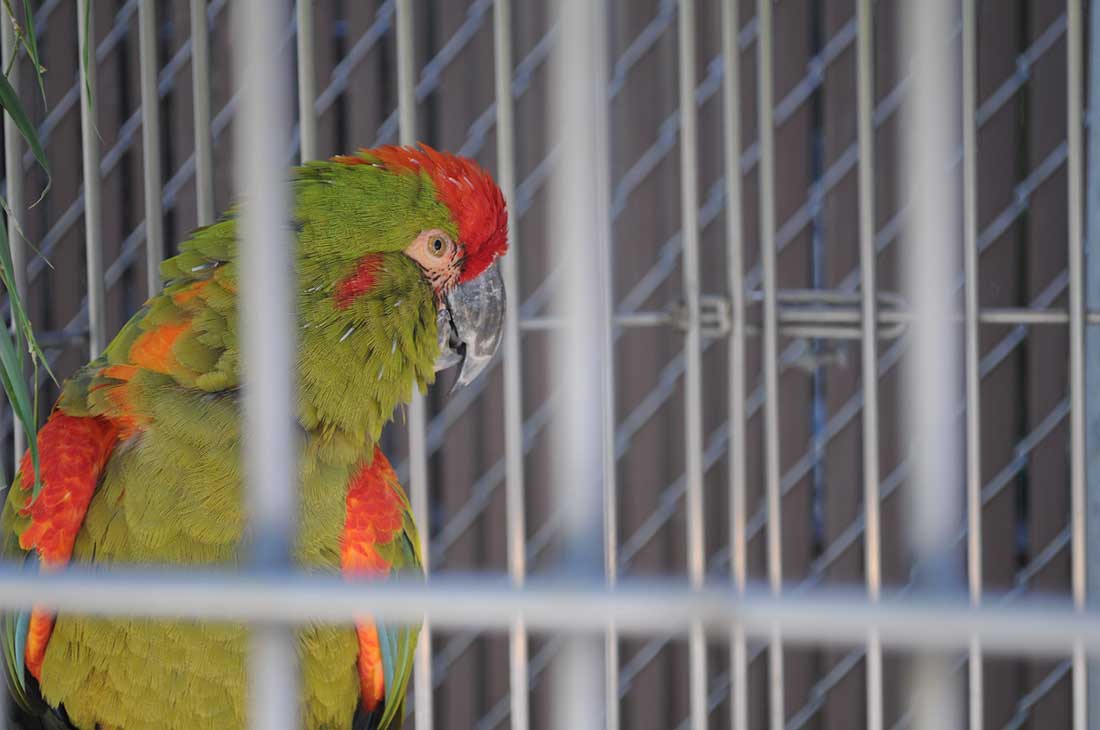
Make sure that the conditions are optimal- no draft, cold temperatures or extreme heat. Provide a large room allowing them to move freely. Giving regular baths are a great way to keep good hygiene and prevent any diseases in Red-fronted macaw as they love bathing and goofing around in the shower! Feed them with a diet that is made up of a variety of fruits, nuts, seeds and agricultural crops as well as a diet with extra protein and calcium.
Conservation Status
The Red-fronted Macaw is currently listed as Critically Endangered by the IUCN and World Parrot Trust. Important pressures include conversion of dry-forest habitat, livestock grazing, illegal trapping, and conflict with farmers when birds feed on maize and other crops. A 2021 range-wide field survey, published in Bird Conservation International in 2023, estimated approximately 1,160 birds and 138–159 nesting pairs. That study recommended reviewing the classification to Endangered; it is not itself evidence that the official IUCN assessment has been changed. Figures from different surveys should not be treated as a precise current count. World Parrot Trust species profile; 2023 population survey.
Economic Importance for Humans
Positive
To preserve the beautiful botanical communities of Bolivia area, Red-fronted macaws help pollinate some plants.
Negative
Red-fronted macaws have been considered as trouble to farmers in Bolivia. Since corn is the main source of food in the red-fronted macaw diet, many crops are affected by their presence. This is deleterious to the production of corn for the farmers who depend on this crop.
Ecosystem roles played by Red-fronted macaw
Red-fronted macaws have a mutualistic relationship with cactus in the arid area. Since both macaw and cactus limited to the same environment, macaws are a beneficial source of seed dispersal. After Red-fronted Macaws eat cacti fruits, the seeds are excreted and distributed throughout the valley, thus supporting the population of cactus. While foraging, Red-fronted macaws also inadvertently pollinate some plants.
